
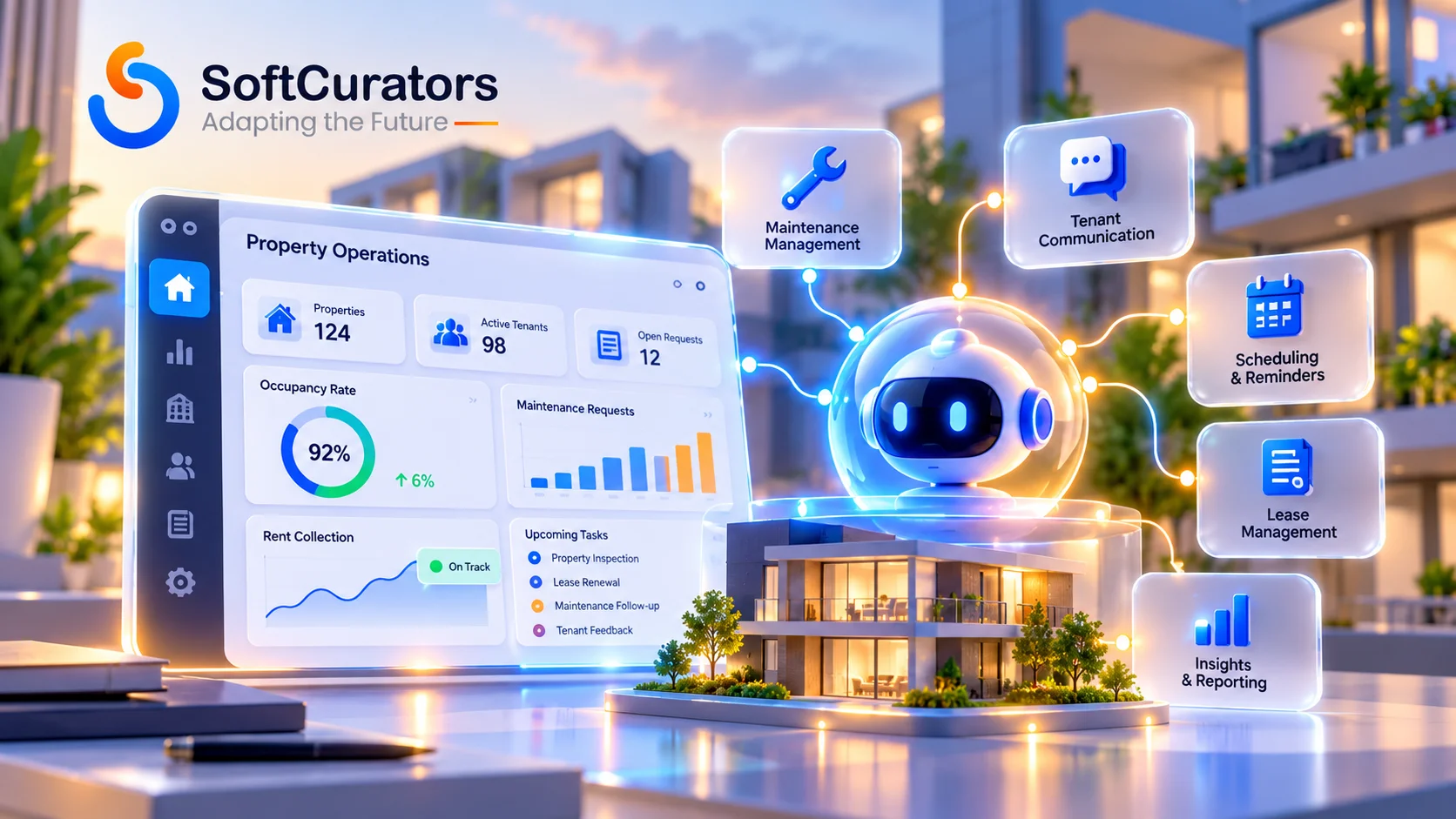
Property management runs on hundreds of small, repetitive decisions a day – which vendor handles a leaking faucet, whether a late rent payment needs a gentle nudge or an escalation, when a lease renewal conversation should start. Most of that decision-making still happens manually, not because the tasks are hard, but because they’re varied enough that a simple rule doesn’t cleanly cover them, and because getting the judgment wrong carries real consequences for real tenants.
This guide is about where agentic AI for property operations actually fits into that picture – not as a blanket upgrade to every workflow, but as a targeted capability for the specific tasks that genuinely involve multi-step judgment. If you’re looking at AI for buyer- or renter-facing features instead – recommendations, valuations, virtual tours – our guide to AI in real estate mobile apps covers that separate, consumer-facing question. This guide is about the operational back office, where the judgment calls are different and the compliance stakes are, in some respects, even higher.
Consultant’s Tip: Before evaluating any agentic AI vendor or build, list your ten most time-consuming operational workflows and mark which ones involve genuine judgment calls versus which ones follow a predictable pattern every time. That list will tell you more about where to actually invest than any product demo will.
What Does “Agentic AI for Property Operations” Actually Mean?
Agentic AI, in a property operations context, refers to a system that can interpret an operational situation, decide what action to take, execute that action through a connected tool or system, evaluate the outcome, and decide what to do next – as opposed to a chatbot that answers questions or a rules engine that follows a fixed if-this-then-that sequence. That multi-step, tool-using pattern is what distinguishes it from the simpler automation most property management software already offers.
The Distinction That Actually Matters
A rules-based automation sends a rent reminder on day three of delinquency because that’s the configured rule – no judgment involved, and that’s exactly why it works well for this task. An agentic system handling a maintenance request reads a tenant’s description, decides whether it’s an emergency, selects an appropriate vendor from several options based on issue type and availability, and follows up if the vendor doesn’t respond in a reasonable window – a sequence of judgment calls a fixed rule can’t cleanly encode, no matter how many conditions you add to it.
Why This Distinction Changes Your Build Decision
Business Insight: Most “AI for property management” marketing blurs this line, presenting every automation feature as agentic AI regardless of whether it actually involves multi-step reasoning. This matters practically because agentic systems cost more to build, test, and monitor than rules-based automation – paying that cost for a task that never needed judgment in the first place is a common, avoidable overreach.
Who needs genuinely agentic AI: Platforms managing enough volume and variety in maintenance, tenant communication, or vendor coordination that manual triage has become a real operational bottleneck, and where the tasks in question involve real judgment, not just repetition at scale.
Who doesn’t: A smaller portfolio or a platform whose operational pain points are mostly predictable, high-volume, low-judgment tasks – rent reminders, fixed inspection scheduling – gets more value from simple, reliable automation than from the added complexity and cost of an agentic system layered on top.
The Core Decision: Rules-Based Automation or Agentic AI for a Given Workflow?
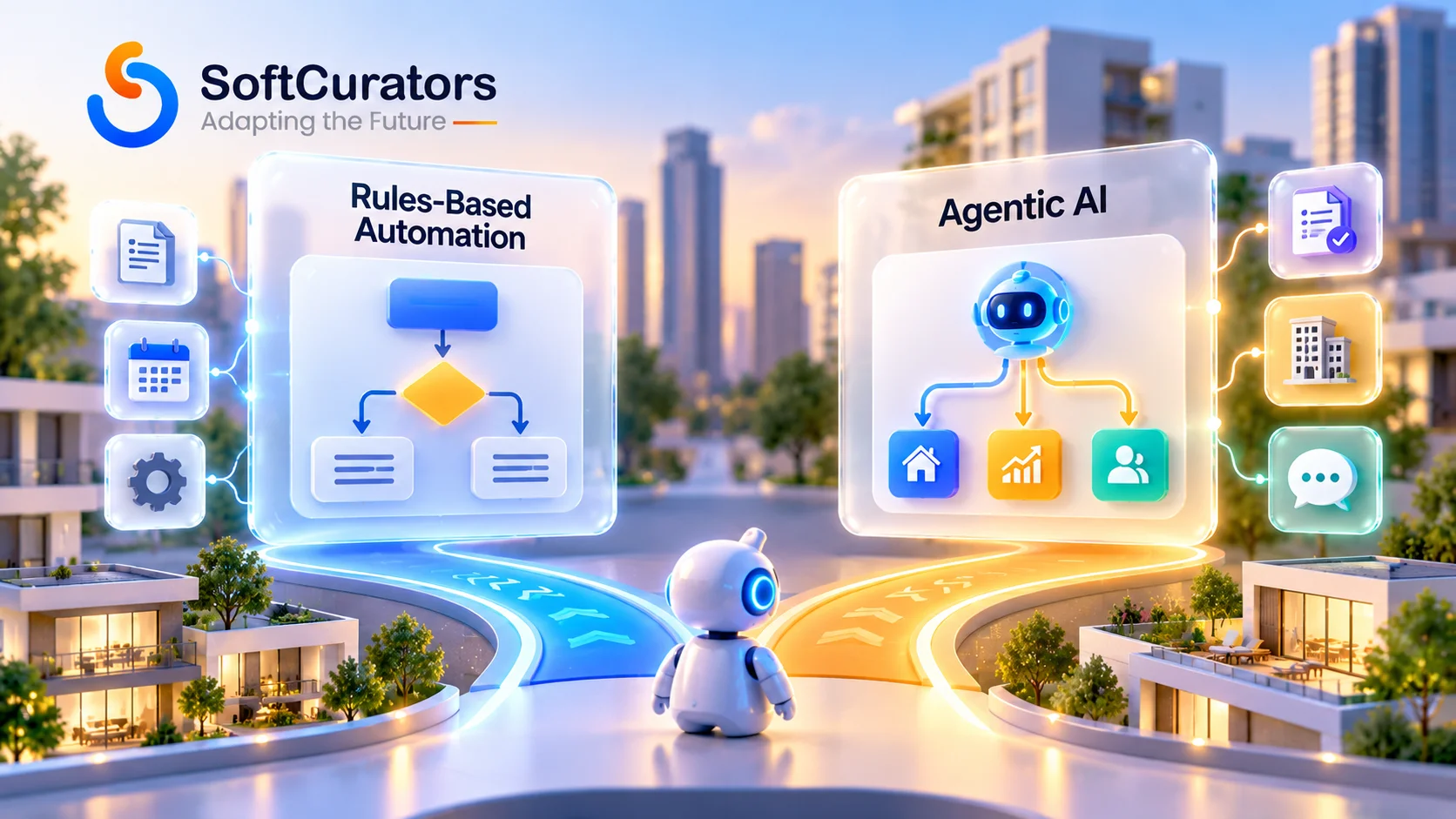
This is the decision that should happen before any specific tool or vendor conversation, and it needs to happen workflow by workflow, not once for your whole platform – some of your operations genuinely need agentic AI, and most probably don’t.
Rules-Based Automation
A rules-based system follows a fixed, predictable sequence: if a condition is met, take a specific, predetermined action. This is simpler to build, easier to test exhaustively, and completely predictable in how it behaves – you can enumerate every possible outcome in advance, which matters enormously for anything touching tenant communication or financial follow-up.
Agentic AI
An agentic system reasons through a task where the right action depends on details a fixed rule can’t fully anticipate – interpreting a freeform maintenance description, judging urgency, selecting among several reasonable next steps. This handles variety and ambiguity that rules-based automation can’t, at the cost of behavior that’s inherently less than 100% predictable in advance, which is a trade-off worth making deliberately rather than by default.
Our default recommendation: start with rules-based automation, and reserve agentic AI for tasks that fail specifically because a fixed rule can’t cover their variety. Here’s the reasoning, stated directly rather than hedged.
Most property operations workflows that feel like they need “AI” actually need reliable automation of a predictable process – the barrier has been implementation effort, not task complexity. Agentic AI is worth its added cost and complexity specifically when you can point to real, recurring cases where a fixed rule produces a wrong or unhelpful outcome because the underlying situation varies too much for one rule to handle well. Build the simple version first; let real operational friction tell you where agentic reasoning is actually earning its keep.
Choose agentic AI when:
- The task requires interpreting freeform, varied input (a tenant’s description of a problem) rather than structured, predictable data.
- The right next action genuinely depends on judgment that varies case by case, not a lookup table of conditions.
- You’ve already tried rules-based automation for this specific workflow and hit a real, recurring ceiling on how well it handles the variety of real cases.
Choose rules-based automation when:
- The task follows a predictable pattern regardless of specific details – a payment due date, a fixed inspection schedule.
- Predictability and auditability matter more than handling edge-case variety, which is especially true for anything touching tenant communication or financial actions.
- You haven’t yet validated that the workflow’s real-world variety actually exceeds what a well-designed rule set can handle.
Cost implications: Rules-based automation is generally faster and cheaper to build and test, since its behavior space is fully enumerable. Agentic AI carries higher build cost (integration, tool access, evaluation) and ongoing inference cost tied to usage volume, covered in more depth in our AI integration costs guide.
Maintenance implications: A rules-based system needs updates only when the underlying business rule changes. An agentic system needs ongoing evaluation and monitoring, since its behavior on new, unanticipated situations isn’t fully predictable in advance and needs to be checked against real outcomes over time.
Scalability implications: Both approaches scale in raw volume terms, but agentic AI scales better across task variety – a single well-designed agent can reasonably handle many different maintenance issue types, while a rules-based system needs a new explicit rule for each meaningfully different case pattern.
Risk factors: Rules-based automation carries the risk of handling edge cases poorly, since anything outside its explicit rules either fails or produces a wrong result. Agentic AI carries the risk of an incorrect judgment call on a case that looked routine, which is a different and, in some contexts, more consequential failure mode, particularly for anything touching tenant communication.
Time-to-market impact: Rules-based automation reaches a working version faster for well-understood, predictable workflows. Agentic AI takes longer to reach a genuinely reliable version, since it needs real evaluation against varied cases before you can trust it in production, not just a working demo.
Comparison Table: Rules-Based Automation vs. Agentic AI for Property Operations
| Factor | Rules-Based Automation | Agentic AI |
| Predictability | Fully enumerable, testable in advance | Behavior varies with input, needs ongoing evaluation |
| Best fit | Predictable, high-volume, low-judgment tasks | Varied, ambiguous, multi-step judgment tasks |
| Build cost | Lower – defined logic paths | Higher – integration, tool access, evaluation |
| Ongoing cost | Minimal, stable | Usage-based inference plus monitoring |
| Edge-case handling | Weak – fails or misfires outside defined rules | Stronger – reasons through unanticipated variation |
| Auditability | High – every outcome traceable to a rule | Lower – requires logging reasoning traces for review |
Note: Many mature platforms run both side by side – rules-based automation for predictable tasks, agentic AI layered on top specifically for the workflows that need it.
Where Agentic AI Actually Fits: Five Property Operations Workflows
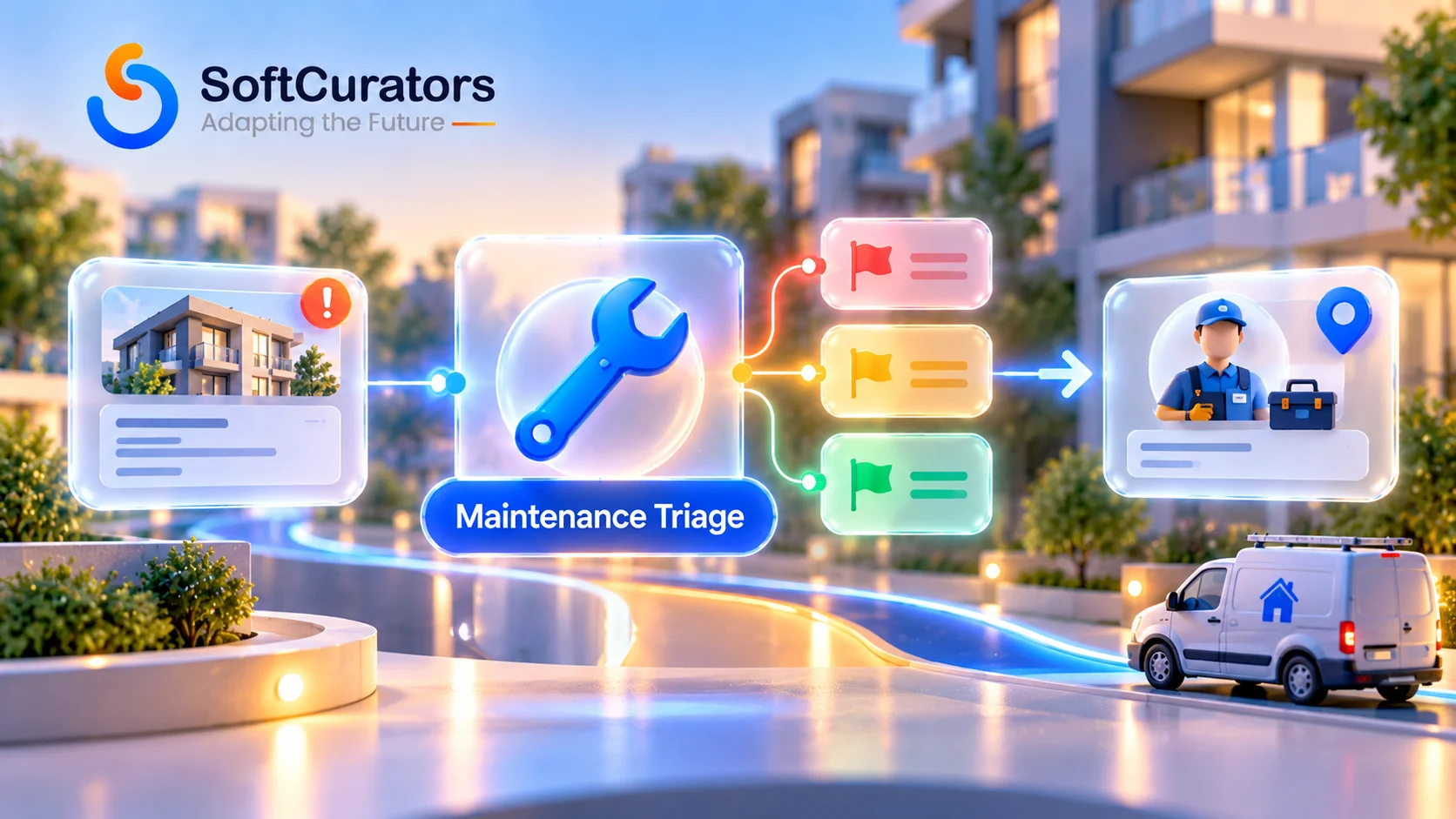 Applying the framework above to real property management workflows makes the distinction concrete. Here’s how it plays out across five common operational areas.
Maintenance Request Triage and Vendor Dispatch
This is the clearest, strongest case for genuine agentic AI in property operations. A tenant’s maintenance description is freeform text, urgency varies by issue and context, and the right vendor depends on issue type, availability, and sometimes cost – several judgment calls in sequence, exactly the pattern agentic reasoning handles well. An agent can read the description, classify urgency, select an appropriate vendor from your existing network, dispatch the request, and follow up if the vendor doesn’t respond within a reasonable window.
Risk Alert: Emergency issues – no heat in winter, active water leaks, safety hazards – need a defined, tested escalation path that doesn’t depend entirely on the agent correctly classifying urgency every time. Build a deterministic safety net (keyword triggers, tenant-initiated emergency flag) alongside the agentic classification, not instead of it.
Tenant Communication and Lease Renewal Follow-Up
Lease renewal timing, tone, and content genuinely benefit from judgment – a tenant with a strong payment history and no complaints warrants a different renewal conversation than one with recent issues. An agent can track relevant tenant history, draft contextually appropriate renewal outreach, and escalate to a human property manager for the actual negotiation, rather than the human starting every renewal conversation from a blank page.
Risk Alert: Any AI system that varies its communication or treatment of tenants based on their data carries fair housing considerations, the same category covered in depth in our AI in real estate mobile apps guide. The Fair Housing Act prohibits discriminatory treatment in housing-related communication, and an agent that inadvertently varies renewal terms or tone based on patterns correlated with protected characteristics creates real legal exposure – this deserves specific review before deployment, not an assumption that a communication-drafting tool is automatically neutral.
Rent Collection and Delinquency Follow-Up
Early-stage rent reminders are a textbook rules-based task – predictable timing, consistent messaging, no judgment required. Later-stage delinquency follow-up, where a tenant’s situation and appropriate next step genuinely vary, is where agentic judgment starts to add real value, deciding between a payment plan offer, an escalation, or a referral based on the specific situation.
Risk Alert: Communication related to debt collection is specifically regulated. The FTC’s guidance on debt collection practices outlines requirements around communication frequency, timing, and content that apply to rent delinquency follow-up once it functions as debt collection. Any agentic system handling this workflow needs these constraints built into its available actions, not left to the agent’s general judgment to respect on its own.
Inspection Scheduling and Compliance Tracking
Most of this workflow is genuinely rules-based – fixed schedules, regulatory deadlines, and standard notice requirements don’t need judgment, just reliable execution. The judgment-requiring piece is prioritization when multiple properties need attention simultaneously and resources are limited, which is a narrower, more contained agentic use case than it might initially seem.
Technical Note: Compliance deadlines in this workflow are often legally fixed, not flexible targets, which means the rules-based portion of this workflow needs to be treated as a hard constraint the agentic prioritization layer operates within, not a soft preference it can reason its way around. Build the regulatory deadline logic as non-negotiable rules first, and layer agentic prioritization only for the genuinely discretionary scheduling decisions around those fixed constraints.
Vendor and Invoice Reconciliation
Matching invoices to work orders, flagging discrepancies, and routing approvals involves enough variation in formatting and edge cases that agentic handling of the matching and flagging step can meaningfully reduce manual review time – while final payment approval should remain a deliberate human decision, not an autonomous action, given the direct financial stakes involved.
Business Perspective: This workflow has a clearer, more immediately measurable ROI case than several of the others in this guide, since reduced manual reconciliation time translates fairly directly into staff capacity freed up for higher-value work – worth considering as an earlier-stage candidate even if it’s not the most prominent use case in typical agentic AI marketing.
Comparison Table: Judgment Level and Oversight Needs by Workflow
Pulling the five workflows together against the judgment-versus-predictability framework makes prioritization more concrete – useful as a starting checklist once you’re ready to sequence your own roadmap.
| Workflow | Judgment Required | Recommended Oversight Level |
| Maintenance triage and dispatch | High – freeform input, variable urgency | Supervised initially, autonomous for routine cases once validated |
| Tenant communication and renewals | Moderate-High – context-dependent tone and timing | Human review for actual terms; agent drafts and context only |
| Rent collection (early stage) | Low – predictable, rules-based | Fully automated, no agent needed |
| Rent collection (delinquency) | Moderate – situation-dependent next step | Agent recommends, human approves escalation actions |
| Inspection scheduling | Low – mostly fixed schedule | Fully automated for scheduling; agent only for conflict prioritization |
| Vendor/invoice reconciliation | Moderate – matching and flagging variation | Agent flags and matches; human approves payment |
Note: Oversight recommendations are starting points – calibrate to your own risk tolerance, portfolio scale, and the specific consequences of an error in each workflow.
How Should You Design Human Oversight for These Workflows?
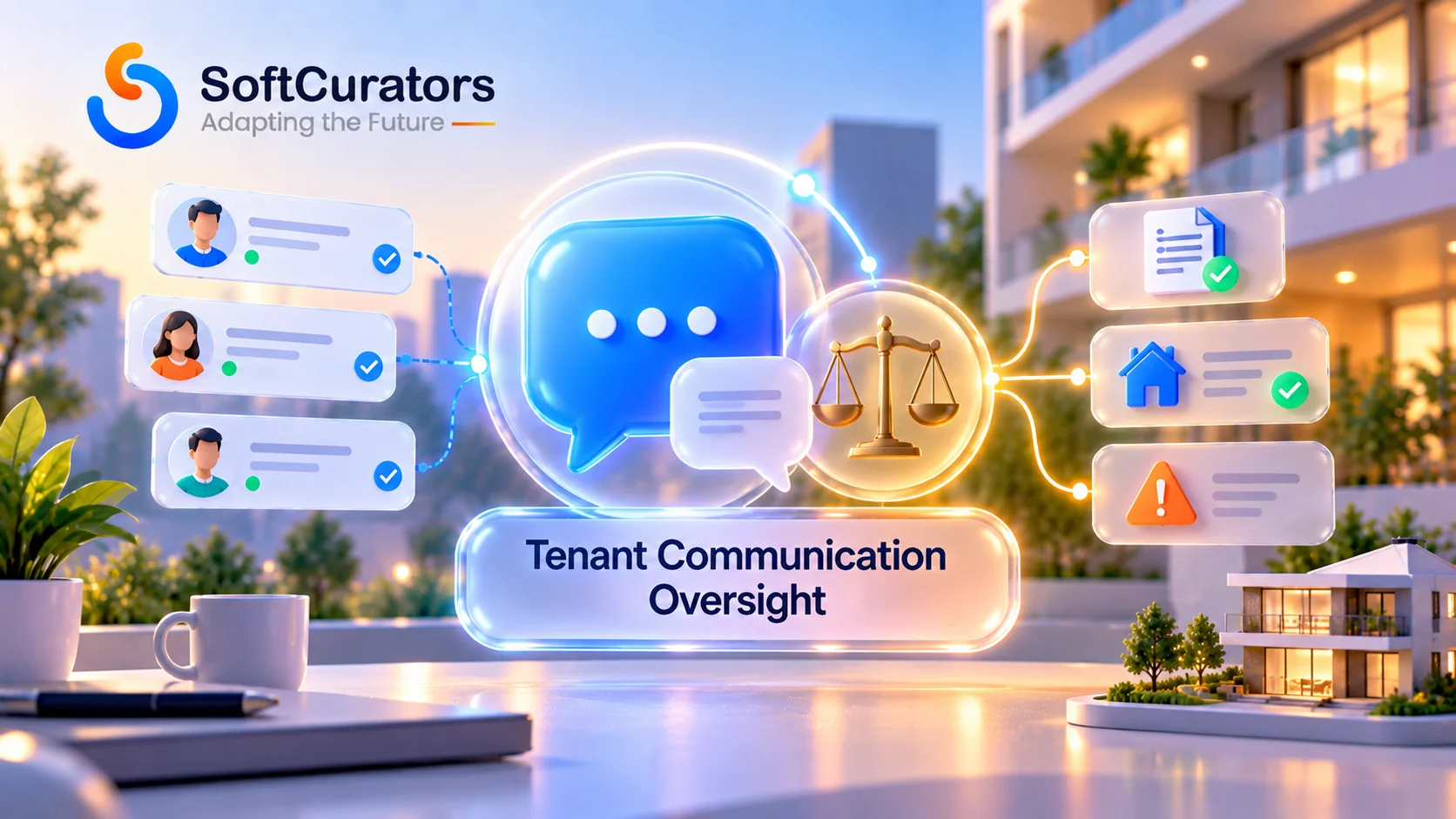 Every workflow covered above needs a defined answer to one question: what happens when the agent is wrong, and how does a human find out before it causes real harm? This isn’t a detail to work out after launch – it’s core design work that belongs at the start.
Match Oversight Level to Consequence, Not to a Uniform Policy
A maintenance vendor dispatch that turns out to be the wrong vendor is an inconvenience, correctable with a follow-up call. A tenant communication that inadvertently varies by protected characteristic, or a debt collection message that violates timing rules, carries real legal exposure. Calibrate how much autonomy you give an agent to the actual consequence of it being wrong, not a single uniform “human review everything” or “fully autonomous” policy applied identically across every workflow.
Build a Visible Escalation Path, Not Just a Logged One
Operational Perspective: A property manager needs an easy, visible way to see what an agent has done and intervene before consequences compound – not a buried log file they’d only check after a complaint arrives. Surface agent actions in the same interface property managers already use daily, with clear flags on anything touching tenant communication or financial follow-up specifically.
Common Mistake: Treating human oversight as a single global toggle rather than a workflow-by-workflow design decision. Full autonomy might be entirely reasonable for maintenance vendor selection while being entirely inappropriate for lease renewal terms – these deserve different oversight designs, not one setting applied everywhere.
Why Do These Agents Depend So Heavily on Your Property Management System Data?
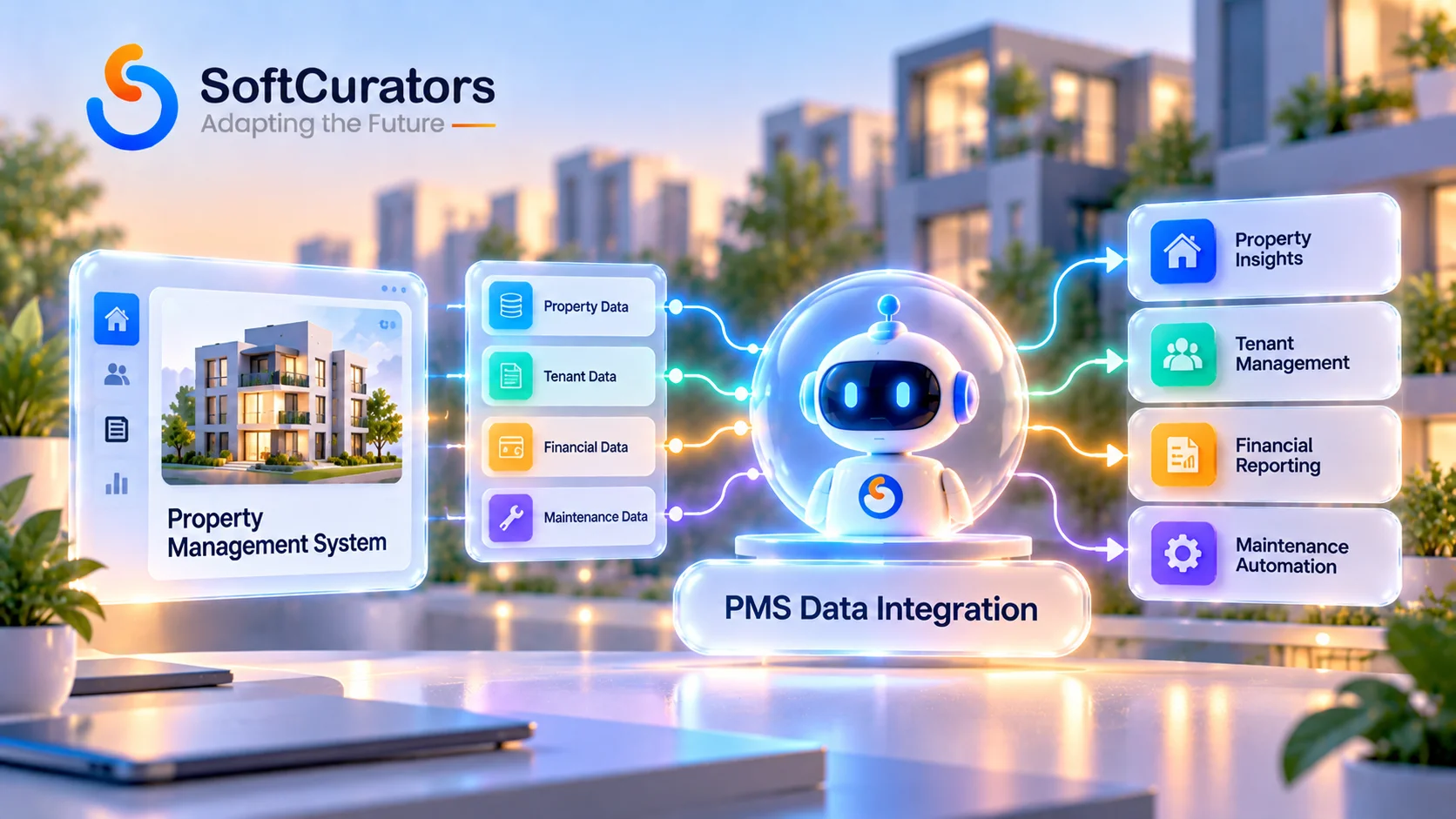
An agent handling maintenance triage or tenant communication is only as good as its access to your actual property management system data – tenant history, lease terms, vendor availability, maintenance records – and integrating cleanly with that data is a bigger engineering effort than the AI reasoning itself, in most real projects.
PMS Integration Is the Real Engineering Work
Property management systems vary widely in how open their data is to integration, and many established, older systems weren’t built with API-driven external access in mind. Reviewing RESO data standards – the same standards referenced in our broader real estate AI coverage – is a useful starting point for understanding what a standardized data integration looks like, though many property management systems specifically, as opposed to listing platforms, don’t fully adhere to this standard, which is worth confirming directly rather than assuming.
Data Quality Determines Agent Reliability More Than Model Choice
Business Insight: An agent working from incomplete or stale tenant and property data will make confidently wrong decisions regardless of how capable the underlying model is – this is the same data-foundation dependency covered throughout our broader AI coverage, and it applies with particular force here, since the data in question directly affects real tenants and real financial outcomes.
Our AI-powered DataOps guide and DataOps vs. DevOps vs. MLOps comparison both cover the broader data pipeline discipline this depends on.
What Security and Access Control Does This Require?
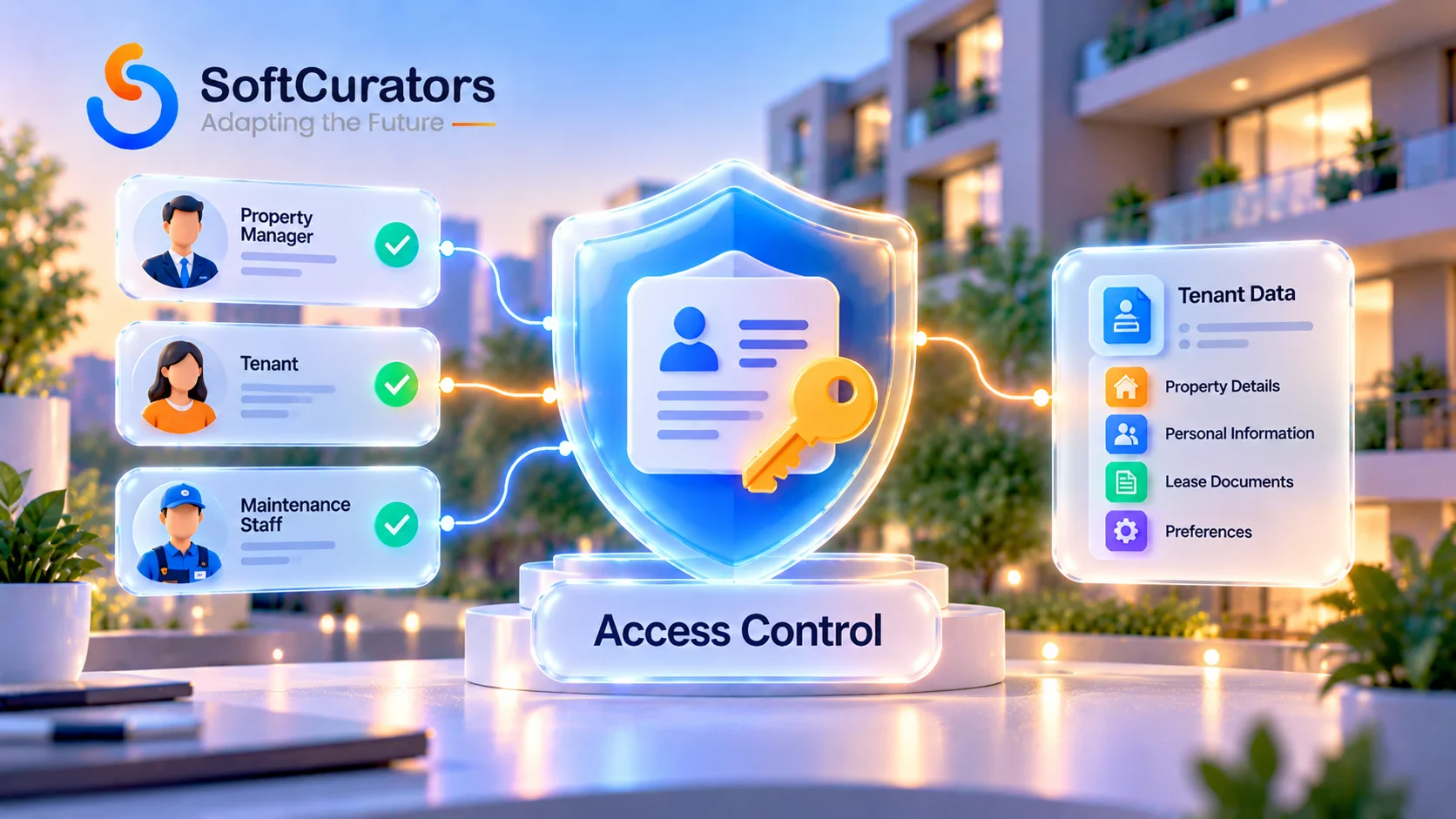
An agent handling property operations needs access to tenant personal information, lease and financial data, and vendor systems – a real access-control problem that deserves the same rigor as any system touching sensitive personal and financial data, not a lighter standard because it’s “just automation.”
Scope Access Narrowly, Per Workflow
An agent handling maintenance dispatch doesn’t need access to tenant payment history, and an agent handling rent collection doesn’t need access to maintenance vendor systems. Scope each agent’s data and system access specifically to what its workflow requires, following the same least-privilege principle covered in our enterprise AI agents on AWS Bedrock guide, which addresses the underlying agent architecture and access-control patterns this article builds on.
Treat Tenant Messages as Untrusted Input
Any agent that reads and acts on tenant-submitted messages is processing untrusted input, and is subject to the same prompt injection risk covered in the OWASP Top 10 for Large Language Model Applications – a tenant could, intentionally or not, submit a maintenance request worded in a way that manipulates the agent’s classification or action. This is a genuine, specific risk for this use case, not a theoretical concern.
Our mobile app security and compliance overview and the NIST AI Risk Management Framework both offer useful structure for treating this as an ongoing, monitored practice rather than a one-time pre-launch review.
How Do You Handle Diverse and Multi-Language Tenant Populations?
A tenant population that communicates in multiple languages, or includes residents with varying levels of comfort with digital communication, adds a real design dimension to agentic tenant communication that’s easy to overlook when a pilot runs on a single, homogeneous property.
Language Quality Varies, and That Variation Has Fair Housing Implications
An agent’s communication quality in a secondary language is frequently weaker than in its primary language, and if that quality gap correlates with tenant demographics, it compounds the fair housing considerations covered earlier in this guide rather than existing as a separate, unrelated concern. Test communication quality specifically in every language your tenant population actually uses, not just the language your team happens to design and review in.
Not Every Tenant Wants to Interact With an Agent
Business Perspective: Some tenants, particularly those less comfortable with digital-first communication, will prefer and sometimes need a direct human contact option regardless of how well an agentic system performs. Keep a clearly available human escalation path visible to every tenant, not buried behind an agent interface that assumes universal comfort with automated communication.
How Does This Change Across a Multi-Property Portfolio?
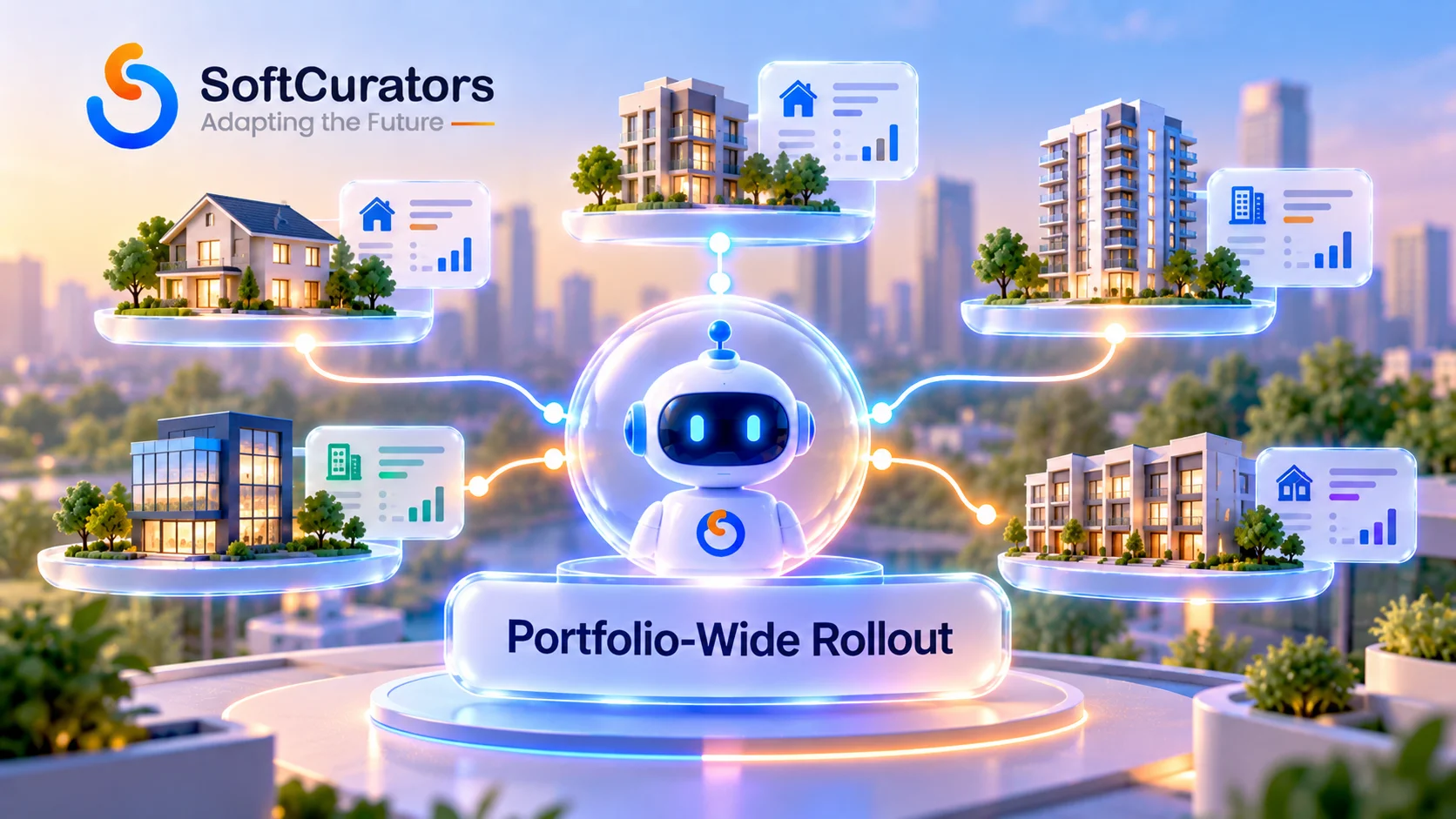
An agent handling operations for a single property is a meaningfully simpler problem than one operating consistently across a large, varied portfolio, where property-specific rules, vendor networks, and local regulations all add real complexity most single-property pilots don’t surface.
Property-Specific Configuration Adds Up
Different properties may have different preferred vendors, different local maintenance regulations, and different lease terms and policies – an agent needs access to this property-specific context, not a single global configuration applied uniformly, which is easy to underestimate when a pilot runs on just one or two properties.
Start Narrow, Expand Deliberately
Expert Recommendation: Pilot agentic workflows on a small, representative subset of your portfolio before rolling out platform-wide, specifically so you can validate the agent handles real property-specific variation correctly before that variation compounds across dozens or hundreds of properties simultaneously. A workflow that looks reliable on one property can reveal real gaps once local and portfolio-specific variation enters the picture.
What Team Do You Actually Need to Build This?
Our view: this requires closer collaboration between engineering and actual property operations staff than most AI feature builds, since the people who understand real-world maintenance triage and tenant communication nuance are your property managers, not your engineers alone.
Involve Operations Staff in Design, Not Just Testing
The specific judgment calls an agent needs to replicate – how to prioritize competing maintenance requests, when a delinquency conversation needs a human touch – live in your property managers’ heads, not in a specification document. Involve them directly in defining what “correct” agent behavior looks like for each workflow, from the earliest design stage, not as a late-stage review step.
In-House vs. a Development Partner
Our view: for a first agentic property operations workflow, working with a team that has already navigated PMS integration challenges and the specific compliance considerations covered in this guide is worth more than the time spent learning these domain-specific patterns from scratch internally. Bring this capability fully in-house once you have validated workflows and a long-term roadmap across multiple operational areas that justifies dedicated headcount.
Does This Look Different for Residential vs. Commercial Properties?
The workflow framework in this guide applies to both, but the specific judgment an agent needs to replicate shifts meaningfully between residential and commercial property operations, and treating them identically is a common source of poorly performing agents.
Residential: Higher Volume, More Standardized Situations
Residential property management typically involves higher transaction and interaction volume with more standardized lease terms and maintenance issue types, which makes it a strong fit for the maintenance triage and tenant communication workflows covered earlier – there’s enough volume and pattern consistency for an agent to learn from and enough repetition to justify the automation investment.
Commercial: Lower Volume, Higher-Stakes Individual Decisions
Commercial property operations typically involve lower transaction volume but higher individual stakes per decision – a single commercial lease negotiation or major maintenance issue carries more weight than the equivalent residential case, and often involves more custom, negotiated terms that resist the pattern-based judgment an agent learns from. Agentic AI’s case is generally weaker here relative to residential, simply because there’s less repetitive volume to justify the investment and more genuinely unique, high-stakes judgment involved in each case.
Business Insight: If your portfolio spans both residential and commercial properties, prioritize agentic AI investment on the residential side first, where volume and pattern consistency make the business case stronger, rather than spreading initial investment evenly across a property mix where the underlying economics genuinely differ.
How Do You Measure Whether an Agentic Workflow Is Actually Working?
Before deploying any agentic workflow, define what success actually means in measurable terms – otherwise you’ll have strong opinions about whether it’s working and no data to settle disagreements.
Metrics That Matter Per Workflow
For maintenance triage, track time-to-vendor-dispatch and, critically, whether the selected vendor was actually appropriate for the issue – a fast dispatch to the wrong vendor isn’t a win. Tenant communication, track response relevance and escalation-to-human rate, not just message volume sent. For delinquency follow-up, track resolution rate and, separately, complaint or dispute rate, since a high resolution rate achieved through aggressive tactics that generate complaints isn’t the outcome you actually want.
Resist Vanity Metrics
Business Insight: Messages sent, tasks processed, and tickets closed are activity metrics, not outcome metrics – an agent can process a high volume of maintenance requests while consistently dispatching the wrong vendor, and activity metrics alone won’t reveal that. Anchor your measurement to outcomes your operations team already cares about – actual resolution quality, tenant satisfaction, dispute rates – not to metrics that are easy to measure but don’t reflect whether the agent is genuinely helping.
Common Mistake: Declaring an agentic workflow successful based on adoption or volume metrics alone, without validating that the underlying decisions were actually correct. A workflow can look successful by activity measures while quietly producing worse outcomes than the manual process it replaced.
How Do You Handle Agent Failures and Fallback to Human Handling?
Every agentic workflow needs a defined answer for what happens when the agent genuinely can’t handle a situation – not an assumption that it always will, but an explicit, tested fallback path.
Design the Fallback Before You Need It
When an agent encounters a situation outside its confidence or scope – an unusual maintenance description, an unclear tenant request – it should escalate to a human promptly rather than guessing or, worse, silently taking a low-confidence action. This requires the agent to have some mechanism for recognizing its own uncertainty, not just always producing an answer regardless of how confident it actually is in that answer.
Make the Handoff Genuinely Usable
Operational Perspective: An escalation that dumps raw context on a property manager with no summary of what the agent already tried is barely better than no automation at all. Design the handoff to include what the agent understood about the situation and why it’s escalating, so the human isn’t starting from zero – this is a real design requirement, not a minor UX detail.
Risk Alert: Track escalation rate as a health metric, not just a fallback mechanism. A rising escalation rate on a previously stable workflow usually signals something has changed – new property types entering the portfolio, seasonal patterns, a data source that’s gone stale – worth investigating rather than just routing around indefinitely.
What Does a Realistic Rollout Timeline Look Like?
Deploying agentic AI for property operations well is a phased process, not a single launch event – and compressing these phases is one of the more common ways teams end up with an agent in production that hasn’t actually been validated properly.
Phase 1: Shadow Mode
Run the agent alongside existing manual processes without letting it take real action – comparing its recommended decisions against what your team actually did, and reviewing discrepancies. This surfaces gaps in the agent’s judgment with zero operational risk, before it ever touches a real tenant or vendor interaction.
Phase 2: Supervised Action on a Limited Scope
Let the agent take real action, but require human approval before each action executes, on a narrow subset of properties or issue types. This validates the agent’s judgment under real conditions while keeping a human in the loop for every decision, which is the appropriate level of caution for a workflow with no production track record yet.
Phase 3: Autonomous Action Within Defined Boundaries
Once supervised performance is consistently strong, allow autonomous action within clearly defined boundaries – routine cases handled independently, anything outside those boundaries still escalating to a human. This is a gradual expansion of trust based on demonstrated performance, not a single jump from manual to fully autonomous.
Common Mistake: Skipping shadow mode entirely to reach a visible result faster. This phase costs little beyond time and reveals exactly the kind of judgment gaps that are expensive and embarrassing to discover once the agent is taking real action against real tenants.
How Do You Test and Monitor Agentic Workflows in Production?
An agentic workflow touching tenant communication or financial follow-up needs more rigorous pre-launch testing and ongoing monitoring than a typical automation feature, given what’s actually at stake if it behaves incorrectly.
Build an Evaluation Set From Real Historical Cases
Assemble real (anonymized) historical maintenance requests, tenant communications, and delinquency cases with known, correct outcomes, and test the agent’s decisions against them before any live deployment – not just a handful of obvious examples, but genuinely representative edge cases your operations team has actually encountered.
Monitor for Drift and Disparate Treatment Specifically
Risk Alert: Beyond general accuracy monitoring, specifically audit whether an agent’s decisions – response time, tone, escalation likelihood – vary in ways correlated with tenant demographics, even unintentionally. This is a direct extension of the fair housing consideration covered earlier in this guide, and it deserves its own recurring review, not just a general accuracy check.
Common Mistake: Validating an agent once before launch and treating that as sufficient indefinitely. Property operations patterns shift with seasons, portfolio changes, and local conditions, and an agent that performed well at launch can drift out of alignment with current reality if not periodically re-evaluated against fresh, real cases.
Common Mistakes When Deploying Agentic AI for Property Operations
- Applying agentic AI to every operational workflow by default. Most property operations tasks are better served by simpler, more predictable rules-based automation.
- Giving an agent full autonomy over tenant communication without fair housing review. This creates genuine legal exposure that general AI safety review doesn’t automatically cover.
- Treating debt collection communication rules as a general best practice rather than a specific legal constraint. FTC debt collection requirements apply directly once delinquency follow-up functions as collection activity.
- Scoping one broad agent with access to everything instead of narrowly scoped agents per workflow. This is both harder to secure and harder to evaluate than several narrowly scoped agents.
- Piloting on a single property and assuming portfolio-wide readiness. Property-specific variation in vendors, regulations, and policies doesn’t surface until you test across genuine portfolio diversity.
- Treating tenant-submitted messages as trusted input. Any agent processing tenant messages is exposed to prompt injection risk and needs specific review for this.
- Validating an agent once at launch and never revisiting it. Operational patterns shift over time, and agent behavior needs recurring, not one-time, evaluation.
What Does This Cost, and Where Should You Look Next?
Cost depends heavily on how many workflows you’re automating, how much PMS integration work is required, and whether you’re building genuinely agentic capability or simpler rules-based automation for most of your scope – deserving its own dedicated estimate rather than a single figure here.
Our AI integration costs guide covers the general cost framework – scoping, engineering integration, data readiness, and ongoing maintenance – that applies directly to adding agentic capability to an existing property management platform. Our broader how to build an AI-powered app guide addresses the underlying model architecture decisions, and our enterprise AI agents on AWS Bedrock guide covers agent infrastructure specifically if you’re building on AWS.
What Do Related Real Estate Technology Projects Actually Look Like?
The architecture and workflow reasoning in this guide sits alongside our broader real estate technology coverage. Our AI in real estate mobile apps guide covers the consumer-facing side – recommendations, valuations, virtual tours – that a property management platform’s tenant- or buyer-facing app might also need. Our AI-powered property recommendation systems explained and AI property valuation apps development guide go deeper into those specific consumer-facing capabilities. For platforms managing rental operations specifically, our guide to how to build a property rental app like Airbnb and our real estate app development industry page cover the broader platform context this operations layer sits inside.
Where Is Agentic AI in Property Operations Headed Next?
The following are directional trends based on current product and market momentum, not settled fact – verify against current vendor capabilities and regulatory guidance before treating any of these as a firm planning assumption.
- Deeper native PMS integration from major property management platforms, likely reducing the custom integration burden covered earlier in this guide over time.
- Growing regulatory attention on AI-driven tenant communication and screening, likely increasing the compliance review expected for agentic systems touching tenant-facing decisions.
- More standardized evaluation practices for agentic property operations specifically, as the category matures beyond early, ad hoc pilot deployments.
- Expansion of agentic capability from single-workflow pilots to coordinated multi-agent systems spanning maintenance, communication, and collections together, though this remains an early-stage direction rather than common practice today.

Final Summary and Next Steps
Agentic AI for property operations earns its place in a small, specific set of workflows – the ones that genuinely require multi-step judgment under ambiguity, like maintenance triage and nuanced tenant communication – not as a blanket upgrade across every operational task. Most of property management’s day-to-day workflows are better served by simple, predictable, rules-based automation, and treating every automation opportunity as an agentic AI opportunity is an expensive, avoidable overreach.
The platforms that get this right start with a clear, workflow-by-workflow assessment of where real judgment is required, design human oversight proportional to each workflow’s actual consequences, and take fair housing and debt collection compliance as seriously as the underlying engineering – because for this category specifically, the compliance risk is at least as real as the technical risk.
Consultant’s Tip: Before your next planning conversation, walk through your ten most time-consuming operational workflows with your property operations team and sort them into “predictable” and “requires judgment.” That sorted list is a better starting point for an agentic AI roadmap than any vendor pitch you’ll hear.
Risk Alert: Regulatory interpretation around AI-driven tenant communication and debt collection continues to evolve, and vendor capabilities in this space are changing quickly as well. Treat the framework in this guide as durable, but revisit your specific compliance posture and vendor evaluation on a recurring basis rather than a single assessment made once at the start of the project.
Next Step
If you’re evaluating which of your property operations workflows genuinely warrant agentic AI, and how to deploy it safely against tenant and financial data, a Technical Audit with Softcurators is a direct way to review your existing systems, PMS integration options, and workflow priorities before committing engineering time to any one direction. Softcurators works across AI app development, AI consulting services, and AI automation. You can review our real estate app development industry page, browse our broader solutions overview, or get in touch directly to talk through your specific platform.
Frequently Asked Questions
Do I need agentic AI, or would simple automation work for my property management workflows?
Most workflows are better served by simple, rules-based automation. Agentic AI earns its added cost and complexity specifically for tasks involving genuine judgment under ambiguity, like maintenance triage, not for predictable tasks like scheduled rent reminders.
Is it legal to use AI for tenant communication and lease renewal decisions?
It can be, but any system that varies communication or treatment based on tenant data carries fair housing considerations under the Fair Housing Act, since algorithmic discrimination is treated the same as human discrimination under the law. This requires specific legal review, not a general assumption of neutrality.
Does AI-driven rent delinquency follow-up need to comply with debt collection regulations?
Yes, once that follow-up functions as debt collection activity. FTC guidance on debt collection practices covers communication frequency, timing, and content requirements that need to be built into an agent's available actions, not left to its general judgment.
How much of my property management system needs to be integrated for agentic AI to work well?
As much as the specific workflow requires - a maintenance triage agent needs vendor and property data, while a delinquency agent needs payment history. Scope integration to each workflow's actual needs rather than assuming full system access is required upfront.
Can a small property management company realistically use agentic AI?
Yes, particularly for a narrowly scoped, high-value workflow like maintenance triage, starting with a pilot on a representative subset of properties before considering broader rollout - this doesn't require enterprise-scale operations to be worthwhile.
What happens if an AI agent makes a wrong decision about a maintenance emergency?
This is exactly why a deterministic safety net - keyword triggers, a tenant-initiated emergency flag - should run alongside agentic classification for anything safety-related, rather than relying entirely on the agent correctly judging urgency every time.
How do I know if my property management system's data is ready for an AI agent?
If your data is consistently formatted, accessible through some form of API or structured export, and reasonably current, you're closer to ready. If answering a data question requires someone manually checking multiple systems, budget dedicated data readiness work first.
Should one agent handle all property operations, or should I use separate agents per workflow?
Separate, narrowly scoped agents per workflow are generally better - easier to secure with tightly scoped access, easier to evaluate independently, and less likely to produce compounding errors than one broad agent with access to everything.
What's the biggest risk in deploying agentic AI for tenant-facing communication?
Inadvertent disparate treatment correlated with protected characteristics, which carries real fair housing exposure. This deserves specific, recurring review - not just general AI accuracy monitoring - for any agent touching tenant communication or renewal terms.
How do I test an agent before letting it handle real tenant interactions?
Build an evaluation set from real, anonymized historical cases with known correct outcomes, covering genuine edge cases your operations team has actually encountered, and test the agent's decisions against that set before any live deployment.
Does agentic AI reduce the need for property management staff?
It's better understood as changing what staff spend time on - reducing manual triage and routine follow-up work while keeping humans responsible for judgment calls with real consequences, rather than eliminating the operational role entirely.
What ongoing monitoring does an agentic property operations system need?
Recurring evaluation against fresh real cases, tracking for behavioral drift over time, and specific auditing for treatment differences correlated with tenant demographics - not just a one-time pre-launch validation.
Can agentic AI help with vendor management and invoice reconciliation?
Yes, particularly for matching invoices to work orders and flagging discrepancies, which involves enough real-world variation to benefit from agentic handling - though final payment approval should remain a deliberate human decision given the direct financial stakes.
How does this differ across a large, multi-property portfolio versus a single building?
Portfolio-scale deployment introduces property-specific configuration - different vendors, local regulations, lease terms - that a single-property pilot won't fully surface, which is why piloting on a representative subset before full rollout matters.
Is prompt injection a real risk for property management AI agents specifically?
Yes, for any agent processing tenant-submitted messages, since that input is untrusted and could be crafted, intentionally or not, to manipulate the agent's classification or resulting action - a documented risk category worth specific design attention.
What team roles are needed to build agentic AI for property operations?
Engineering capability for the AI integration itself, plus close involvement from actual property operations staff who understand the real-world judgment calls the agent needs to replicate - this collaboration matters more here than in many other AI feature builds.
Should I build agentic AI in-house or work with a development partner?
For a first agentic workflow, a partner with prior experience in PMS integration and the compliance considerations specific to this category is generally worth more than the time spent building that domain knowledge internally from scratch.
How long does it typically take to deploy a first agentic property operations workflow?
A narrowly scoped pilot - maintenance triage on a representative subset of properties, for instance - is a more realistic first milestone than a broad, multi-workflow rollout, and timeline depends heavily on how much PMS integration work the specific workflow requires.
Does agentic AI for property operations require blockchain or any specialized infrastructure?
No. This is a conventional AI agent architecture problem - model access, tool integration, data access - with no inherent blockchain or specialized infrastructure requirement, distinct from the crypto-adjacent categories we cover elsewhere.
What's the realistic ROI case for agentic AI in property operations?
The clearest, most measurable case is typically in reduced manual triage time for maintenance requests and reduced time-to-resolution, both measurable against a clear before-and-after baseline, more directly than softer metrics like tenant satisfaction.
Can agentic AI help identify which maintenance issues are likely to become emergencies?
This is a reasonable extension of triage capability, though it should supplement rather than replace clear tenant-reported urgency signals and defined emergency escalation paths, given the real consequences of a missed genuine emergency.
Do I need separate compliance review for each property operations workflow, or is one review sufficient?
Separate review per workflow is more defensible, since the compliance considerations differ meaningfully - fair housing for tenant communication, debt collection rules for delinquency follow-up - and a single general review is unlikely to cover all of them adequately.
How do I decide which operational workflow to automate with agentic AI first?
Start with the workflow that combines genuine judgment complexity with real operational pain - maintenance triage is the most common starting point for this reason - rather than the workflow that sounds most impressive to describe as "AI-powered."
What's a reasonable first step if I'm not sure which workflows need agentic AI versus simple automation?
A structured review of your actual operational workflows against the judgment-versus-predictability framework in this guide, ideally involving your property operations staff directly, gives a far more grounded starting point than evaluating AI vendors before that internal analysis is done.
What metrics actually show whether an agentic workflow is working?
Outcome metrics specific to the workflow - vendor appropriateness for maintenance triage, resolution and dispute rate for delinquency follow-up - not activity metrics like message volume or tasks processed, which can look strong while masking poor underlying decisions.
What should happen when an agent isn't confident about how to handle a situation?
It should escalate to a human promptly, with a summary of what it understood and why it's escalating, rather than guessing or taking a low-confidence action. This requires building some mechanism for the agent to recognize its own uncertainty, not just always producing an answer.
Is a rising escalation rate always a bad sign?
Not automatically - it can reflect the agent correctly recognizing genuinely ambiguous cases. But a rising rate on a previously stable workflow usually signals something has changed and deserves investigation rather than being treated as background noise.
What's shadow mode, and is it really necessary?
Running an agent alongside existing manual processes without letting it take real action, purely to compare its recommendations against what actually happened. It's a low-cost, low-risk way to surface judgment gaps before the agent touches any real tenant or vendor interaction, and skipping it is a common, costly shortcut.
How long should each rollout phase last before moving to the next?
Long enough to build genuine confidence in consistent performance, not a fixed calendar period - move to the next phase based on demonstrated reliability across a reasonable volume of real cases, not based on an arbitrary timeline.
Can I skip supervised action and go straight from shadow mode to full autonomy?
This is possible but riskier, since supervised action is what validates the agent's judgment under real conditions with a safety net still in place. Skipping it means your first real-world validation happens without human review catching mistakes before they affect a tenant.
Does a successful pilot on one property guarantee success across the whole portfolio?
No - property-specific variation in vendors, local regulations, and tenant populations means a single-property pilot doesn't fully validate portfolio-wide readiness, which is why testing across a representative subset before full rollout matters.
Is agentic AI a better fit for residential or commercial property management?
Generally residential, since it involves higher volume and more standardized situations that give an agent enough consistent pattern to learn from. Commercial operations typically involve lower volume and more unique, high-stakes negotiated terms that resist pattern-based judgment.
How should I handle tenant communication in multiple languages with an AI agent?
Test communication quality specifically in every language your tenant population uses, not just your team's primary working language, since quality gaps across languages can compound fair housing concerns if they correlate with tenant demographics.
Should every tenant be required to interact with an AI agent instead of a human?
No. Keep a clearly available human escalation path visible to all tenants, since some will prefer or need direct human contact regardless of how well the agentic system performs, particularly those less comfortable with automated communication.
What's the difference in oversight needed for maintenance dispatch versus lease renewal terms?
Maintenance dispatch can reasonably move toward supervised or even autonomous handling for routine cases once validated, while actual lease renewal terms should keep human review and approval given the direct financial and legal stakes involved.
Can agentic AI help prioritize which of several simultaneous inspections to handle first?
Yes, this is a genuinely useful, narrower agentic use case within an otherwise mostly rules-based inspection scheduling workflow, specifically for resolving competing priorities when resources are limited across multiple properties at once.
Is it worth building agentic AI for a single-property landlord, or is this only for larger operators?
The economics generally favor larger portfolios with enough volume to justify the engineering investment, though a single-property landlord with a high-maintenance property could reasonably consider a narrowly scoped, low-cost automation approach instead of a full agentic build.
Which property operations workflow typically has the fastest, clearest ROI?
Vendor and invoice reconciliation often shows the clearest early return, since reduced manual review time translates fairly directly into freed-up staff capacity, even though maintenance triage tends to get more attention in typical agentic AI discussions.
Should compliance deadlines ever be left to an agent's discretion?
No. Legally fixed deadlines should be built as hard, non-negotiable rules the agent operates within, not soft preferences subject to its general judgment - reserve agentic reasoning for the genuinely discretionary scheduling decisions around those fixed constraints.
How do I know if my agent's performance is actually consistent across different languages?
Test it directly and specifically in every language your tenant population uses, rather than assuming performance in your team's primary working language generalizes - quality gaps across languages are common and easy to miss without deliberate testing.
What's the risk of rolling out agentic AI to all properties in a portfolio at once?
Property-specific variation in vendors, regulations, and tenant populations that a smaller pilot wouldn't surface can compound quickly at full scale, producing inconsistent or poor outcomes across properties before you have a chance to catch and correct the underlying pattern.
Does agentic AI change staffing needs for a property management company?
It typically shifts staff time away from manual triage and routine follow-up toward judgment-intensive exceptions and genuine relationship management, rather than straightforwardly reducing headcount - the nature of the operational role changes more than its overall necessity.
How do I justify the investment in agentic AI to stakeholders who are skeptical of AI hype?
Lead with the specific, measurable workflow pain point - time-to-vendor-dispatch, reconciliation hours, dispute rates - rather than general AI capability claims, and present the rules-based-first framework from this guide as evidence of a disciplined, non-hype-driven approach.
Can the same agent handle both maintenance triage and tenant communication?
It's technically possible, but narrowly scoped, single-purpose agents are generally easier to secure, test, and evaluate independently than one broad agent spanning multiple distinct responsibilities with different risk profiles and data access needs.
Does this framework apply to short-term rental operations as well as long-term leasing?
The core judgment-versus-predictability framework applies, though short-term rental operations typically involve higher turnover and different compliance considerations, which should be evaluated specifically rather than assuming the long-term leasing analysis in this guide transfers directly.
How often should compliance posture for agentic property operations be reviewed?
On a recurring basis, not as a one-time assessment, since regulatory interpretation around AI-driven tenant communication and debt collection continues to evolve, along with the capabilities of the underlying vendors and models involved.
What's the single most important principle to carry forward from this guide?
Match the tool to the task: rules-based automation for predictable work, agentic AI specifically for genuine judgment under ambiguity, with oversight calibrated to each workflow's real consequences rather than applied uniformly across everything.
Where should a property management platform start if budget only allows one agentic workflow this year?
Maintenance triage, for most portfolios - it combines the clearest judgment-based case for agentic reasoning with a real, widely felt operational pain point, making it the most defensible first investment among the workflows covered in this guide.
