
Laundry App Development Company
Laundry app development is the design and engineering of a dedicated booking, tracking, and delivery platform for laundromats, dry cleaners, and on-demand laundry services, covering real-time order status across wash, dry, fold, and delivery stages, route optimization for pickup and delivery, and integrated payments. What’s actually at stake for a laundry or dry-cleaning business isn’t the booking form itself, it’s what manual order-taking and paper tickets cost in practice: lost orders, no real-time visibility into where a customer’s laundry actually is in the process, inefficient pickup and delivery routing, and customers switching to a competitor offering app-based convenience similar to established players in the on-demand laundry space. This page works through when a dedicated app is worth building against a white-label laundry solution or generic scheduling tool, since that decision not the feature list determines whether the investment pays off.

The underlying booking and dispatch problem here has real parallels to other on-demand categories we build for, including beauty salon booking, car wash app development, and on-demand app development more broadly, and if you’ve already decided to build, our mobile app development page covers the underlying engineering process in more depth.

Why ?
Why Invest in Laundry App Development ?
The laundry and dry-cleaning industry is undergoing digital disruption, with customers expecting faster, more convenient, and contactless services. A mobile app helps you manage customer requests, optimize logistics, and grow your business online
Mobile-first Convenience
Automated Order Management
Digital Invoicing & Payments
Improved Customer Retention
Revenue Growth via Subscriptions & Upsells
Laundry App Development
The Business Case for a Dedicated Laundry App
Manual order-taking, phone-based scheduling, and paper tickets create costs that compound as a laundry or dry-cleaning business grows: lost orders happen without a real-time record, customers have no visibility into where their laundry is in the process, and pickup/delivery routing done informally wastes driver time that a dedicated system would optimize. A booking system that can’t show real-time order status also loses customer trust outright, since a customer who doesn’t know whether their order is washed, drying, or out for delivery calls to check which is exactly the manual overhead a dedicated app is meant to eliminate.
Relying entirely on a generic scheduling tool or a third-party laundry marketplace carries a related but different cost: you don’t own the customer relationship, your brand competes for visibility inside someone else’s listings, and margins erode to marketplace commissions in a way that gets more expensive as order volume grows. A handful of signals indicate a business has outgrown manual processes or a generic tool: multiple locations needing centralized visibility, growing delivery volume that makes informal routing genuinely inefficient, a desire to launch a subscription model, and a strategic need to own customer data directly. A single small laundromat with low delivery volume rarely meets that bar a simpler, off-the-shelf tool remains the more efficient choice until volume or business-model complexity genuinely justify custom software.
Build vs. Buy: Custom App, White-Label Solution or Hybrid
|
Approach
|
Upfront Cost
|
Time to Market
|
Control & Branding
|
Long-Term Cost
|
|---|---|---|---|---|
|
White-Label Laundry App Solution
|
Lowest
|
Fastest
|
Limited to the provider’s branding and feature set
|
Ongoing subscription or per-order platform fees
|
|
Custom Development
|
Highest
|
Longest
|
Full control over branding, workflow, and feature roadmap
|
No recurring platform fees, but you own ongoing maintenance cost
|
|
Hybrid (white-label core, custom layer)
|
Moderate
|
Moderate
|
Moderate - platform fees continue for the underlying provider
|
Moderate - SaaS licensing continues for the underlying platform
|
The right approach depends on your business model, how much brand control and feature ownership you need, and how much recurring platform cost you’re willing to accept, since custom development and white-label laundry app solutions trade these off very differently. White-label solutions make sense for a single laundromat or small operation where platform fees stay manageable and the provider’s existing feature set covers your operational needs the speed and lower upfront cost are a reasonable trade for accepting someone else’s branding and roadmap. Custom development earns its cost once ongoing white-label platform fees at your order volume start approaching what custom software costs to build and maintain, or once you need marketplace functionality, subscription billing, or workflow logic a white-label provider doesn’t support. A prototype of the core booking and order-tracking flow is a reasonable way to validate a custom build’s case before committing to full development, and our UI/UX design process ensures that flow is tested with real customers and drivers before engineering begins.
Who Actually Needs a Dedicated Laundry App
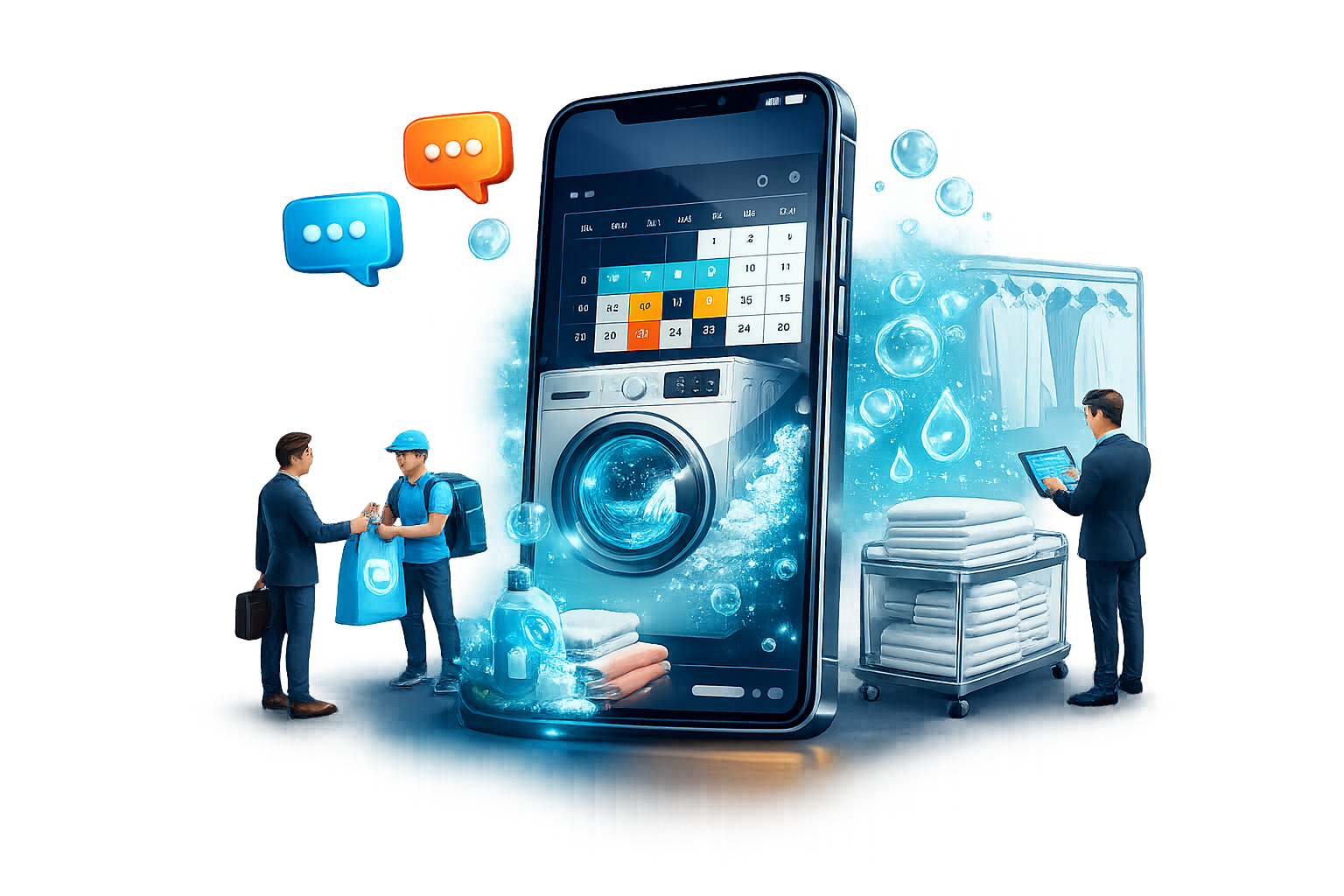
A dedicated app makes sense for businesses with real operational complexity or a genuine ownership need, not for every laundromat looking to modernize booking.
- Single laundromats with growing delivery demand where informal pickup/delivery scheduling has started producing real errors and customer complaints.
- On-demand laundry delivery startups building a business around convenience-driven pickup and delivery from the start, with dispatch needs comparable to what we solve for food delivery
- Multi-vendor laundry marketplaces connecting customers with multiple independent laundry or dry-cleaning providers, needing vendor onboarding and commission logic a single-vendor app doesn’t require.
- Multi-location laundry chains needing centralized order visibility and reporting across locations.
- Subscription-based laundry services needing recurring billing, usage tracking, and tiered plan management beyond one-off order booking.
Solution Readiness Assessment: Is Your Laundry Business Ready to Build?
Delivery volume is high enough that informal routing has real costs.
Missed pickups, inefficient routes, or delivery errors are frequent enough to affect customer satisfaction or driver time meaningfully.
A clear business-model reason for custom software exists.
You’re building a marketplace, subscription model, or workflow that a white-label solution genuinely doesn’t support.
White-label platform fees are becoming a real constraint.
Your order volume or growth trajectory makes ongoing subscription or per-order fees comparable to or higher than custom software’s maintenance cost.
You have integration requirements a generic platform doesn’t support.
POS integration for self-service machines, specific payment processors, or route-optimization needs aren’t well supported by existing tools.
Staff are ready to adopt new digital order management.
Your team can realistically transition from phone/paper-based order tracking to a digital system without major disruption.
Types of Laundry Apps We Develop
On-Demand Laundry Apps
End-to-end laundry delivery apps for customers to schedule pickup/drop-off and track orders
Laundry Marketplace Apps
Aggregator platform connecting users with multiple laundry vendors in their area
Laundry Service Provider Apps
For laundromats and dry cleaners to digitize their customer booking, billing, and delivery workflows
Self-Service Laundromat Apps
Allows customers to book washers/dryers, monitor machine availability, and pay digitally
Subscription-Based Laundry Apps
Recurring pickup plans for busy professionals, families, or student accommodations
Laundry Management Systems (LMS)
Internal systems for managing logistics, inventory, staff, machines, and performance
Garment Liability, Loss and Damage Handling
Garment liability means documenting item condition at pickup and delivery clearly enough to reduce disputes when a customer claims an item was lost or damaged, and this is a genuine operational risk a booking app can help manage even though it can’t eliminate it. Structured photo or condition-note capture at both pickup and delivery, tied to a specific order in the app, gives a business a clearer record than a paper ticket typically provides, which matters both for resolving individual disputes and for identifying patterns if a specific process step is causing repeat damage. Liability and insurance coverage for lost or damaged garments varies significantly by business type and jurisdiction a self-service laundromat generally carries different liability exposure than a full-service dry cleaner handling and processing garments directly and this is genuinely not an area where generic platform guidance is a substitute for confirming your specific coverage and local requirements. Building condition documentation into the platform doesn’t resolve the underlying legal and insurance question, but it does give a business better evidence when that question comes up.
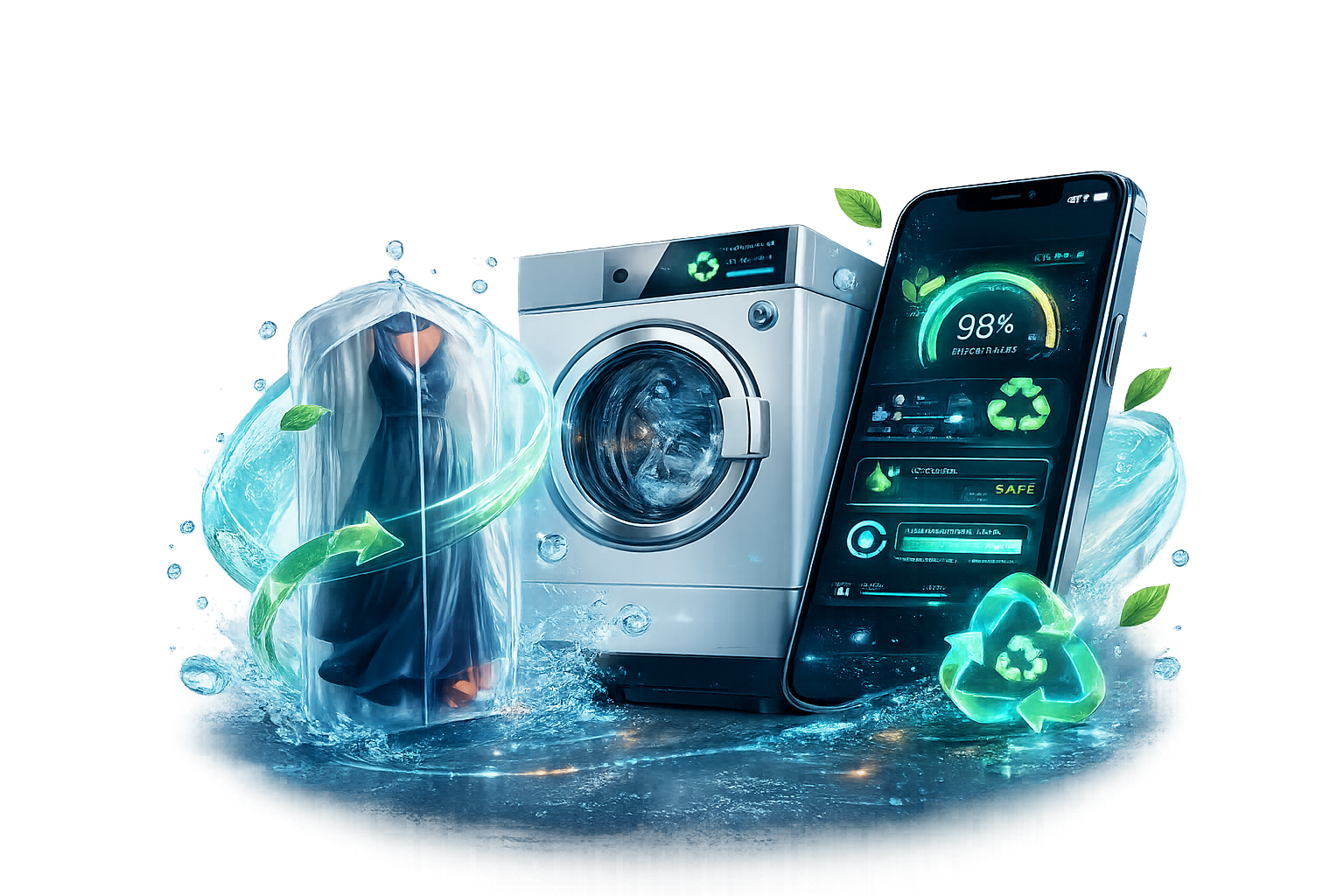

Environmental and Solvent-Handling Considerations for Dry Cleaning
Dry-cleaning solvent use and disposal is regulated in many jurisdictions, since the chemicals commonly used in the dry-cleaning process require specific handling, storage, and disposal procedures to limit environmental and health impact. Requirements vary significantly by jurisdiction and by which solvent a specific business uses, so this is genuinely not an area where generic platform guidance can responsibly state universal requirements. At a platform level, this matters less for the customer-facing booking flow and more for internal operations a management system app can track which processing method or solvent was used for a given order if that’s relevant to a business’s compliance recordkeeping, without the platform itself making legal or environmental determinations. Businesses running both self-service laundromat and dry-cleaning operations should treat solvent-handling compliance as a distinct consideration from garment liability, since the two involve different regulatory bodies and risk categories entirely.
Key Features of Our Laundry Apps
- Quick Signup/Login
- Pickup & Delivery Scheduling
- Service Selection (wash & fold, dry cleaning, ironing, etc.)
- Price Estimator & Order Summary
- Order Tracking & Notifications
- In-App Chat & Support
- Multiple Payment Options
- Ratings & Reviews
- Subscription Plan Management
- Order History & Reorder Feature
- Order Notifications & Acceptance
- Pickup & Delivery Status Updates
- Route Optimization for Delivery Staff
- Customer Management Dashboard
- Service Customization (Pricing, Time Slots, etc.)
- Staff Assignment & Task Scheduling
- Income Reports & Analytics
- Manage Users & Vendors
- Dashboard with Key Metrics
- Pricing & Service Configuration
- Order & Delivery Management
- Coupon Code & Loyalty Program Setup
- Payout Management for Vendors
- Review & Dispute Management
Advanced Features That Set Us Apart
AI-Based Recommendation
Real-Time GPS Tracking
Order Rescheduling & Cancellation
Push Notifications & Email Alerts
Tax Invoicing & Auto-Billing
Advanced Analytics Dashboard
Inventory & Tag Management
Multi-Language & Multi-Currency Support
Live Chat & Help support

Contact Us
Ready to scope your laundry or dry-cleaning business ?
Book a build-vs-buy consultation and we’ll walk through custom, white-label, and hybrid options against your business model and volume honestly.
Our Laundry App Development Process
A laundry app build runs through six phases, sequenced around the business-model and order-workflow decisions that constrain everything else.
Requirements and business-model planning.
We define whether the business is single-vendor, marketplace, subscription-based, or a hybrid before any technical design begins, since this decision shapes the entire architecture.
Order-workflow architecture design.
Real-time order-status tracking across wash, dry, fold, and delivery stages gets architected explicitly, including how order modifications after pickup are handled.

Payment and route-optimization integration.
Payment processing and pickup/delivery route optimization get scoped and built against your actual operational needs, including any existing POS system for self-service machines.
Core platform build
Customer app, vendor/staff app, and admin panel along with a web-based admin dashboard where useful for multi-location reporting are developed against the architecture established earlier.

Testing & Phased rollout
The platform gets tested against real order edge cases modifications after pickup, delivery delays, marketplace vendor cancellations not just a standard functional pass Launch with one location or a smaller vendor group first to validate order-tracking accuracy and staff adoption, with ongoing maintenance and support scoped from launch rather than treated as an afterthought.
Tech Stack We Use
- Flutter
- React Native
- Swift
- Kotlin
- Node
- Laravel (PHP)
- Python / Django
- Java / Spring
- MongoDB
- PostgreSQL
- Firebase
- Stripe, PayPal, Razorpay, Braintree
- Bank APIs
- AWS / Google Cloud / Azure
- Cloud-based backups
AI-powered route optimization can improve pickup and delivery efficiency as order volume grows, and AI consulting is a reasonable first step if you’re unsure whether your current volume justifies investing in it yet.
Security & Compliance
End-to-End Data Encryption
Secure Authentication & OTP
Payment Security (PCI DSS )
GDPR-Compliant User Data Handling
Role-Based Access & Permissions
Regular Security Audits & Updates
Ready to Digitize Your Laundry Business?
Partner with SoftCurators, a leading Laundry App Development Company, to build a powerful on-demand laundry solution that boosts revenue, enhances customer experience, and automates your operations.
Monetization Models for Laundry Apps
Per Order Pricing with Service Add-ons
Subscription Plans (Weekly/Monthly Laundry)
Commission on Marketplace Orders
Express Delivery Charges
In-App Product Sales
Rewards & Loyalty Points
Ads or Featured Listings
Data Migration and Customer History Onboarding
Migrating existing customer and order history from a prior system means transferring contact details, order preferences, and where relevant garment or processing notes, and this rarely maps cleanly from a spreadsheet or legacy system without real data cleanup. Inconsistent or incomplete customer records carry directly into the new platform if not audited first, which affects both personalization and staff ability to serve returning customers well from day one. Change management for staff adopting a new digital order-management system matters as much as the technical migration teams used to paper tickets or a basic scheduling tool need training and a transition period where old and new systems may run in parallel briefly, rather than a single hard cutover that risks lost orders during the switch.
Cost and Timeline Planning
Cost and timeline depend heavily on business model and path a single-vendor app, a marketplace platform, and a subscription-based service represent meaningfully different scopes. An MVP covering core booking, order tracking, and payment typically takes around 6 to 10 weeks, while a full-featured platform with marketplace functionality, subscription billing, and multi-location reporting typically takes 12 to 16-plus weeks depending on complexity. A white-label deployment is the fastest path by far, since core booking and tracking functionality already exists and the work centers on configuration and branding rather than development.
Questions to Ask Before Starting Your Project
Why Choose SoftCurators as your App Development Partner ?
We blend innovation with precision to build digital products that truly stand out. As a globally trusted app development partner, we craft high-performing, future-ready solutions that keep your business agile, scalable, and ahead of evolving market demands.
Common Mistakes We See in Laundry App Projects
|
Mistake
|
Why It Hurts
|
What To Do Instead
|
|---|---|---|
|
Underestimating order-status tracking complexity across processing stages
|
Customers lose trust quickly when status updates are vague or inaccurate across wash/dry/fold/delivery stages
|
Architect real-time, stage-specific order tracking explicitly before development starts
|
|
Skipping garment-condition documentation at pickup
|
Disputes over lost or damaged items are harder to resolve fairly without a clear condition record
|
Build structured photo/condition capture into the pickup and delivery workflow
|
|
Ignoring route-optimization needs as delivery volume grows
|
Informal routing that worked at low volume becomes a real efficiency and cost problem as delivery volume increases
|
Plan for route optimization proactively rather than retrofitting it once volume becomes a problem
|
|
Choosing custom development without a clear cost case
|
Custom software costs more to build and maintain than white-label, and without volume genuinely justifying it, that cost is hard to recover
|
Confirm white-label platform costs at your actual scale before committing to custom development
|
|
Hardcoding marketplace commission or subscription pricing logic
|
Commission rates and subscription tiers reliably change after launch, and hardcoded logic turns every adjustment into a development request
|
Build commission and subscription logic as configurable data from the start
|
|
Migrating customer data without a cleanup pass
|
Inconsistent records carry directly into the new platform, affecting personalization and service quality from day one
|
Audit and clean customer and order data before migration
|
Lets Connect
Let’s Build Your On-Demand Laundry App
Frequently Asked Questions
A white-label solution is generally better if you’re a single laundromat or small operation where platform fees stay manageable and existing features cover your needs. Custom development becomes worth it once ongoing white-label fees at your volume approach what custom software costs to build and maintain, or once you need marketplace or subscription functionality a white-label provider doesn’t support.
Cost depends primarily on whether you’re building a single-vendor app, a marketplace platform, or a subscription-based service, since each represents meaningfully different technical complexity.
An MVP covering core booking, order tracking, and payment typically takes around 6 to 10 weeks, while a full-featured platform with marketplace functionality and subscription billing typically takes 12 to 16-plus weeks depending on complexity.
Garment liability and insurance requirements vary significantly by business type and jurisdiction, with different exposure for a self-service laundromat versus a full-service dry cleaner handling garments directly.
Yes, dry-cleaning solvent use and disposal is regulated in many jurisdictions, though exact requirements vary significantly by location and which solvent a business uses.
An MVP needs order booking, real-time status tracking, basic payment processing, and core route assignment for pickup and delivery. Marketplace vendor management, subscription billing, and advanced route optimization are reasonable to defer to later phases.
A single-vendor app represents one laundromat or dry cleaner building a direct, branded customer relationship, while a marketplace app connects customers with multiple independent providers, requiring vendor onboarding, commission logic, and multi-party order coordination. Marketplace apps are meaningfully more complex to build and operate, since they add rights and payout management across contributors that a single-vendor app doesn’t need.
Yes, though it’s rarely a clean import — customer and order records from a spreadsheet or prior system typically need a data-quality audit before migration, since inconsistent records carry directly into the new platform. Planning this as a dedicated step avoids carrying data problems into your new system.
Usually not — for a single laundromat with low delivery volume, a simpler off-the-shelf or white-label tool is almost always more efficient than custom software, since platform fees stay low relative to what custom development costs. Custom development becomes worth considering once delivery volume, a marketplace model, or subscription plans genuinely justify the added cost.
We integrate with established payment processors like Stripe, PayPal, Razorpay, and Braintree, chosen based on your region and any existing business relationships with a specific processor. Integration is scoped to your actual payment needs rather than assumed to work identically across every region.
Yes, POS integration for self-service laundromat machines is scoped as a specific part of the project based on which system you’re already running, since compatibility and integration complexity vary meaningfully by provider. We recommend identifying these integration requirements during initial planning rather than after development has started.
Yes, ongoing support and maintenance covers monitoring booking and payment system reliability, applying security and platform updates, and adjusting workflow logic as your business grows or adds locations. This is scoped as a distinct, ongoing engagement rather than a one-time deliverable.
Our Latest Blogs
Somewhere along the way, adding a chatbot got treated like adding a newsletter signup form , a small checkbox item...
If you use Salesforce, or you’re evaluating whether to, you’ve probably noticed the product names keep changing. Sales Cloud is...
“Why ‘How Much Does AI Cost’ Is the Wrong First Question ?” Founders ask this question expecting a single number,...
Ask ten AI vendors which tool your business needs and you’ll get ten different answers, each conveniently pointing at their...