
Engineering Compliant Pay-In-Four Lending Software
BNPL App Development Company
A checkout that offers “four payments, zero interest” looks simple to a shopper. Underneath it, a Buy Now Pay Later (BNPL) platform is running a credit decision in under two seconds, splitting a merchant settlement from a consumer repayment schedule, screening for first-party fraud, and now in a growing number of states checking whether it even holds the license to originate that loan. Most software vendors pitch BNPL as a checkout feature. It isn’t. It is a lending product wrapped in a shopping experience, a subset of what falls under what is fintech more broadly and the two halves have to be engineered separately before they’re stitched together.
SoftCurators builds that lending layer first, then makes it feel effortless at the point of sale.






Fintech
Why BNPL Development Looks Different
The ground under this product category shifted hard between 2025 and 2026, and it changes what “building a BNPL app” actually means. In May 2025, the CFPB rescinded its 2024 interpretive rule that had treated BNPL digital accounts as credit cards under Regulation Z, calling the earlier approach an ill-fitting overlay on a closed-end product. That federal retreat did not leave a vacuum for long. New York’s BNPL Act (Banking Law Article 14-B) now requires a state license to originate pay-in-four loans, caps interest at 16%, and forces disclosure of whether payments are reported to credit bureaus. Illinois followed with SB 3561, the Buy-Now-Pay-Later Loan Consumer Protection Act, which mandates ability-to-repay underwriting and treats unlicensed loans as void. California, Massachusetts, and Connecticut are drafting comparable frameworks, and the UK’s FCA is bringing BNPL fully under its consumer credit regime in 2026. For a development team, this means the underwriting engine, the disclosure layer, and the dispute workflow can no longer be an afterthought bolted onto a checkout widget they have to be modular enough to satisfy a different rule set per state or region without a rebuild. A platform architected only for the old “no regulation, no friction” era of BNPL will need re-engineering within eighteen months. One built with a compliance abstraction layer from day one won’t.
- Increasing Sales & Average Order Value: Customers can purchase more with the flexible payments.
- Enhancing Customer Experience : Instant approval and transparent instalment plans develops the customer trust.
- Reducing Cart Abandonment: Offering BNPL at checkout reduces resistance and boosts conversions.
- Attracting Younger Consumers: Younger generations these days prefer flexible credit options over old-style loans.
- Providing Competitive Edge: Merchants can separate themselves with innovative payment options.
Types of BNPL Apps We Develop



Core Features of Our BNPL Apps
- Easy Registration & KYC Verification
- Instant Credit Approval & Limit Display
- Flexible Installment Plans & EMI Calculators
- Transparent Interest & Fee Breakdown
- Order History & Payment Schedule
- Notifications & Payment Reminders
- Secure Payment Gateway Integration
- Real-time Transaction Dashboard
- Order & Payment Management
- Customer Credit Risk Assessment
- Integration with POS & E-commerce Platforms
- Settlement & Reconciliation Tools
- Promotional Offers & Discounts
- User & Merchant Management
- Credit Risk & Fraud Analytics
- Compliance & Regulatory Reporting
- Transaction Monitoring & Dispute Resolution
- Analytics & Business Insights
Advanced Features Of Our BNPL Apps
Real-Time KYC & Instant Loan Decisioning
Multi-Merchant & Omni-Channel Integration
AI-Powered Credit Scoring & Fraud Detection
Secure Cloud Storage & End-to-End Encryption
Multi-Currency & Multi-Language Support
Dynamic Payment Scheduling & Early Repayment Options
Regulatory Compliance & Security
We prioritize compliance and security to build trust and ensure smooth operations
Core Capabilities Every BNPL Platform Needs |
A pay-in-four product is really five interlocking systems. Here’s what SoftCurators builds into the core release, not as a “phase two”
Instant underwriting engine
that scores a transaction using bureau data, alternative data (bank transaction history via Plaid or MX), and internal repayment history.
Ability-to-repay (ATR)
logic that documents the factors considered per applicant now a hard requirement under Illinois’s SB 3561 and expected in New York’s final DFS rule.
Dynamic installment scheduler
supporting pay-in-four, pay-in-six, and longer-term monthly plans, each with its own fee and interest configuration.
Merchant settlement engine
that pays the merchant the full order value (minus discount rate) upfront while the platform carries the consumer receivable, integrating cleanly with the storefront through our e-commerce development practice.
Checkout SDKs and plugins
for Shopify, WooCommerce, Magento, and custom React/Vue storefronts, plus a hosted checkout for merchants without engineering resources.
Dispute and billing-error workflow
modeled on Regulation Z’s Section 1026.13 categories — item not received, wrong amount charged, quality disputes — even in states where it isn’t yet mandatory, because merchants ask for it
Credit bureau reporting toggle
since some products report to TransUnion or Equifax and others don’t, and the difference must be disclosed clearly per loan.
Fraud and first-party-default detection
that flags synthetic identities and repeat non-payers before they reach a fourth or fifth account.
Consumer account dashboard
showing upcoming installments, autopay status, refund credits similar to what you’d find in e-wallet app development, and a self-service path to request forbearance.
Our Build Process for BNPL Platforms
Before a line of code is written, we map which states or countries the platform will operate in and what each requires a license, an interest cap, a specific dispute timeline. This decides the architecture, not the UI. This mapping exercise looks similar whether the product is a BNPL checkout or a standalone loan and lending app development build.
We design the decision engine — which bureau or alternative-data providers to call, how to weight signals, what triggers a manual review versus an automatic decline — and document the ATR methodology so it’s defensible to a regulator, not just accurate. This is where AI in credit scoring does the most work, blending bureau and alternative-data signals into a single decision.
The double-entry ledger tracking merchant payables, consumer receivables, fee accruals, and write-offs gets built before the checkout widget does. Get this wrong and every other feature inherits the bug.
SDKs, hosted checkout pages, and the consumer account portal are built against the ledger and underwriting APIs, with disclosure language reviewed against each target jurisdiction’s required wording.
We run the billing-error and dispute process against real scenarios — a returned item, a duplicate charge, a merchant that never shipped — before launch, not after the first complaint arrives.
Independent review of the underwriting logic for disparate-impact risk, a PCI DSS and SOC 2 readiness check, and a walkthrough of state-specific disclosure copy with counsel — the same rigor a banking app development engagement goes through before a bank partner signs off.
Launch in one jurisdiction, watch default rates and dispute volume for 60–90 days, then expand because a lending product’s real failure modes only show up after real repayment cycles run.
Which BNPL Model Actually Fits Your Business
Not every merchant or fintech needs the same product. Picking the wrong model early is one of the most expensive mistakes we see, because the ledger, licensing, and disclosure requirements diverge sharply between them.
|
Model
|
Typical Term
|
Interest/Fees
|
Regulatory Exposure
|
Best Fit
|
|---|---|---|---|---|
|
Pay-in-four
|
6 weeks
|
Usually none, late fees only
|
Lightest but now licensed in NY, IL
|
Everyday retail, apparel, electronics under $500
|
|
Pay-in-six/eight
|
8–12 weeks
|
Moderate
|
Slightly higher order values, electronics, furniture accessories
|
|
|
Monthly installment (3–24 months)
|
Months to years
|
Interest-bearing
|
Heaviest closer to traditional installment lending law
|
|
|
Revolving BNPL line of credit
|
Ongoing
|
Interest-bearing, revolving
|
Falls under existing open-end credit rules
|
A retailer selling $60 sneakers has no business standing up a revolving credit line the underwriting cost per transaction would exceed the margin, which is roughly the profile an app like Afterpay was originally built around. A furniture retailer selling $2,000 sectionals, on the other hand, usually needs the monthly installment model because pay-in-four doesn’t spread the payment far enough to keep conversion high. Get your target average order value clear before architecture decisions start, not after.
Build, Partner, or License: A Decision Framework
Merchants and fintechs asking us for a BNPL platform usually haven’t yet decided whether they should build the whole lending stack, partner with an existing BNPL provider through an API, or license an underwriting engine while a bank partner holds the receivables. Here’s the honest breakdown:
- Build the full stack if you want to own the underwriting data long-term, keep 100% of the merchant discount fee, and are prepared to either hold receivables on your own balance sheet or arrange funding through a partner bank. This is the highest-control, highest-capital path, and it’s often worth validating first through MVP development before committing to the full build.
- Partner via API with an existing provider (Klarna, Affirm, Sezzle) if you’re a smaller merchant testing whether BNPL lifts conversion before committing engineering budget. Fastest to launch, but you pay a per-transaction fee indefinitely and never own the underwriting data.
- License an underwriting engine, bank holds the loans if you’re a fintech wanting to offer BNPL to your own merchant network without becoming a licensed lender yourself. This shifts capital risk to the bank partner but adds a layer of negotiation and revenue share.
If your model is closer to peer-to-peer financing than merchant checkout financing, the underwriting and funding differences are significant enough that it’s worth reading our separate guides on how to build a P2P lending app and how to create a P2P lending app before locking in an architecture. And if you’re evaluating whether to operate as a licensed lender at all, our breakdown of how to start a money lending business covers the capital and licensing groundwork that applies whether or not BNPL is the specific product.
We’ve watched founders spend six months building the full stack only to realize they needed a bank partnership anyway because they underestimated capital requirements for holding receivables. Decide the capital structure before the technical architecture, not after.
Tech Stack for a BNPL Platform
- Flutter
- React Native
- Swift
- Kotlin
- Node
- Laravel (PHP)
- Python / Django
- Java / Spring
- MongoDB
- PostgreSQL
- Firebase
- Stripe, PayPal, Razorpay, Braintree
- Bank APIs
- OAuth 2.0
- SSL/TLS Encryption
- AES-256 Encryption
- Biometric Authentication
- Tokenization
- AWS / Google Cloud / Azure
- Cloud-based backups
- Onfido / Jumio / IDology
- AML Screening
Contact Us
Ready to Build a BNPL Platform That Survives Its First Regulatory Cycle?
Talk to SoftCurators about mapping your target states, architecting your underwriting engine, and shipping a pay-in-four platform built for the compliance environment you’ll actually be operating in not the one from three years ago. Browse our portfolio for related fintech builds, or contact SoftCurators directly to start scoping your platform.
Budget Planning Checklist Beyond Engineering |
|
Cost Center
|
Why Founders Miss It
|
Rough Timing
|
|---|---|---|
|
State licensing and legal counsel
|
Varies by state and is still changing as New York and Illinois finalize rules
|
|
|
Bureau / alternative-data provider fees
|
Usage-based pricing per underwriting pull, easy to underestimate at scale
|
|
|
Early-stage default reserve
|
Risk model needs real repayment cycles to calibrate; early losses run higher than steady-state
|
|
|
Dispute resolution staffing or tooling
|
||
|
Disclosure and compliance-copy maintenance
|
State rules are still being finalized in 2026; copy needs updating as they change
|
Ongoing
|
Standard app analytics DAU, session length tell you almost nothing useful here. The metrics that predict whether the business survives are: first-payment default rate (a leading indicator of underwriting drift), dispute-to-transaction ratio by merchant category, merchant churn tied to settlement speed, and approval rate segmented by data source (bureau-only versus bureau-plus-alternative-data), which tells you whether your alternative-data integration is actually expanding access or just adding cost without improving accuracy.
When evaluating a development partner for a lending product, ask them to walk through how they’d handle a specific scenario: a consumer in a newly regulated state disputes a charge after the merchant already received settlement. A team that can answer in ledger and workflow terms — not just “we’d build a support ticket system” — understands that BNPL is a financial system with UI, not an app with a payment feature. Also ask what happens to their disclosure engine when a state’s rule changes mid-development; vague answers here predict expensive rework later.
Feel the difference
Industries and Use Cases Where BNPL Drives Results
Retail & Fashion
Everyday purchases under $500 are the classic pay-in-four use case apparel, footwear, and accessories see the biggest conversion lift from splitting cost into four interest-free installments.
Travel & Hospitality
Booking-to-travel-date gaps make BNPL a natural fit for flights, packages, and experiences, letting customers lock in a trip today and spread the cost before they fly.
Automotive Services & Parts
Repairs and accessory purchases suit shorter installment terms, helping shops close higher-ticket repair estimates without customers walking away over sticker shock.
Growth Strategy and Post-Launch Optimization
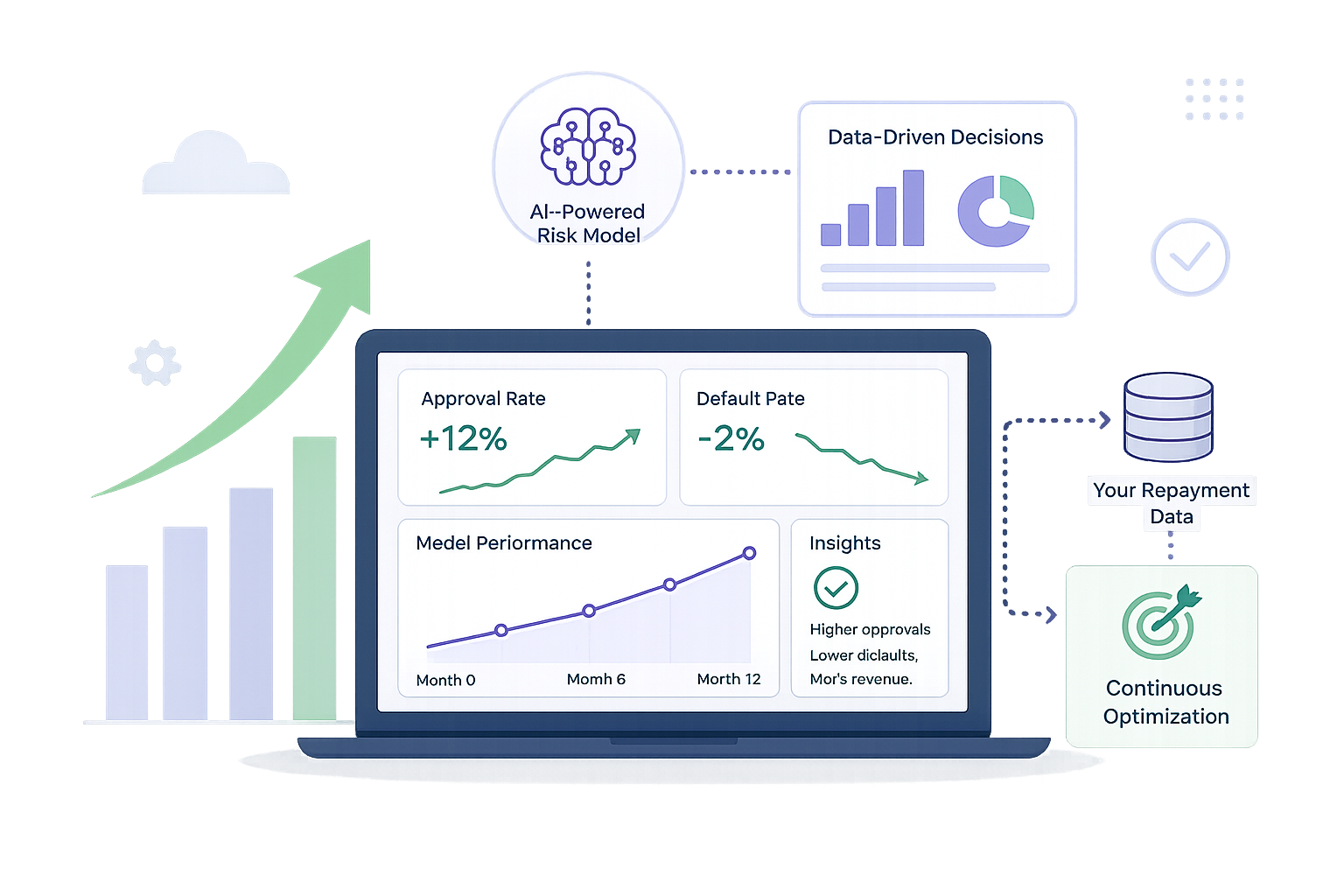
Once the core platform is stable, growth in BNPL comes less from adding checkout surfaces and more from improving approval rates without increasing default rates — every additional percentage point of approvals that doesn’t raise losses is pure revenue. This is where retraining the risk model on your own repayment data (rather than relying solely on bureau scores) starts to outperform competitors who never move past off-the-shelf underwriting, a shift that mirrors the broader trend toward AI in loan lending. Teams without in-house data science bandwidth often bring in AI consulting services at this stage rather than trying to build the modeling function from scratch. Expect the model’s biggest accuracy gains between month six and month twelve, once you have enough completed repayment cycles to see which early signals actually predicted default.

International and Multi-Region Considerations
If you’re expanding beyond the US, the UK’s FCA is bringing BNPL fully under its consumer credit regime in 2026, requiring proportionate affordability checks and upfront disclosure of repayment terms before each loan — closer in spirit to what New York and Illinois are now requiring in the US. The EU has its own Consumer Credit Directive revisions moving through member states on a similar timeline. Practically, this means a platform expanding internationally needs the same jurisdiction-configurable disclosure and underwriting layer we recommend for multi-state US operation just with a wider set of rule variations to support. Building region-agnostic from the start costs more upfront and saves a rebuild later.
Why Choose SoftCurators as your BNPL App Development Partner ?
Common Mistakes We See in BNPL Builds
|
Mistake
|
Why It Hurts
|
What To Do Instead
|
|---|---|---|
|
Treating BNPL as a checkout plugin, not a lending product
|
Underwriting and ledger logic get bolted on late, creating reconciliation bugs
|
|
|
Launching in all 50 states simultaneously
|
Licensing, interest caps, and disclosure rules already differ by state and are diverging further
|
|
|
No manual review path for edge-case declines
|
Automated-only decisions increase disparate-impact risk and hurt approval rates for thin-file consumers
|
Build a human-review queue for borderline scores
|
|
Ignoring merchant-side dispute handling
|
Merchants abandon platforms that don’t resolve item-not-received claims quickly
|
Model dispute workflow on Reg Z billing-error categories regardless of current enforcement status
|
|
Hardcoding disclosure text
|
Every state law change requires a full redeploy
|
Externalize disclosure copy into a jurisdiction-configurable template engine
|
Risk Mitigation, QA, and Launch Strategy
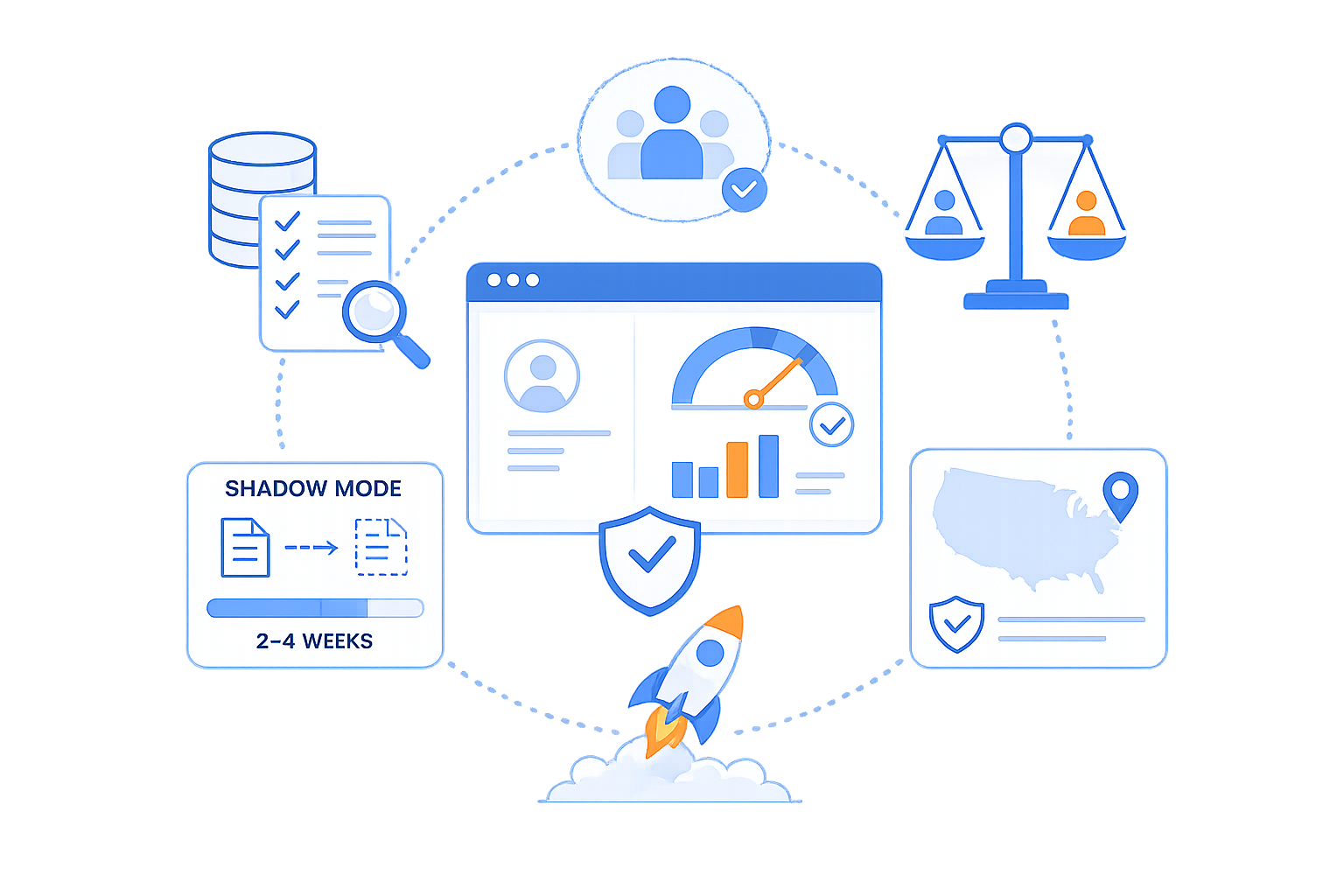
Test the underwriting engine against historical, anonymized transaction data before any real consumer sees it, specifically checking for approval-rate disparities across protected characteristics that regulators and plaintiffs’ attorneys now scrutinize closely. Run a shadow-mode launch, real transactions, real underwriting decisions computed but not acted on for two to four weeks before flipping the engine live, so you can compare model output against what a manual underwriter would have decided.For the initial market, choose a state with clearer rules already in force (New York, once its DFS rule finalizes, or a state without BNPL-specific legislation yet) rather than one mid-rulemaking, so the compliance target isn’t moving under you during your first repayment cycles.
Deployment, Maintenance, and Performance
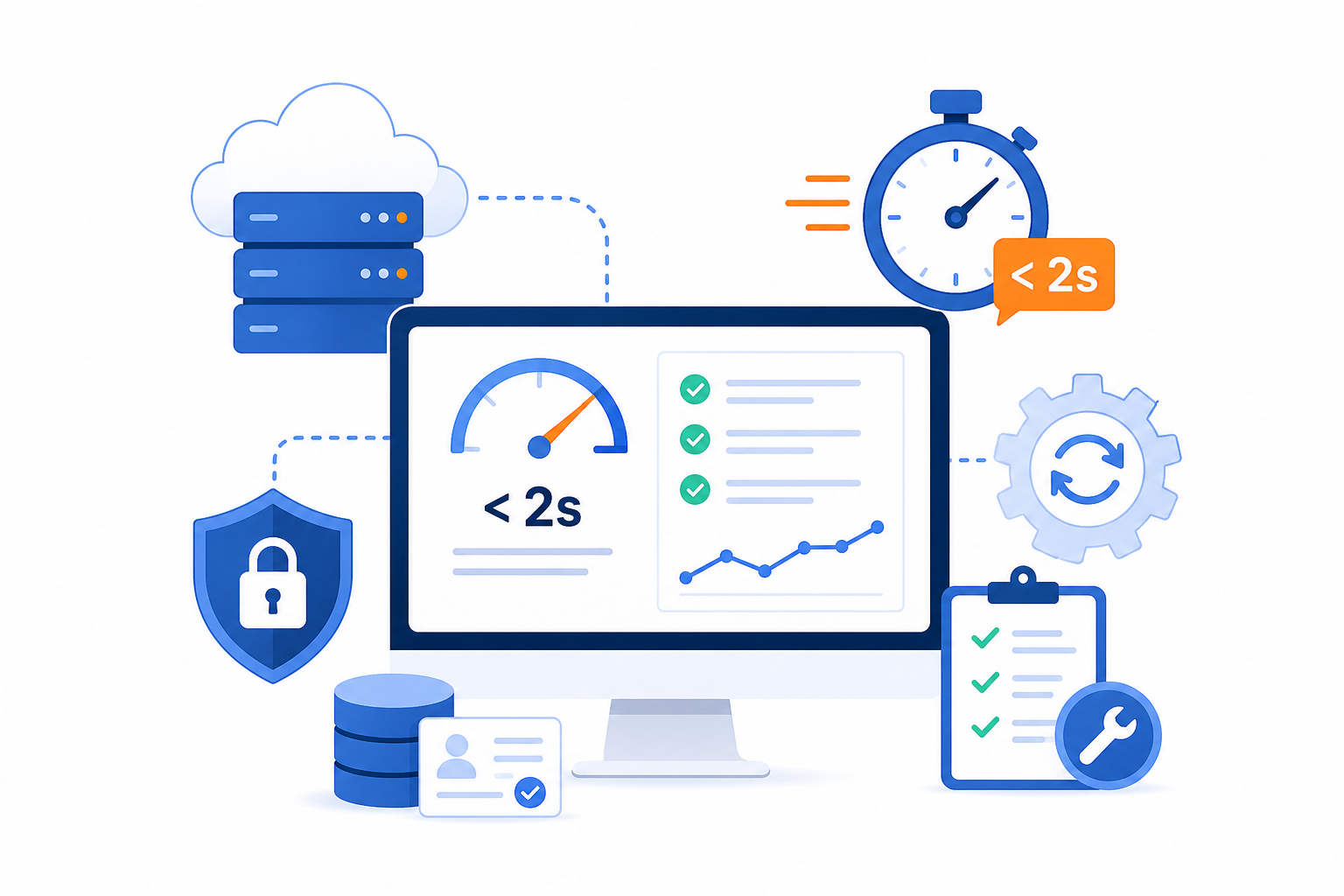
Underwriting APIs need sub-two-second response times at checkout or merchants see abandoned carts this is a harder performance requirement than most consumer apps face, because a shopper waiting on a spinning “checking eligibility” screen behaves differently than one waiting on a page to load. Cache non-volatile risk signals, pre-fetch bureau data where consent allows, and keep the decision engine’s hot path free of synchronous third-party calls that aren’t strictly necessary for that specific transaction the kind of hardening we detail in our broader notes on mobile app security and compliance. Post-launch, the maintenance burden is dominated by two things: keeping disclosure language current as states finalize rules (New York’s DFS rule alone is expected to shift multiple times during its comment period), and retraining the risk model as repayment data accumulates a model built on thin pre-launch data will drift within two to three quarters of real-world use. This is where an ongoing maintenance and support services arrangement earns its keep rather than a one-time handoff.
Frequently Asked Questions
It depends on where your consumers are. New York’s Banking Law Article 14-B and Illinois’s SB 3561 both require licensing for BNPL lenders as of 2026, with Illinois giving providers until January 1, 2028 to comply. Other states currently have no BNPL-specific licensing requirement, though several are drafting one, so your platform needs a jurisdiction-configuration layer rather than a single hardcoded ruleset.
The CFPB’s 2024 attempt to regulate BNPL like a credit card under Regulation Z was rescinded in 2025 because BNPL is structured as closed-end installment credit, not revolving credit. States are now writing bespoke rules instead — New York’s, for example, caps interest at 16% and mandates specific data-privacy protections that don’t map directly onto existing credit card law.
Pay-in-four is typically interest-free and settled within six weeks, which is why it avoided being treated as a “credit card” federally. Longer installment plans (three, six, or twelve months) usually carry interest and fall under different, often stricter, state lending statutes — your platform needs separate compliance logic for each product type.
Yes, if the underwriting logic, disclosure copy, and fee caps are built as configurable modules rather than hardcoded values. This is the architectural decision that determines whether expanding to a new state takes two weeks or a rebuild.
Some products do, some don’t, and that choice has to be disclosed clearly New York’s proposed rule specifically requires lenders to state whether a loan will be reported. Reporting affects both consumer trust and your own default-tracking data quality.
Your platform needs a dispute workflow modeled on Regulation Z’s billing-error categories even where not strictly mandated — that can pause collections, investigate with the merchant, and resolve within a defined window. Merchants increasingly expect this before they’ll integrate.
Primarily through merchant discount fees (a percentage the merchant pays per transaction, similar to a card processing fee) and, secondarily, through late fees on interest-free products or interest on longer installment plans — we break this down transaction by transaction in how money lending apps make money.
Underestimating the ledger complexity. A lending product needs a double-entry, auditable ledger tracking merchant payables, consumer receivables, and fee accruals separately — bolting this onto a generic payments database after the fact causes reconciliation errors that are painful to unwind.
Both, typically. Bureau data alone excludes thin-file consumers who may be perfectly creditworthy; alternative data (bank transaction history, for instance) helps assess repayment capacity for consumers without deep credit histories, but adds cost and integration complexity.
A licensed-market-ready MVP - underwriting engine, checkout SDK, ledger, and one jurisdiction’s disclosure set — typically takes longer than a standard fintech MVP because the compliance validation step can’t be skipped or shortened. Expect the underwriting and ledger design phase alone to take as long as the entire consumer-facing build; for a fuller line-item breakdown, see our guide on the cost to develop a BNPL app (the timeline and cost drivers track closely with what we see on a cost to develop a loan lending app engagement).
Yes, most platforms are built with checkout SDKs or plugins for major e-commerce platforms alongside a hosted checkout option for merchants without in-house engineering resources.
A merchant feature is embedded checkout financing where you carry the credit risk directly. A standalone platform can license the underwriting engine to other merchants while a bank partner holds the loans this changes your capital requirements and licensing obligations significantly.
Through device fingerprinting, identity verification against multiple data sources, and internal repayment-history checks that flag applicants who’ve defaulted on a previous loan under a different but related identity — first-party default, not stolen-identity fraud, is the dominant loss pattern in pay-in-four books.
Only if you plan to operate in the UK. The FCA is bringing BNPL fully under its consumer credit regime in 2026, requiring affordability checks and clearer disclosures — a useful preview of where US federal or multi-state regulation may eventually land.
Two recurring workstreams dominate: updating disclosure language as state rules finalize or change, and retraining the underwriting model as real repayment data accumulates, since a model calibrated on thin pre-launch data will drift within a few quarters.
For a small merchant testing demand, a third-party BNPL provider’s plugin (Klarna, Affirm, etc.) is often the faster starting point. Custom development makes sense once you want to own the underwriting data, avoid per-transaction fees to a third-party lender, or serve a niche vertical those providers don’t prioritize.
The platform, not the merchant, typically absorbs the credit loss the merchant is paid in full upfront (minus the discount fee), and the receivable risk sits with whoever holds the loan, which is why the ledger has to cleanly separate merchant payables from consumer receivables from day one.
Lets Connect
Launch Your BNPL App with Confidence
Our Latest Blogs

Most founders come into an MVP conversation asking how to build a smaller version of their product for less money....
An AI agent and a chatbot get discussed as if they’re the same thing, and on AWS specifically, that confusion...

Somewhere along the way, adding a chatbot got treated like adding a newsletter signup form , a small checkbox item...

If you use Salesforce, or you’re evaluating whether to, you’ve probably noticed the product names keep changing. Sales Cloud is...