Education

Empower Learning Through
Mobile Innovation

Education app development is the process of building software specifically for teaching, learning, and academic administration  eLearning platforms, learning management systems, exam prep tools, virtual classrooms, and campus apps each with genuinely different technical and compliance requirements from a typical consumer app. What makes education apps hard to build well isn’t the interface, it’s everything underneath it: keeping students engaged over months rather than a single session, meeting accessibility requirements for a genuinely diverse user base, protecting the data of users who are often minors, and integrating cleanly with the learning management systems and student information systems institutions already run on. If you’re comparing whether your project needs a mobile app, a web platform, or both, our mobile app development hub covers that decision at a business level. SoftCurators scopes student data handling and institutional integration requirements before any screen design starts, which is the step that gets skipped on projects that later fail a district’s procurement review.

80+

Happy Clients

50+

Team Members

10+

Years Experienced Team
100+

Projects Completed
Types of Educational Apps We Develop

Education

eLearning Apps

Offers flexible lessons with videos, quiz and progress tracking to help learners learn topics at their own convenience.
Education AI

AI-Powered Educational Apps

Use artificial intelligence for personalized learning, smart recommendations, adaptive tests, chatbot tutors and automated performance feedback.
Education

Exam Preparation & Test Series Apps

Offers mock tests, previous papers, time-based quizzes and analytics for competitive exams like NEET, UPSC, IELTS and SAT.

Education

Live Tutoring & Virtual Classroom Apps

Enables real time teaching through video calls, screen sharing, live chat and interactive whiteboards for engaging learning experiences.

Education Kids

Kids’ Educational Games & Interactive Learning Apps

Combine games, animations, and challenges to make learning engaging, fun, and effective for children from preschool to Grade 12.

Education

University & College Apps

Support student services like course enrolment, attendance tracking, campus announcements, grade viewing and online fee payments.

Education

Learning Management System (LMS) Apps

Provide tools to manage courses, monitor learners, deliver content, track progress, issue certificates and analyze performance data.

Education Training

Corporate Training Apps

Delivering professional development programs, onboarding sessions, compliance training and internal assessments for employees in various corporate sectors.

On Demand ELearing Apps

Provide instant access to educational content, courses and tutorials anytime and anywhere—letting users learn at their own schedule.


The distinction that matters most when choosing a starting point: whether learners move through content at their own pace (eLearning, on-demand, adaptive learning) or whether an institution needs to manage cohorts, grading, and compliance at scale (LMS, university apps, corporate training) these two directions lead to different data models and shouldn’t be treated as the same build with a different skin.

Our Clients

Student Data Privacy and Compliance in EdTech

Yes, most education apps serving students under 13 in the US need COPPA compliance, and apps used by US schools receiving federal funding are affected by FERPA even when the app vendor itself isn’t a school. These aren’t optional considerations to address after launch  they shape data architecture decisions that are expensive to retrofit.

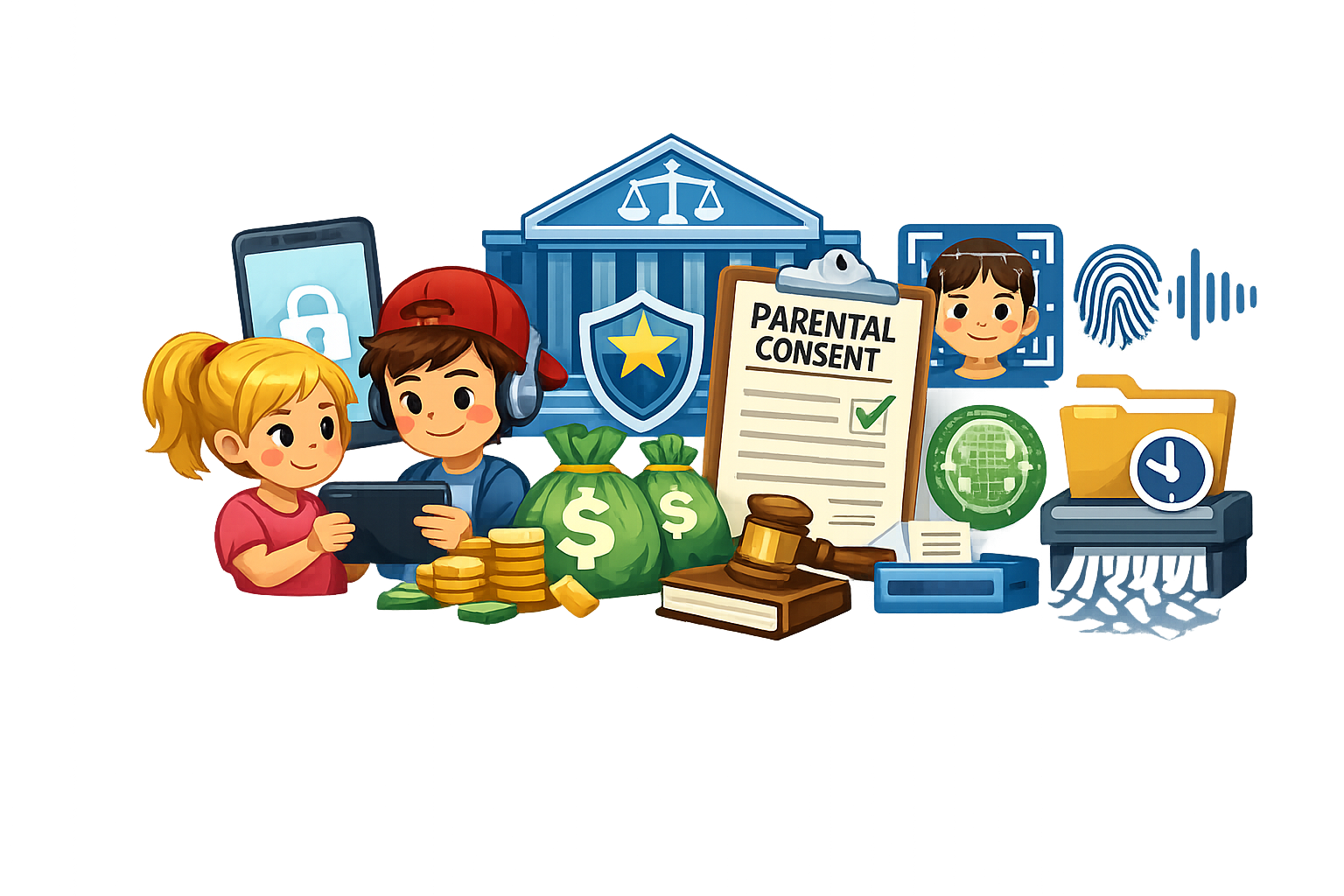
COPPA (the Children’s Online Privacy Protection Act) applies to any online service, including an app, that’s directed at children under 13 or that knowingly collects personal information from users in that age group. The FTC’s amended COPPA Rule moved into full enforcement in April 2026, and it now requires separate, verifiable parental consent specifically for any third-party data disclosure (consent for basic app function no longer implicitly covers sharing data with other vendors), written data retention and deletion policies rather than indefinite storage, and treats biometric identifiers  voiceprints, facial recognition data as personal information requiring the same protections as a name or email address. Civil penalties for violations now run into the tens of thousands of dollars per affected user, which means a product with even a moderate number of under-13 users carries real exposure if consent and retention practices aren’t built correctly from the start.

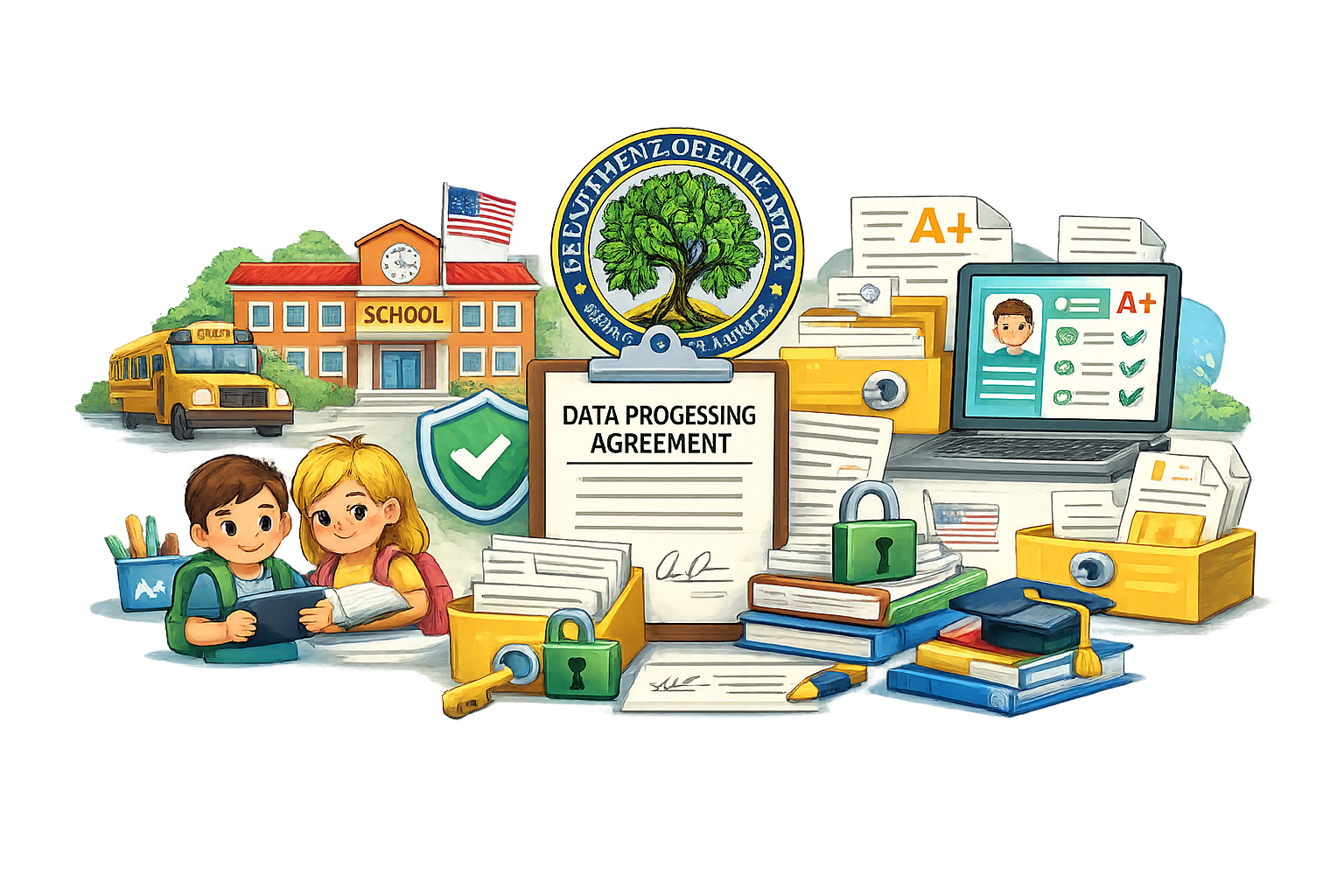
FERPA (the Family Educational Rights and Privacy Act) works differently it doesn’t regulate EdTech vendors directly, since it applies to educational institutions that receive federal funding. Vendors typically achieve FERPA alignment through the “school official exception,” formalized in a Data Processing Agreement with the school or district that restricts the vendor to performing functions the school would otherwise handle internally, keeps the school in control of data use, and limits processing strictly to educational purposes. Without a clearly defined DPA in place, there’s no such thing as presumed FERPA compliance for a vendor it has to be documented, not assumed.

For products serving European users, GDPR adds obligations beyond both US laws: individual data-subject rights (access, correction, deletion), a mandatory Data Protection Officer for many public educational institutions, and specific governance requirements around any cross-border data transfer. Role-based access control and detailed access logging are compliance requirements under multiple frameworks simultaneously, not an optional security enhancement  the same discipline covered in our broader mobile app security and compliance practices and retention and deletion logic needs to be explicit and automated, since a backup policy that quietly retains “deleted” student records creates separate regulatory exposure of its own.

AI and Emerging Technology in Education Apps

AI & ML

The integration of AI and ML in education is a powerful trend that enhances how users interact with eLearning platforms. By leveraging intelligent insights and predictive analytics, these technologies make eLearning solutions more personalized, efficient, and productive.

Blockchain

The decentralized nature of blockchain enables developers to build education apps with enhanced data security and transparency. By leveraging blockchain, eLearning platforms can ensure that both student and teacher credentials remain tamper-proof, verifiable, and securely stored.

Internet of Things (IoT)

Integrating IoT into education apps empowers smart learning environments where multiple devices connect seamlessly. IoT-enabled applications enhance accessibility and interaction, allowing students and educators to experience a more connected, efficient, and personalized learning ecosystem.

Big Data & Learning analytics

Learning analytics tracking time-on-task, question-level error patterns, and engagement drop-off points lets instructors and institutions see where students are actually struggling, at a level of specificity a single end-of-unit test score never reveals. This data is also exactly the kind of information that falls under FERPA and COPPA obligations covered above, which is why analytics infrastructure and compliance architecture need to be designed together, not as separate workstreams.

Gamification

Gamification, done well in education, means structuring genuine progress feedback and mastery-based unlocking a student can’t advance to the next module until demonstrating competency in the current one rather than just adding points and badges on top of an unchanged curriculum. The distinction matters: badges without a real competency gate train students to chase points, not to learn, while mastery-gated progression uses game mechanics to reinforce the actual learning goal.

AR & VR

AR and VR in education show up most credibly in specific, spatial-learning use cases: a biology app letting students manipulate a 3D model of a cell structure, or a vocational training app simulating equipment operation before a student touches the real machinery. These technologies add real value where physical or spatial understanding is the actual learning objective they add much less value bolted onto a flashcard app just to look current.

Features of Modern Education Application

Basic Features
Advanced
  • User Registration & Profiles
  • Course Management 
  • Interactive Dashboard
  • Video Lessons & Tutorials
  • Quizzes & Assessments
  • Push Notifications
  • Progress Tracking
  • In-App Chat or Messaging
  • Multi-Device Support
  • Offline Access
  • AI-Based Personalization
  • Gamification Elements
  • AR/VR Learning Modules
  • Blockchain Integration
  • IoT Integration
  • Big Data & Learning Analytics
  • Webinars
  • Multilingual Support
  • AI Chatbots
  • Social Learning Features
Engagement design for long-term use, not single-session retention
Education apps succeed or fail on whether students keep returning over months, which needs deliberate design attention distinct from typical consumer-app engagement tactics.
Offline-access planning built in where relevant
Students without consistent connectivity are accounted for in the architecture, not treated as an edge case discovered after launch complaints.

Why Choose SoftCurators for Education App Development

Compliance architecture designed before development starts
Data retention, consent flows, and access controls are built into the data model from day one, not retrofitted before a procurement review
Real experience with institutional integration
Connecting to existing LMS and SIS platforms is planned as a defined technical requirement, not treated as an afterthought once core features are built.
Adaptive learning logic built on real assessment data, not a generic recommendation engine
Difficulty adjustment and content sequencing are designed against actual education-specific assessment models
Accessibility built in from the first wireframe
Screen-reader compatibility, contrast, and keyboard navigation are design requirements from the start, since education audiences are especially likely to include users with a wide range of accessibility needs.

Contact Us

Ready to Build Your Education App?

Talk to SoftCurators about your learner population, institutional integrations, and compliance requirements before design starts  see examples of our work or get in touch to start scoping your education project.

Common Mistakes We See in Education App Projects

Mistake
Why It Hurts
What To Do Instead
Underestimating offline-access needs
Students with unreliable connectivity common in many school districts and regions, can’t access content, directly hurting the app’s actual educational value
Design core content and assessment features to work with intermittent connectivity from the start, not as a later enhancement
Treating accessibility as optional
Inaccessible interfaces exclude students with disabilities and can create legal exposure for institutional customers, beyond just being poor practice
Build accessibility requirements into the design phase, not a QA pass done right before launch
Skipping LMS/SIS integration planning until late
Discovering integration requirements after core development is finished forces expensive architecture rework
Confirm required institutional system integrations during requirement analysis, before development begins
Assuming COPPA/FERPA compliance is a legal afterthought
Compliance gaps discovered during a school district’s procurement review can disqualify a product entirely, well after development investment is already spent
Design data retention, consent, and access-control architecture against compliance requirements from the start
Over-gamifying without real learning gates
Points and badges disconnected from actual competency demonstration produce engagement metrics that don’t reflect real learning outcomes
Tie game mechanics to genuine mastery-based progression, not engagement theater layered on top of an unchanged curriculum

Cost and Timeline Planning

Education app cost and timeline scale primarily with compliance complexity and integration depth, not just feature count an app handling under-13 users or requiring LMS/SIS integration takes meaningfully longer than one with equivalent features but no institutional data exchange or child-privacy obligations. An MVP-scope education app core learning content delivery, basic user accounts, standard assessment features typically takes around 8 to 10 weeks to build; a full-featured platform with adaptive learning logic, live tutoring infrastructure, LMS/SIS integration, and full COPPA/FERPA-aligned data architecture typically takes 3 to 6 months, with the compliance and integration work often taking as long as the core feature build itself.

Tech Stack for Education Apps

SoftCurators uses modern, scalable and future ready technologies for development.

  • Flutter
  • React Native
  • Swift
  • Kotlin 
  • React
  • Vue.JS
  • JavaScript
  • Angular
  • Next.JS
  • Node
  • Laravel (PHP)
  • Python / Django
  • Java / Spring
  • MySQL
  • MS SQL
  • PostGreDB
  • Firebase
  • Mongo DB
  • AWS
  • Google Cloud
  • MS Azure

Our Education App Development Process

image

Requirement Analysis

We define the learner population, institutional stakeholders, and any existing systems (LMS, SIS, single sign-on) the app needs to work alongside, since integration requirements discovered late in a project are expensive to retrofit.
image

Wireframing & UI/UX Design

Screens are designed through our UI/UX design process with accessibility requirements screen-reader compatibility, sufficient contrast, keyboard navigation built in from the first wireframe, not reviewed for compliance after the visual design is finalized.
image

Development & Testing

Engineering proceeds against the confirmed data model and integration points, with student data handling built to the compliance requirements established during requirement analysis rather than added afterward
image

LMS/SIS integration and compliance review.

Before launch, we validate actual data exchange with any required learning management or student information systems, and confirm data retention, consent, and access-control logic against the compliance framework the project falls under
image

Deployment, Launch.& Post-Launch Support

The app or platform goes live with monitoring in place for both technical performance and data-handling correctness, since a compliance gap surfacing after launch is far more costly to fix than one caught in testing. Ongoing maintenance and support covers both the usual technical upkeep and the compliance maintenance specific to EdTech retention policy enforcement, consent record-keeping, and adjustments as student data privacy regulations continue to evolve.
Lets Connect

Your App, Our Expertise - Let’s Build It!

    Frequently Asked Questions

    If your app is directed at children under 13, or you knowingly collect personal information from users in that age group, yes  COPPA applies regardless of whether your company is based in education specifically. The FTC’s amended COPPA Rule, in full enforcement since April 2026, requires separate verifiable parental consent for third-party data sharing and treats biometric data as personal information requiring the same protection.

     FERPA applies directly to educational institutions receiving federal funding, not to EdTech vendors themselves  vendors typically achieve alignment through a Data Processing Agreement under the “school official exception,” which restricts the vendor to school-directed functions and educational-purpose-only data use. Without that documented agreement in place, a vendor cannot assume it’s FERPA compliant by default.

     Yes, LMS and student information system integration is planned as a defined technical requirement during the requirement-analysis phase of a project, not added after core features are built.

    An MVP-scope app with core learning content and standard assessment features typically takes about 8 to 10 weeks, while a full-featured platform with adaptive learning, live tutoring, and full institutional integration and compliance architecture typically takes 3 to 6 months.

    Absolutely. We offer ongoing support, performance optimization, feature updates, bug fixes, and OS compatibility upgrades under our support plans.

    Yes! Whether you need UX redesign, performance improvements, or new features — we can take over and enhance your existing app.

    An LMS manages course content, enrollment, grading, and communication at an institutional scale for schools, districts, or corporate training teams, while a general eLearning app typically delivers content to individual, often self-directed learners without that institutional management layer. The distinction affects the underlying data model, not just the feature list.

     We build across all three- K-12, higher education, and corporate training though each carries different compliance and feature priorities, with K-12 apps serving minors carrying the most stringent child-privacy requirements under COPPA specifically.

     Yes, if offline access is planned into the architecture from the start core content and assessment features can be designed to function with intermittent connectivity, syncing progress once a connection is available, rather than requiring constant connectivity to function at all.

    Adaptive learning adjusts question difficulty or content sequencing in real time based on a learner’s recent performance, converging on an accurate skill estimate faster than fixed-difficulty content  this requires an assessment engine designed around that specific logic, not just a generic content recommendation algorithm.

     It’s effective specifically when game mechanics are tied to real competency demonstration mastery-gated progression rather than points and badges layered on top of an unchanged curriculum. Gamification without a genuine learning gate tends to produce engagement metrics that don’t reflect actual learning outcomes.

     Education apps should follow WCAG accessibility guidelines at minimum, covering screen-reader compatibility, sufficient color contrast, and keyboard navigation, since education audiences are especially likely to include users with a wide range of accessibility needs and, in many cases, legal obligations tied to institutional customers.

     Yes, if the app serves EU-based students, GDPR adds obligations beyond US frameworks individual data-subject rights, a mandatory Data Protection Officer for many public institutions, and specific rules around cross-border data transfers that need to be designed into the same data architecture as FERPA and COPPA requirements, not addressed separately.

    What happens to student data if we stop using the app or switch providers?

    Our Latest Blogs