

Prototype Development Company

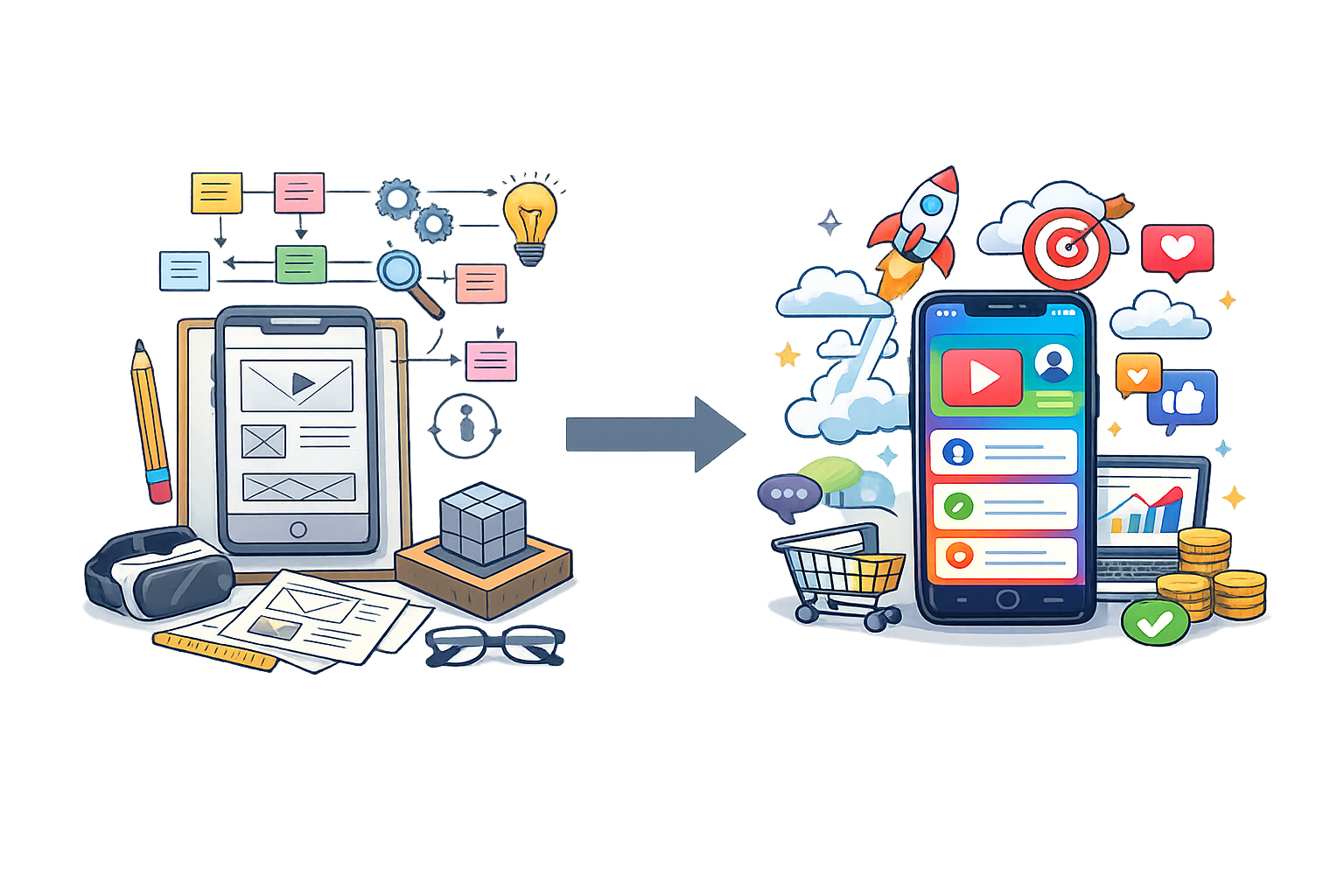
Prototype development is the process of building a non-functional or partially functional simulation of an app or website clickable screens that look and behave like the real product without the underlying code that would make it actually work used to validate an idea, test a user flow, or pitch investors before committing to a full build. A prototype buys a founder something a pitch deck or a written spec never can: a demo an investor or early user can actually click through, a flow that gets tested with real people before a single line of production code exists, and a concrete way to catch a confusing screen or missing step while it costs a design revision instead of a rebuild.SoftCurators treats prototyping as a standalone, fast engagement with its own scope and its own deliverable distinct from the broader research-through-handoff process covered on our UI/UX design page, and distinct from actually building working software, which is what MVP development covers. Both distinctions matter enough that we’ve dedicated full sections to them below, because confusing a prototype with an MVP is one of the most common and most expensive mistakes we see founders make before their first real development engagement.

Request a Free Quote

    Satisfaction
    70 %
    Happy Clients
    50 +
    Years Experienced Team
    5 +
    Team Members
    40 +

    Prototype vs. MVP: What’s the Difference?

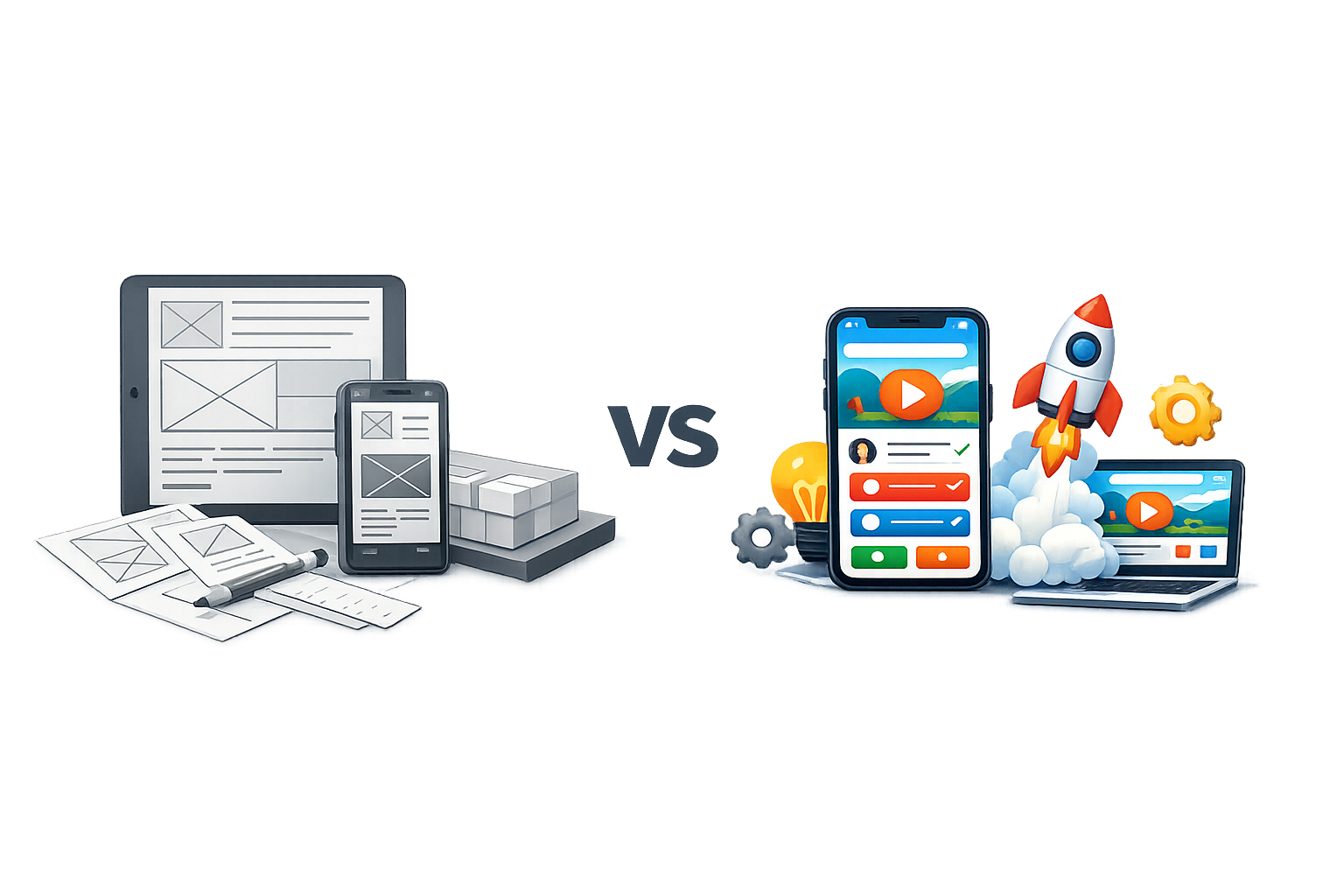
    A prototype is a simulation used to validate an idea before building it, while an MVP (minimum viable product) is real, working software that early users can actually use. A prototype’s screens are typically wired together with prototyping tools like Figma and don’t connect to a real database, real user accounts, or real backend logic — clicking “sign up” in a prototype moves you to the next screen because that transition was designed, not because an account was actually created. An MVP, by contrast, is functioning code: a real signup creates a real account, a real payment actually processes, and the product can be used, not just clicked through.

    The two serve different stages of the same decision. A prototype is the right tool when the question is still “will people understand and want this,” because it lets you test that question in days or weeks without engineering cost. An MVP is the right tool once that question has a reasonably confident answer and the next question becomes “will people actually use this and pay for it,” which requires real functionality to test honestly. Skipping straight to an MVP without prototyping first usually means expensive engineering time gets spent building flows that a five-minute clickable test would have shown were confusing; skipping the MVP stage and trying to raise real revenue or retention data from a prototype alone usually fails, because a prototype can’t produce data that depends on the product actually working.

    Our Clients

    Low-Fidelity vs. High-Fidelity Prototypes: What’s the Difference?

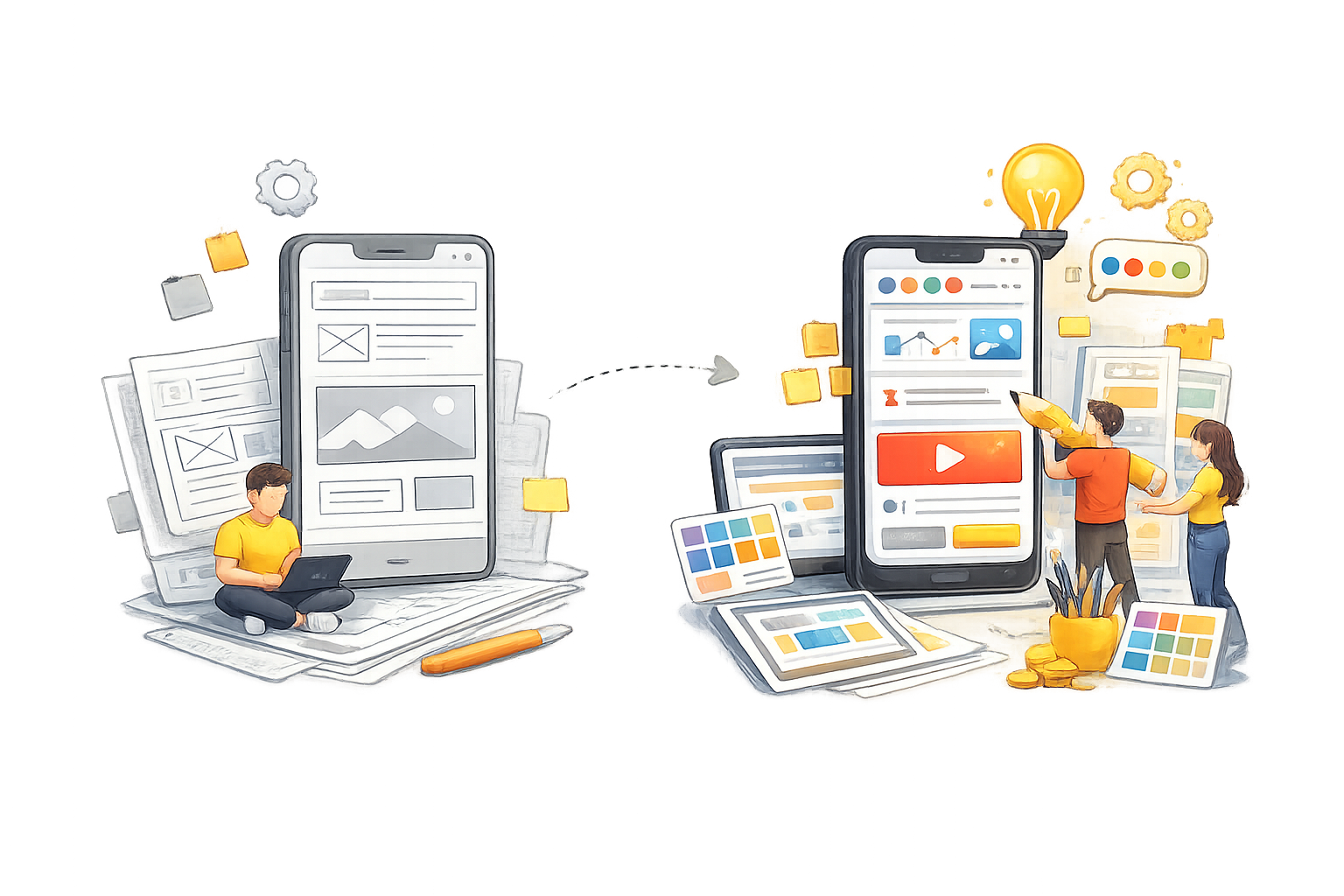
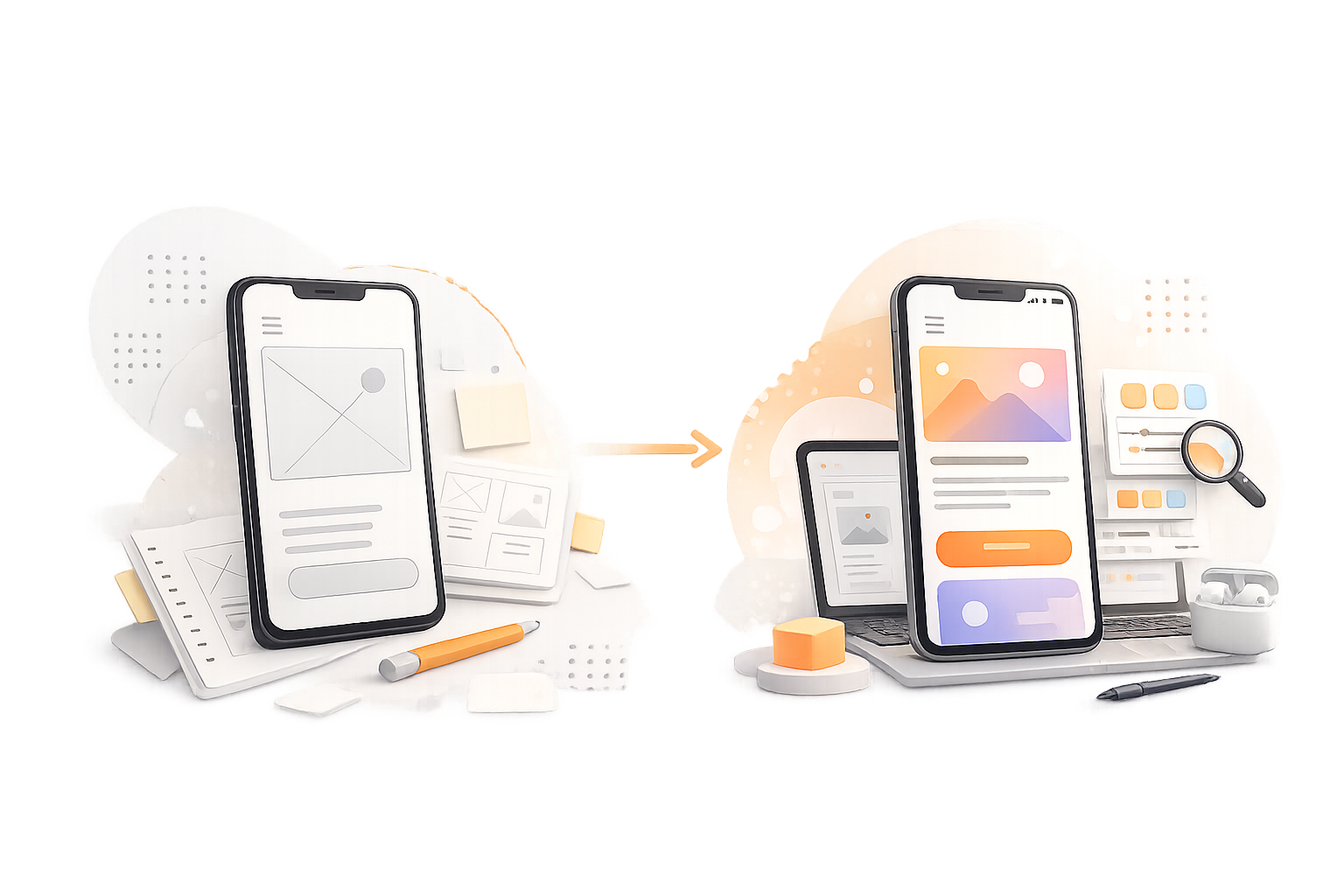
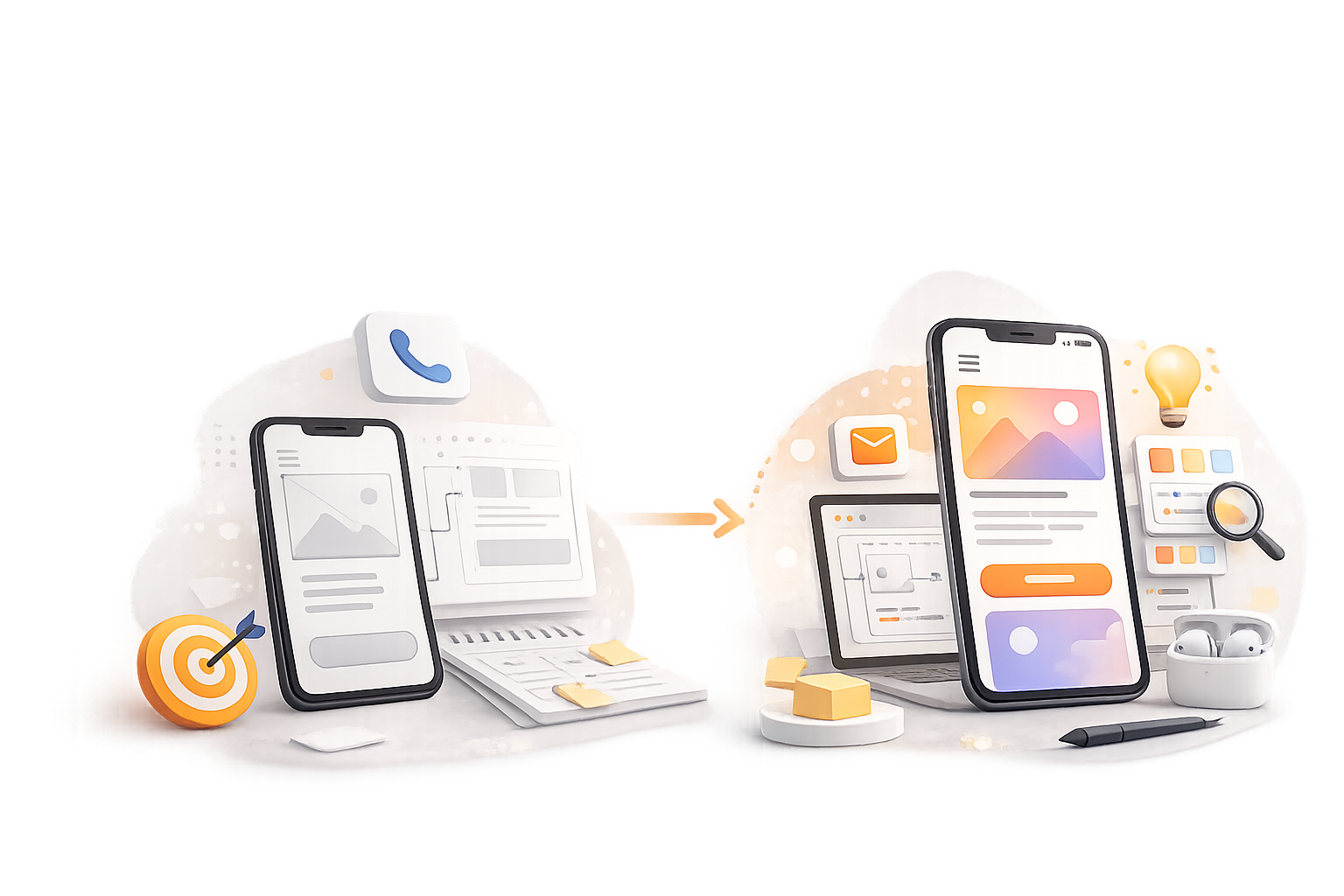
    Low-fidelity prototypes are simple, often black-and-white wireframes that show layout and flow without real visual design, while high-fidelity prototypes are polished, fully styled screens that look like the finished product, complete with real colors, typography, and imagery. Low-fidelity prototypes are built fast sometimes in a single working session specifically because stripping away visual polish forces feedback to focus on structure and flow rather than color choices or font preferences.

    The right fidelity level depends on what you’re testing and who you’re testing it with. Low-fidelity wireframes are the right choice early, when the goal is validating that a flow makes logical sense internally with your own team or in a UX workshop, since polished visuals at this stage tend to distract reviewers into commenting on aesthetics instead of structure. High-fidelity prototypes are the right choice once the flow is settled and the goal shifts to testing with real external users or pitching investors, because both audiences need to react to something that looks and feels like a real product to give feedback that actually transfers to the finished build.

    Our Prototype Services |

    image

    UX Research & Strategy

    Quick-turnaround user interviews, competitor review, and flow mapping scoped specifically to validate the assumptions your prototype needs to test, not a full research program.
    image

    Low-Fidelity Wireframes

    Fast, structural layouts used to settle flow and hierarchy internally before any visual design work begins, typically turned around in days

    image

    High-Fidelity Prototypes (UI)

    Fully styled, interactive screens built in Figma with a defined component set, ready for real user testing or stakeholder review
    image

    Interactive Demos for Pitches

    Investor-ready clickable walkthroughs of your core use case, built to hold up under live demo conditions in a pitch meeting, not just a recorded screen capture.

    Types of Prototypes We Build

    Prototype

    Low-Fidelity Wireframe Prototypes

    Best For

    Early internal validation, fast iteration, and testing logical flow before visual investment

    ecommerce

    Mobile App Prototypes (iOS & Android)

    Best For

    Founders validating a mobile-first product before committing to native or cross-platform development

    Prototype

    Clickable UI Prototypes (High-Fidelity)

    Best For

    Fully styled, interactive screens that look and behave like the finished product
    ecommerce

    Web App/Dashboard Prototypes

    Best For

    Teams validating complex layouts admin panels, dashboards, multi-step web workflows

    UX Flow Prototypes

    Best for

    Internal product teams, UX workshops, and mapping complex multi-step flows
    Investor Pitch Demos

    Best For

    High-fidelity prototypes built specifically to walk through a core use case in a pitch setting
    Contact Us

    Ready to Validate Your Idea Before You Build It?

    Bring us your idea or your existing flow, and we’ll tell you honestly whether a prototype, a redesign, or an MVP is the right next step get in touch to start.

    Our Prototype Development Process

    A prototype engagement runs through five stages, each scoped tighter than a full design project because the goal is validation speed, not a finished, production-ready design system.

    image

    Discovery

    We identify exactly what the prototype needs to prove a flow, a feature, a full pitch narrative so scope stays tied to that specific question instead of expanding into a full product design.
    image

    Wireframing

    Low-fidelity layouts establish the core structure and flow, reviewed with your team before any visual design time gets spent on screens that might still change.
    image

    Designing

    Approved wireframes become high-fidelity screens with real visual design, built only once the underlying structure is confirmed.
    image

    Prototyping

    Screens get wired together into a clickable, interactive flow using tools like Figma’s native prototyping features, simulating the real navigation and key interactions a user or investor would actually experience.
    image

    Testing, Feedback & Delivery

    The prototype gets tested with your team, target users, or both and refined based on real reactions before final files and a walkthrough are delivered.
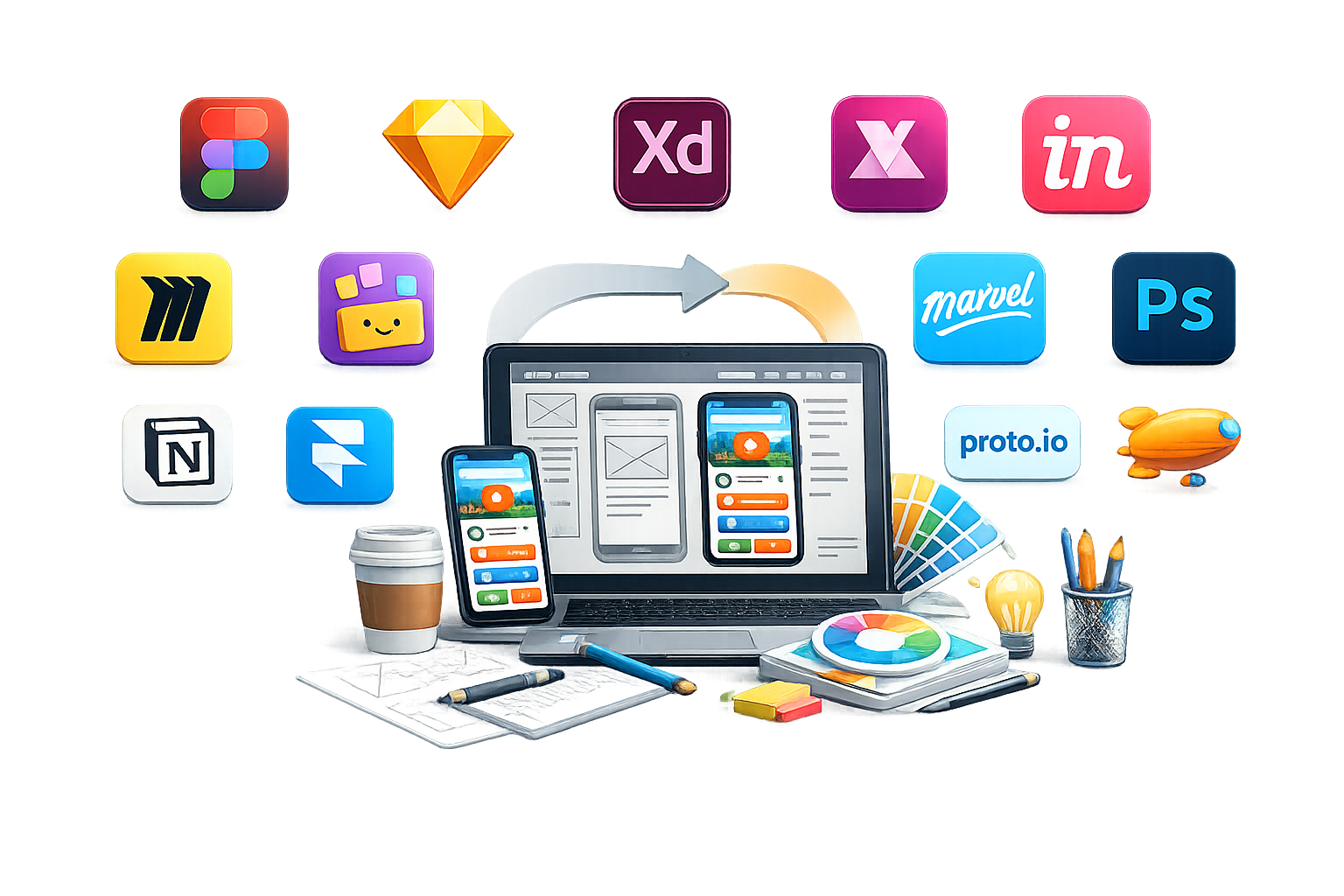
    Tools We Use

    Figma, Adobe XD, Sketch, InVision, Marvel

    Miro, Whimsical, Lucidchart, Balsamiq

    Jira, Notion, Slack, Zeplin

    Cost and Timeline

    Prototype timelines typically run from 3 days to 3 weeks, and fidelity level is the single biggest driver of where a given project falls in that range. A low-fidelity wireframe set for a single core flow can often be turned around in 3 to 5 days, since the goal is structural validation rather than polish. A high-fidelity clickable prototype covering a full core use case typically takes 1 to 2 weeks, once real visual design and interaction wiring are included. A full investor pitch demo high-fidelity, tested, and refined for a live walkthrough  usually needs closer to 2 to 3 weeks to hold up under real pitch-meeting conditions.

    Cost scales with the same factors: the number of unique screens and states involved, how much original research is needed before wireframing starts, and whether the prototype needs to cover one narrow flow or an entire product’s core experience.

    Industries We Serve

    Prototype validation matters most where a wrong flow assumption is expensive to discover after real development starts, which is why these industries make up a large share of our prototype work.

    Why Choose Softcurators for Prototype Development ?

    We scope prototypes to a specific validation question, not a generic deliverable.

    Every engagement starts by defining exactly what the prototype needs to prove, so budget and timeline stay tied to that question instead of expanding into unrelated screens.

    We build prototypes our own development team can hand off cleanly, or that transfer to yours.

    Because our prototyping team works alongside mobile app and web development engineers, prototypes are built with development feasibility in mind rather than including interactions that would be difficult or impossible to build as shown.

    Pitch-specific demos are built to survive a live room.

    Investor pitch prototypes are tested for how they hold up under a live walkthrough, not just reviewed as a finished file that looks good in isolation.

    Our prototypes get tested with real interaction, not just reviewed as static images.

    Clickable, wired-together flows built in Figma simulate real navigation, so feedback reflects how the product actually feels to use.

    We tell you honestly when a prototype isn’t the right next step.

    If a project actually needs an MVP or a full UI/UX engagement instead, we say so rather than selling a prototype into a scope where it won’t answer the real question.

    Turnaround is measured in days for early-stage validation, not weeks by default.

    Low-fidelity wireframes for a single flow can move fast specifically because we don’t over-invest in polish before the structure is confirmed.

    Common Mistakes We See in Prototype Projects

    Mistake
    Why It Hurts
    What To Do Instead
    Over-investing in high-fidelity polish before validating the core flow
    Time and budget go into visual details on a flow that might still change based on early feedback, forcing rework on screens that were never structurally confirmed
    Validate structure with low-fidelity wireframes first, and move to high-fidelity only once the flow is settled
    Skipping user testing on the prototype itself
    A prototype that only gets reviewed internally can carry the same blind spots as the team that built it, missing confusion real users would catch immediately
    Test the clickable prototype with 5–8 target users before treating the flow as validated
    Building a prototype so detailed that developers treat it as a spec rather than a reference
    Overly literal interpretation of a prototype’s exact pixel values and animations can slow development down or produce a rebuild-heavy handoff instead of a smooth one
    Pair the prototype with clear handoff notes that distinguish what’s a firm requirement from what’s illustrative
    Testing a prototype with the wrong audience
    Feedback from team members or friends familiar with the product doesn’t reveal the confusion a real first-time user would hit
    Test with people who match your actual target user profile, not just convenient internal reviewers
    Treating a validated prototype as proof the product will succeed
    A prototype can confirm people understand and like a flow, but it can’t validate retention, real payment behavior, or actual usage patterns, which require working software
    Move to MVP development once flow validation is done, and treat usage-based questions as the MVP stage’s job
    Skipping prototyping entirely and going straight to full development
    Structural and flow problems that a few days of wireframing would have caught instead get discovered mid-build, when fixing them costs far more in engineering time
    Prototype any flow with real uncertainty before committing full development budget to it

    Lets Connect

    Bring Your Ideas to Life Before You Build.

      Frequently Asked Questions

      A prototype is a non-functional or partially functional simulation used to validate an idea or flow before development, while an MVP is real, working software that early users can actually use, sign up for, and interact with. Prototypes are built with design tools like Figma and don’t connect to a real backend, while an MVP involves actual code, a real database, and functioning features.

      Not directly, a prototype is built in design tools and doesn’t contain functioning code, so a development team still needs to build the real application from scratch, using the prototype as a design and flow reference rather than a codebase. What does carry forward directly is the validated flow, the visual design system, and the developer handoff notes, which meaningfully speed up development compared to starting design and development at the same time.

       Most prototype engagements run 3 days to 3 weeks depending on fidelity and scope: a low-fidelity wireframe set for one flow can take as little as 3 to 5 days, while a full high-fidelity investor pitch demo typically needs 2 to 3 weeks. The number of unique screens and how much research is needed upfront are the biggest factors affecting where a specific project falls in that range.

       A clickable prototype significantly strengthens an investor pitch because it lets investors interact with the core idea rather than only hearing it described, and it demonstrates that the founding team has thought through the actual user experience, not just the business model. It’s not strictly required at every funding stage, but for product-focused pitches it’s often the difference between investors imagining the product and investors actually experiencing it.

       Low-fidelity prototypes are simple, unstyled wireframes used to validate structure and flow quickly, while high-fidelity prototypes are fully designed, polished screens that look like the finished product. Low-fidelity is the right choice for early internal validation, while high-fidelity is the right choice once you’re testing with real external users or presenting to investors.

      Cost depends primarily on the number of screens involved, the fidelity level required, and how much original research is needed before design starts, rather than being a flat rate across every project.

      Both are available  a prototype engagement can include structured usability testing with real target users as part of the deliverable, or it can be scoped as design-and-build only if your team plans to run testing internally. We recommend including testing whenever the goal is genuine validation rather than only an investor-facing demo.

      Yes, and it’s often a more efficient use of a prototyping budget than committing early to a single direction — multiple low-fidelity concepts can be tested quickly to see which one resonates before investing in high-fidelity design for just one. This works best when scoped upfront, since testing multiple directions takes more time than validating a single, already-chosen concept.

      Yes, we build interactive prototypes for iOS and Android mobile apps, including native gesture interactions like swipe and tap, as well as browser-based web and dashboard prototypes for more complex, data-heavy interfaces. The tools and interaction patterns differ between the two, which is why we scope mobile and web prototypes as distinct project types rather than one generic offering.

      Yes, prototype engagements can lead directly into MVP development or full mobile app or web development, using the validated flow and design as the starting reference for the real build. You’re not required to continue with us for development, and prototype files are delivered in a state usable by any development team.

      Yes, in most cases — having a clear idea internally doesn’t guarantee real users will understand or want the flow the same way, and a prototype is the fastest, cheapest way to find out before development budget is committed. The founders who skip this step most often are the ones later paying for a mid-development redesign once real user feedback surfaces a flow problem a prototype test would have caught early.

      Our Latest Blogs