Cross-Platform App Development Company

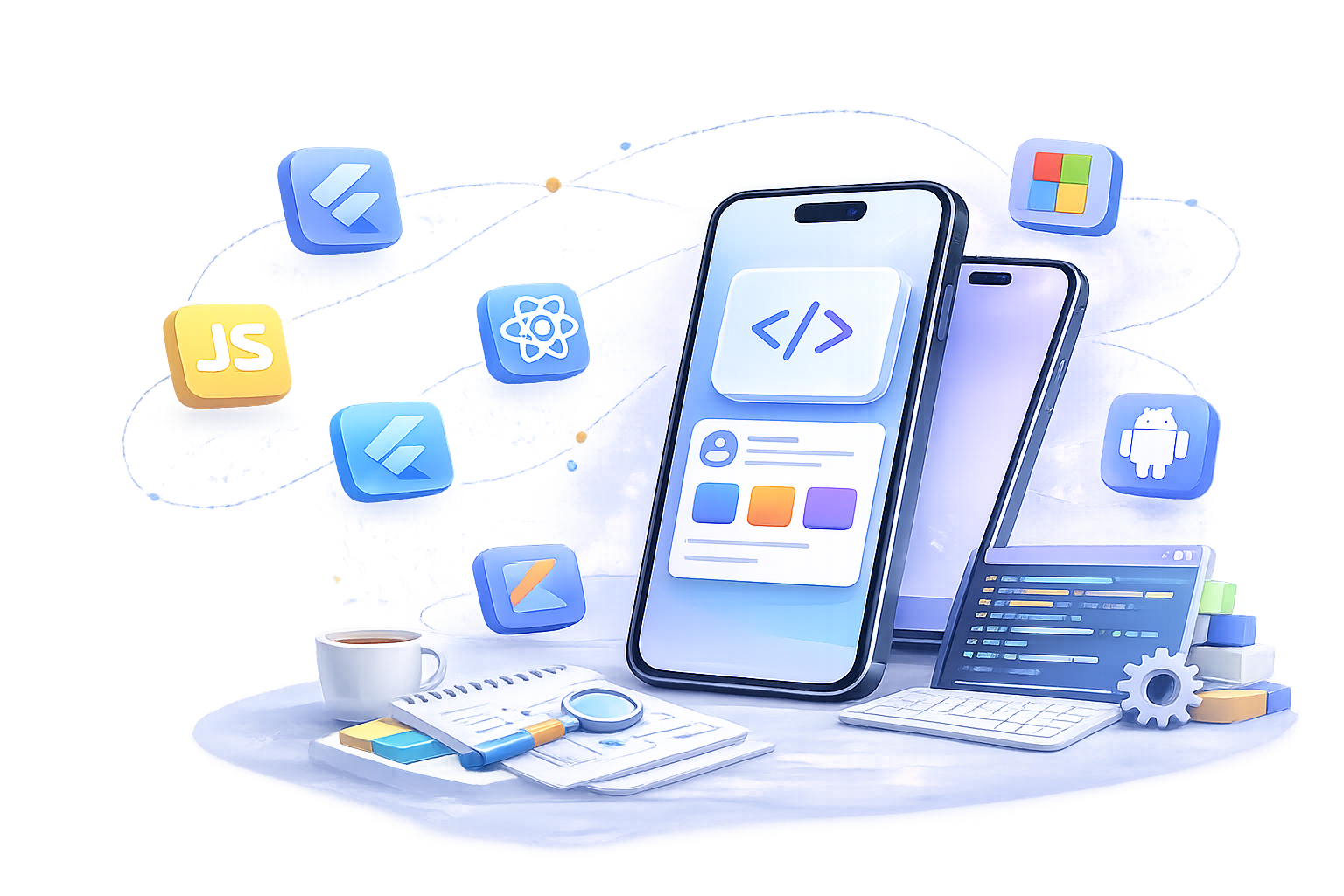
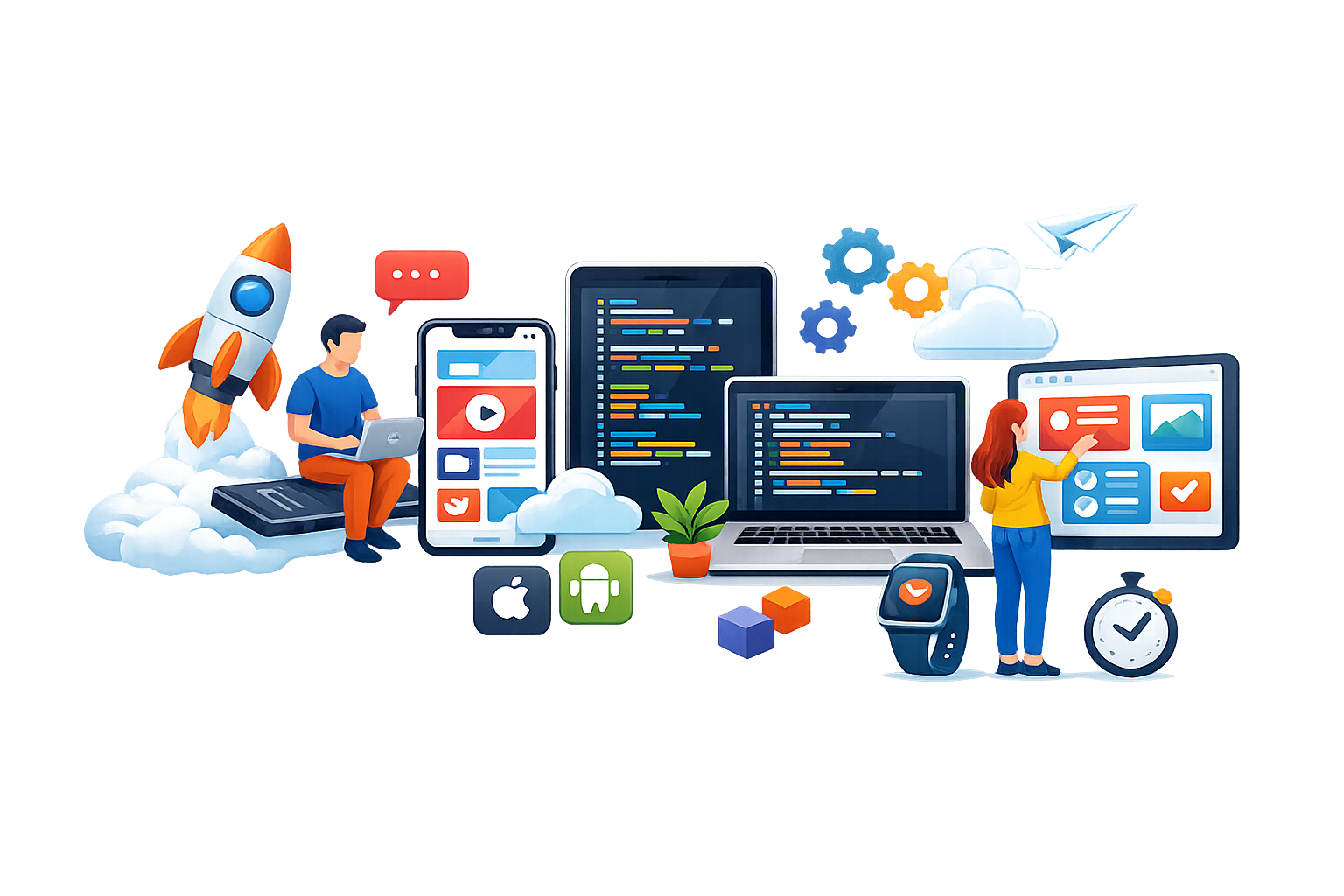
Cross-platform app development means building one codebase that ships to iOS and Android together often web and desktop too, instead of maintaining two separate native builds. The trade-off is real: you give up some day-one access to brand-new platform APIs, in exchange for one team, one codebase, and a faster path to both platforms at once. If you’re still weighing that against going fully native, our mobile app development hub covers that decision at a business level, this page assumes you’ve already landed on cross-platform and need the right framework and partner. SoftCurators maintains dedicated engineering teams per framework rather than one generalist team defaulting to whatever it knows best, so our recommendation depends on your app’s actual requirements, not our staffing convenience.

Request a Free Quote

    Satisfaction
    70 %
    Happy Clients
    50 +
    Years Experienced Team
    5 +
    Team Members
    40 +

    What We Build With Cross-Platform Frameworks |

    image

    Custom Cross-Platform App Development

    We develop fully tailored cross-platform applications with native-like speed, modern interfaces, and seamless performance, ensuring your app works smoothly across Android, iOS, tablets, and modern devices.

    image

    Cross-Platform App Consulting

    We evaluate your business model, audience needs, and long-term goals to recommend the best frameworks, architecture, and development approach for building scalable, high-performance cross-platform applications.
    image

    MVP Development for Startups

    Scoping and building a cross-platform MVP that validates core assumptions on both iOS and Android at once, without the cost of two parallel native builds.

    image

    UI/UX Design for Multi-Platform Apps

    Interface design built around a shared component system through our UI/UX design process while still respecting where iOS and Android genuinely expect different interaction patterns.
    image

    Migration to Cross-Platform Frameworks

    Moving an existing native iOS or Android app onto a single cross-platform codebase, typically screen-by-screen against a defined feature-parity checklist rather than a risky big-bang rewrite
    image

    API & Third-Party Integration

    Connecting payment processors, analytics, authentication providers, and backend services into a cross-platform codebase without compromising app-store review standing on either platform.

    image

    Backend & Cloud Development

    Building or connecting the server-side infrastructure a cross-platform app actually depends on, sized to the app’s real data and scaling needs rather than a default stack, including AI-powered features where the product calls for them.
    image

    Cross-Platform Game Development

    We design and develop engaging, lightweight cross-platform games using modern engines, ensuring smooth gameplay, attractive visuals, and optimized performance on both Android and iOS devices.

    image

    Wearable & Smart Device App Development

    Extending a cross-platform app’s core logic to Apple Watch, Wear OS, or connected-device companion experiences where the framework’s plugin ecosystem supports it.

    image

    Enterprise Cross-Platform Solutions

    Internal and customer-facing apps built with role-based access, integration into existing enterprise identity systems, and the compliance considerations that come with operating inside a larger organization.

    image

    Multi-Platform Plugin & Module Development

    We build custom reusable modules and plugins that extend app functionality, reduce development time, and ensure consistent behavior across multiple platforms and device ecosystems.

    image

    Progressive Web App (PWA) Development

    Extending a cross-platform app’s reach to the browser through a PWA build, useful when app-store distribution isn’t the only reach that matters.

    Our Clients

    Choosing a Cross-Platform Framework: Flutter vs React Native vs .NET MAUI vs Ionic

    Dimension
    Flutter
    React Native
    .NET MAUI
    Ionic
    Performance
    Compiles to native ARM code with its own rendering engine, giving consistent frame performance across devices
    Uses native platform components with a modern architecture that has closed most of its historical performance gap
    Compiles to native code via .NET, with performance comparable to native for most business-app use cases
    Runs in a web view, so performance trails the other three for animation-heavy or graphically demanding apps
    Ecosystem maturity
    Large, active plugin ecosystem (pub.dev) and strong first-party tooling from Google
    The largest cross-platform ecosystem by package count, drawing on the broader JavaScript/npm world
    Smaller but growing ecosystem, backed directly by Microsoft and tightly integrated with the .NET/Azure stack
    Mature and stable, built on web standards (HTML/CSS/JS) with framework-agnostic support for Angular, React, or Vue
    Team/hiring availability
    Growing, increasingly specialized Dart/Flutter talent pool Largest hiring pool of the four, since it draws on the broad JavaScript/React developer base
    Largest hiring pool of the four, since it draws on the broad JavaScript/React developer base
    Best fit for teams already staffed with C#/.NET developers; a smaller specialist pool otherwise
    Easiest entry point for web developers with no prior native mobile experience
    Best fit
    Apps prioritizing visual consistency and animation quality across platforms
    Teams with an existing React web codebase wanting to share logic and hiring pools with mobile
    Organizations already invested in the Microsoft/.NET ecosystem, including first-party Windows desktop targets
    Internal tools, content-driven apps, or teams distributing an existing web app through app stores with modest performance needs

    Choose based on what your team already knows and what the app actually needs to feel like, not which framework is trending. A team of C# developers building an internal enterprise tool has a very different right answer than a startup with a React web app trying to launch a consumer product fast our dedicated Flutter app development and React Native app development pages go deeper on each framework’s technical trade-offs once you’re ready to commit. A useful gut-check for any cross-platform app development decision: list the two or three platform-specific capabilities your app absolutely cannot ship without, then check each framework’s plugin ecosystem against that list before weighing performance or hiring availability. A framework that scores well on paper but lacks first-party support for a capability your app depends on will cost you more in custom native-module work than a slightly less popular framework that already covers it.

    Advanced Features We Integrate in Cross-Platform Apps

    Real-Time Chat & Messaging

    Live Video / Audio Streaming

    Payment Gateway Integration

    GPS, Maps & Geolocation

    AI & Machine Learning Modules

    Social & Third-Party Logins

    Wearable, IoT & Smart Device Integration

    Offline Functionality

    Multi-Language & Multi-Currency

    Our Cross-Platform Development Process

    1. Framework selection based on project

    requirements. We match the framework to the app’s actual performance needs, target platforms, and the team’s existing skills not to whichever framework is easiest for us to staff.

    2. Shared-component architecture planning.

    Before development scales up, we design the shared component and state-management architecture so code reuse is intentional, not accidental duplication that diverges over time.

    3. Development against the shared codebase.

    Engineering proceeds against the locked architecture, with regular, testable builds rather than a single deliverable at the end of the project.

    4. Platform-specific testing despite the shared codebase.

    A shared codebase does not mean shared behavior — we test on real iOS and Android devices separately, since rendering, gesture handling, and performance can genuinely diverge even from identical source code.

    5. Native-module bridging where the framework’s plugin ecosystem falls short.

    When a feature needs a capability outside the framework’s existing plugins, we build the native bridge directly rather than shipping a degraded workaround.

    6. CI/CD setup, App store submission & post-launch monitoring.

    Automated pipelines build, test, and prepare iOS and Android releases together from the same repository, catching platform-specific regressions before manual QA.We coordinate Apple App Store and Google Play submissions together, then track crash reports and performance data per platform after launch, since a shared codebase can still produce platform-specific issues once real users are on it.

    Tech Stack for Cross-Platform Projects

    Flutter, React Native, .NET MAUI, or Ionic with Capacitor

    AWS, Google Cloud, or Azure, with Git-based CI/CD pipelines

    Node.js, Firebase, or a custom REST/GraphQL API


    PostgreSQL, MongoDB, or Firestore


    OAuth 2.0/OpenID Connect for auth, TLS for data in transit, platform-native secure storage (Keychain/Keystore) for sensitive local data


    Cost and Timeline Planning

    Cross-platform app development cost and timeline scale primarily with feature complexity and how much native-module bridging a project needs, not with the number of target platforms alone the entire point of a shared codebase is that reaching iOS and Android together doesn’t cost twice as much as reaching one. An MVP-scope cross-platform app core flows, standard UI patterns, a lightweight backend takes meaningfully less time than a medium-complexity app with custom animations and several integrations, which takes less time again than a complex app requiring deep native-module work or enterprise backend integration; our mobile app development cost and pricing guide breaks down general cost tiers in more depth. The cross-platform-specific cost factors that catch founders off guard:

    Contact Us

    Ready to Build Your Cross-Platform App?

    Talk to SoftCurators about which framework actually fits your team and app before development starts  see examples of our work or get in touch to start scoping your cross-platform project.

    Industries and Use Cases Where Cross-Platform Fits Best

    Cross-platform makes the most business sense wherever the cost of reaching both platforms fast outweighs the value of platform-specific native polish which is a different calculation industry by industry, not a universal rule. An app where users compare it directly against native competitors on animation smoothness needs a different answer than one where users mostly care whether the core task gets done reliably.

    Worth naming the flip side directly: apps competing primarily on camera quality, AR/VR immersion, or graphically intensive gaming are usually a weaker fit for cross-platform, since these are exactly the areas where native’s direct hardware access still delivers a meaningfully better result. Knowing which category your app falls into before committing to a framework is more useful than a generic “cross-platform saves money” pitch.

    Why Choose SoftCurators for Cross-Platform Development

    Dedicated teams per framework, not one generalist team

    Our Flutter, React Native, and .NET MAUI engineers specialize in their respective frameworks rather than switching between them project to project

    Framework recommendations based on your constraints, not our preference

    We scope Flutter, React Native, .NET MAUI, or Ionic against your actual team skills and performance needs before recommending one.

    Real experience with native-app-to-cross-platform migration

    Moving an existing native codebase onto a shared framework is work we do regularly, not a first-time exercise on your project.

    Native-module bridging capability in-house

    When a feature needs a capability outside a framework’s plugin ecosystem, we build the bridge directly rather than avoiding the problem with a degraded workaround.

    Multi-platform CI/CD built as standard

    Every cross-platform engagement ships with automated iOS and Android build pipelines from early in the project, not added right before launch.

    QA that treats “one codebase” as a starting point, not a guarantee

    Platform-specific testing on real iOS and Android hardware is standard practice, since shared code doesn’t mean shared runtime behavior.

    One coordination detail this process depends on that’s easy to overlook: a single engineering team working across both platforms needs a release calendar that accounts for each store’s independent review timeline, not a single shared launch date assumed to work for both. Treating Apple and Google’s review processes as if they run on the same clock is a common source of last-minute scheduling stress on cross-platform launches.

    Common Mistakes We See in Cross-Platform Projects

    Mistake
    Why It Hurts
    What To Do Instead
    Choosing a framework based on hype rather than team fit
    A team with no Dart experience forced onto Flutter, or a C#-heavy team pushed toward React Native, both create unnecessary ramp-up friction and slower delivery
    Match the framework to the team’s actual existing skills and the app’s real performance needs
    Skipping platform-specific QA because “it’s one codebase”
    Shared source code doesn’t guarantee shared runtime behavior — rendering, gestures, and performance can genuinely diverge between iOS and Android
    Test on real iOS and Android devices separately, even when the codebase is shared
    Ignoring native-module needs until late in the project
    Discovering a required feature isn’t supported by the framework’s plugin ecosystem after most of the app is built forces expensive rework
    Audit required native capabilities against the chosen framework’s plugin ecosystem during the architecture phase, not after development is underway
    Treating Xamarin as a current option
    Microsoft ended all support for Xamarin, including Xamarin.Forms, in 2024 — it receives no updates, bug fixes, or security patches
    Use .NET MAUI for any .NET-based cross-platform project; it’s Microsoft’s fully supported successor
    Over-customizing the UI to the point of losing cross-platform’s cost advantage
    Recreating fully platform-specific native interactions on top of a cross-platform framework erodes the exact cost and speed benefit that justified the framework choice in the first place
    Decide upfront which interactions genuinely need platform-specific polish and which can share a common design across iOS and Android

    It’s worth naming one scenario before the mistakes table: sometimes the right cross-platform framework changes mid-project, and that’s a planning failure worth catching early rather than a sign the original choice was wrong. If a project’s feature list shifts meaningfully after framework selection — a content app suddenly needs AR try-on, or an internal tool suddenly needs consumer-grade animation  revisiting the framework decision against the new requirements is usually cheaper than forcing the original framework to do something it wasn’t well suited for. This is different from switching frameworks out of impatience or hype; it’s a deliberate response to genuinely changed requirements.

    Deployment, Maintenance and Performance

    Cross-platform apps need framework version upgrades planned across both platforms simultaneously, not one platform at a time, a Flutter or React Native upgrade affects the iOS and Android builds together, and skipping several framework versions makes any single upgrade riskier due to compounding breaking changes, which is exactly the kind of work our maintenance and support engagements plan for from the start. Performance parity between iOS and Android deserves ongoing monitoring rather than a one-time launch check, since a shared codebase can still produce meaningfully different real-world performance across the wider spread of Android hardware compared to Apple’s narrower device lineup, the same discipline covered in our broader mobile app security and compliance practices. Native-module updates need particular attention: when a framework’s abstraction layer changes between versions, any custom native bridges built for platform-specific features need to be tested and updated alongside the core framework upgrade, not assumed to keep working unchanged.

    Lets Connect

    Launch Your Cross Platform App with Confidence

      Frequently Asked Questions

       It depends on your team’s existing skills and how much you value visual consistency versus native-component behavior. Teams with an existing React web codebase generally get more value from React Native’s shared logic and hiring pool, while teams prioritizing consistent UI and animation quality across platforms often prefer Flutter’s own rendering approach.

      The terms are often used loosely, but cross-platform typically refers to frameworks like Flutter or React Native that compile to native code or use native components, while hybrid usually refers to web-view-based approaches like Ionic that wrap web technology in a native shell. Our breakdown of native apps vs. hybrid apps covers this distinction along with where native development fits in.

      No — Microsoft ended all support for Xamarin, including Xamarin.Forms, in 2024, meaning it no longer receives updates, bug fixes, or security patches. Any team considering Xamarin today should use .NET MAUI instead, which is Microsoft’s fully supported, actively developed successor.

       Cross-platform development is generally less expensive than building separate native iOS and Android apps, since one codebase covers both platforms instead of two parallel builds. The actual savings depend heavily on how much native-module bridging and platform-specific polish the app needs — an app requiring extensive custom native work narrows that cost gap considerably.

      Yes, all four major frameworks — Flutter, React Native, .NET MAUI, and Ionic — provide plugin ecosystems for common native features like camera, GPS, and biometric authentication. For less common or newly released platform capabilities, a custom native bridge may be needed if no existing plugin covers it yet.

       It comes down to your team’s existing language skills and target platforms: .NET MAUI fits organizations already invested in C# and the Microsoft/Azure ecosystem, particularly if first-party Windows desktop support matters, while Ionic fits teams of web developers with no native mobile background who want the fastest path to app-store distribution.

      Not necessarily, though the degree varies by framework. Flutter and React Native both compile to or interact with native code and deliver performance suitable for the large majority of consumer and business apps, while Ionic’s web-view approach trails the other options for graphically demanding or animation-heavy use cases specifically.

      Yes, native-to-cross-platform migration is a common project type, typically done screen-by-screen against a defined feature-parity checklist rather than a single risky rewrite. The main cost driver is how many custom native features the original app has that don’t have a direct equivalent in the target framework’s plugin ecosystem.

       Framework version upgrades need to be planned across both iOS and Android simultaneously, since a single framework update affects both platforms together, and any custom native-module bridges need re-testing whenever the framework’s underlying abstraction layer changes. Falling multiple framework versions behind makes any single upgrade progressively riskier due to compounding breaking changes.

       Ionic works best for content-driven or modest-performance-requirement apps, and it’s a genuinely strong fit for internal enterprise tools or apps extending an existing web product to app stores. For consumer apps depending on smooth animation or graphically intensive interactions, Flutter or React Native generally deliver a better user experience.

      We coordinate Apple App Store and Google Play submissions together, since a shared codebase still means navigating each store’s distinct review requirements, metadata rules, and typical rejection reasons separately — a cross-platform build doesn’t exempt an app from either platform’s review process.

      Our Latest Blogs