

Most “how to build an AI app” guides read like a mobile app checklist with a chapter on AI stapled to the front. That’s a mistake, because AI doesn’t just add a feature to a normal software project , it changes how the app is architected, how much it costs to run per user, how it fails, and how you test it before shipping.
This guide walks through building an AI-powered app the way we’d actually scope it for a client: starting with whether AI is the right tool for the problem at all, moving into the one architecture decision that determines almost every cost and timeline question that follows, and then into the parts most guides skip , what AI inference actually costs and why, how to design around a model’s real failure modes, and what testing an AI feature looks like when the same input can produce a different output twice.
We’ll give direct recommendations throughout, not a menu of equally valid options. Where we deviate from our default recommendation, we’ll say exactly why, because “it depends” is true of almost every engineering decision and useless as guidance on its own. You’ll leave this guide with an actual position to start from, not a longer list of things to consider.
Consultant’s Tip: Read the architecture decision section before you read anything else in this guide, even if you already think you know whether you’re fine-tuning a model. It’s the decision that determines your budget, your timeline, and which of the later sections actually apply to your project , everything downstream assumes you’ve made this call deliberately, not by default.
What Actually Makes an App “AI-Powered”?
An app is genuinely AI-powered when a machine learning model , not a rules engine, not a search index, not a decision tree dressed up in marketing language , makes a judgment call that a human would otherwise have to make: generating text, classifying an image, predicting a value, or deciding what to show a specific user. A chatbot widget bolted onto an FAQ page doesn’t meet that bar. A model that reads a user’s uploaded document and extracts structured data from it does.
This distinction matters because it determines whether you’re actually solving a problem AI is suited to, or whether you’re adding AI because it’s the expected answer to “what’s next” on a roadmap. We’ve seen both, and the second one is expensive in a way that doesn’t show up until the inference bill arrives.
Who Should Actually Build an AI Feature
AI is the right tool when the task involves judgment under ambiguity , understanding free-form text, recognizing patterns across messy data, generating a first draft of something a human will refine , tasks where writing explicit rules would take longer than training or prompting a model to handle the variation.
Who Shouldn’t
If your task has a deterministic correct answer , calculating a total, validating a format, enforcing a business rule , a model is the wrong tool even if it can technically do it, because it introduces cost, latency, and failure modes that a plain conditional statement doesn’t have. We’ve had this exact conversation with founders who wanted “AI-powered” form validation. It doesn’t need to be AI-powered. It needs a regex.
Business Insight: The founders who get the most value from AI aren’t the ones who add the most AI features , they’re the ones who correctly identify the one or two places in their product where judgment under ambiguity is actually the bottleneck, and leave everything else as conventional, cheaper, more predictable software.
What Problem Are You Actually Solving? A Filter Before You Build Anything
 Before any architecture discussion, run your AI idea through a specific filter: can you describe, in one sentence, the judgment call the model is making, and can you describe what a wrong judgment costs you? If you can’t answer both, you’re not ready to build , you’re still brainstorming, and that’s a planning problem, not an engineering one.
The Cost of Being Wrong Determines Your Design, Not Your Model Choice
A model that occasionally gets a movie recommendation wrong costs you a slightly worse recommendation. A model that occasionally gets a medical dosage suggestion wrong costs you a lawsuit. The same underlying technology, the same architecture pattern, requires an entirely different amount of human oversight, confidence signaling, and fallback design depending on what a wrong answer actually costs , and this should be decided before you pick a model, not after.
Decision Checklist:
- Can you state the specific judgment call the model makes, in one sentence, without the word “smart” or “personalized”?
- What does a wrong output cost a user , annoyance, wasted time, financial harm, safety risk?
- Could a simpler, deterministic approach (rules, search, filters) handle 80% of this well enough to ship first?
Common Mistake: Starting a project with “we want to add AI” instead of “users can’t find X” or “agents spend too long doing Y.” The first framing produces a feature searching for a justification. The second produces a feature with a measurable success condition, which is what actually lets you tell later whether the AI made things better.
The Core Decision: Foundation Model API, Fine-Tuning, or Custom Model?
This is the decision that determines your entire project’s cost, timeline, and risk profile, and it’s the one most “AI app” content either skips or answers vaguely. There are three real paths, and they are not interchangeable starting points , they’re a progression, and almost every founder should start at the first one.
Path 1: Call a Foundation Model Through an API
You send a request , text, an image, structured data , to a hosted model run by a provider like OpenAI, Anthropic, or Google, and get a response back. You write no training code and own no infrastructure. This is not a lesser approach reserved for prototypes , production applications used by large audiences run entirely on this pattern, because the model quality available through an API now exceeds what most companies could train themselves.
Path 2: Fine-Tune an Existing Model
You take a pre-trained model and continue training it on your own labeled examples, adjusting its behavior for your specific task without starting from nothing. This narrows the model’s behavior , better at your specific task, often worse at general tasks , and requires you to have enough quality labeled data to meaningfully move performance, which is a higher bar than most teams expect.
Path 3: Train a Custom Model From Scratch
You build and train a model architecture yourself on your own data pipeline, with no dependency on a pre-trained foundation. This path makes sense in a genuinely small number of cases , usually where your data and problem are unlike anything a general-purpose model was trained on, or where you need levels of latency, cost control, or data isolation that no hosted API can offer.
Our default recommendation: start with Path 1.
Here’s the actual reasoning, not just a preference.
An API-based build gets a working version in front of real users in days to a few weeks, which means you find out whether AI actually improves your product before you’ve spent months on infrastructure that may not have been the right investment. Fine-tuning and custom training are commitments you make after you know the API version isn’t good enough , not decisions you make on a hunch before you’ve shipped anything.
Choose fine-tuning when:
- You’ve shipped the API version, measured it, and identified a specific, repeated failure pattern the base model consistently gets wrong on your task.
- You have hundreds to thousands of high-quality labeled examples of the correct behavior , not a vague sense that “our data is different.”
- The task is narrow and repetitive enough that specializing the model is worth losing some of its general capability.
Choose custom training when:
- Your data and task genuinely don’t resemble anything in a foundation model’s training distribution , highly specialized sensor data or a domain with no public text corpus, for instance.
- You have regulatory or contractual requirements that no hosted API can satisfy, regardless of the provider’s data policies.
- You have both the data volume and the ML engineering capacity to maintain a model indefinitely , this is not a one-time build, it’s an ongoing team commitment.
Cost implications:
API usage costs scale directly with volume, charged per unit of input and output processed , this means your cost is genuinely unpredictable until you know your usage pattern, but it starts near zero and grows with revenue-generating usage, which is a very different risk profile than infrastructure you pay for whether or not anyone uses it. Fine-tuning adds a one-time training cost plus, for many providers, a higher per-request cost for the fine-tuned model afterward. Custom training requires ongoing compute infrastructure (GPU capacity) that you pay for continuously, plus the ML engineering salaries to maintain it , this is the most expensive path by a wide margin, and it’s expensive whether or not the product succeeds.
Maintenance implications:
An API dependency means the provider handles model updates, though you need to test against new model versions when providers deprecate old ones. A fine-tuned model needs periodic retraining as your data or task shifts. A custom model needs a permanent team watching for performance drift, retraining pipelines, and infrastructure upkeep , this is the path most likely to be underestimated at decision time and painful eighteen months later.
Scalability implications:
APIs scale by design , the provider handles the infrastructure. Fine-tuned models scale similarly if hosted by the same provider. Custom models require you to build and scale your own inference infrastructure, which is a genuinely different engineering discipline than product development and one most startup teams don’t have in-house.
Risk factors:
APIs carry vendor dependency risk , pricing changes, rate limits, and the provider’s uptime become your uptime. Fine-tuning carries data risk if your labeled examples are lower quality than you think, which silently degrades output rather than failing loudly. Custom training carries the risk of the entire investment underperforming a foundation model anyway, which happens more often than teams expect, since foundation models are trained on more data and compute than most companies can access.
Time-to-market impact:
Path 1 to a working prototype: days. The Path 2 to a validated fine-tune: weeks to a couple of months, most of it spent on data preparation, not training itself. Path 3: months at minimum, often longer, before you have something competitive with what an API already offers today.
Comparison Table: Foundation Model API vs. Fine-Tuning vs. Custom Model
| Factor | Foundation Model API | Fine-Tuning | Custom Model |
| Time to working version | Days to weeks | Weeks to months | Months or longer |
| Upfront cost | Near zero | Training cost + data prep | High , compute and ML team |
| Ongoing cost driver | Usage-based, per request | Usage-based, often higher rate | Fixed infrastructure, regardless of usage |
| Team required | Product engineers | Product engineers + data prep | Dedicated ML engineering team |
| Best fit | Validating AI value, most production use cases | Narrow task, base model has a specific consistent gap | Data/task unlike anything public, or hard regulatory isolation need |
Note: Specific provider pricing and rate limits change frequently , verify current terms directly with the provider before finalizing a budget.

What Does AI Inference Actually Cost, and Why Does It Vary So Much?
Most cost content on this topic gives you a range and calls it a day. That’s not useful, because the range exists for specific, explainable reasons , and once you understand the mechanism, you can estimate your own cost instead of guessing.
Text Generation Is Priced Per Token, Not Per Request
Foundation model APIs charge based on tokens , roughly, word fragments , processed in both your input (the prompt, plus any context you send) and the model’s output. A short question with a short answer might cost a fraction of a cent. A request that includes a long document as context, asking the model to summarize it, processes far more input tokens and costs proportionally more , the cost difference isn’t about the task being “more complex,” it’s about literally how much text passed through the model.
Why a Chatbot and a Document Processor Have Different Economics
This is the specific reason two apps that both call themselves “AI-powered” can have wildly different unit economics: a simple chat feature with short exchanges costs very little per conversation, while a feature that feeds an entire document into the model on every request multiplies cost by the document’s length, every single time it’s called. If your product’s core loop involves large context windows on every request, that’s not a rounding error , it’s your primary cost driver, and it needs to be in your financial model from day one, not discovered after launch.
Custom and Fine-Tuned Models Shift Cost From Variable to Fixed
A self-hosted or custom model replaces per-token API charges with GPU infrastructure costs that run whether or not anyone is using the feature. This becomes cheaper than API calls only past a specific, calculable usage volume , below that volume, you’re paying for idle infrastructure capacity that an API would have let you avoid entirely. Don’t move to custom infrastructure to save money without actually running that calculation against your real, current usage.
Risk Alert: The most common AI cost failure we see isn’t a founder choosing the wrong path , it’s a founder shipping an API-based feature with no per-user cost ceiling, discovering that a small number of power users are sending very long inputs on every request, and watching the inference bill scale in a way the pricing model never accounted for. Set usage limits and cost monitoring before launch, not after the first invoice surprises you.
How Do You Actually Choose a Model or Provider?
Benchmark leaderboards are a poor basis for this decision on their own, because they measure general capability, not your specific task, your latency budget, or your cost ceiling. Here’s what actually matters, in the order we’d weigh it.
Latency Requirements Rule Out Options Before Quality Does
If your feature sits in a real-time interaction , a live chat, a voice interface, an in-editor suggestion , a highly capable model with a two-second response time is worse for your product than a slightly less capable model that responds in 300 milliseconds. Decide your latency budget before you compare model quality, because it will eliminate options before quality ever becomes the deciding factor.
Context Window Determines What You Can Actually Send the Model
A model’s context window is the maximum amount of text (input plus output) it can process in a single request. If your feature needs to reference a long document, a full conversation history, or a large dataset in every call, your context window requirement can eliminate providers before pricing even enters the conversation.
Data Handling Policy Matters More Than Marketing Copy Suggests
Providers differ in whether your data is used for further model training, how long it’s retained, and what contractual commitments they’ll make around data processing , read the actual terms for your plan tier, since consumer-tier and enterprise-tier terms from the same provider frequently differ. This is the section founders skip and then have to revisit during a compliance review months later.
Expert Recommendation: Don’t commit to a single provider architecturally at the start. Build your model access behind a thin internal interface in your own codebase, so swapping providers , or running two in parallel to compare real output on your actual task , is a configuration change, not a rewrite. Providers change pricing and capability often enough that this flexibility pays for itself within the first year.
How Do You Design a Product Around a Model’s Real Failure Modes?
Traditional software fails predictably , the same input produces the same bug, every time, until you fix it. AI models fail differently: the same input can produce a different output on different calls, a confident-sounding answer can be factually wrong (a pattern generally called hallucination), and quality can degrade in ways that are hard to catch with a standard test suite. Product design has to account for this directly, not treat it as an edge case.
Show Your Work: Confidence and Sourcing
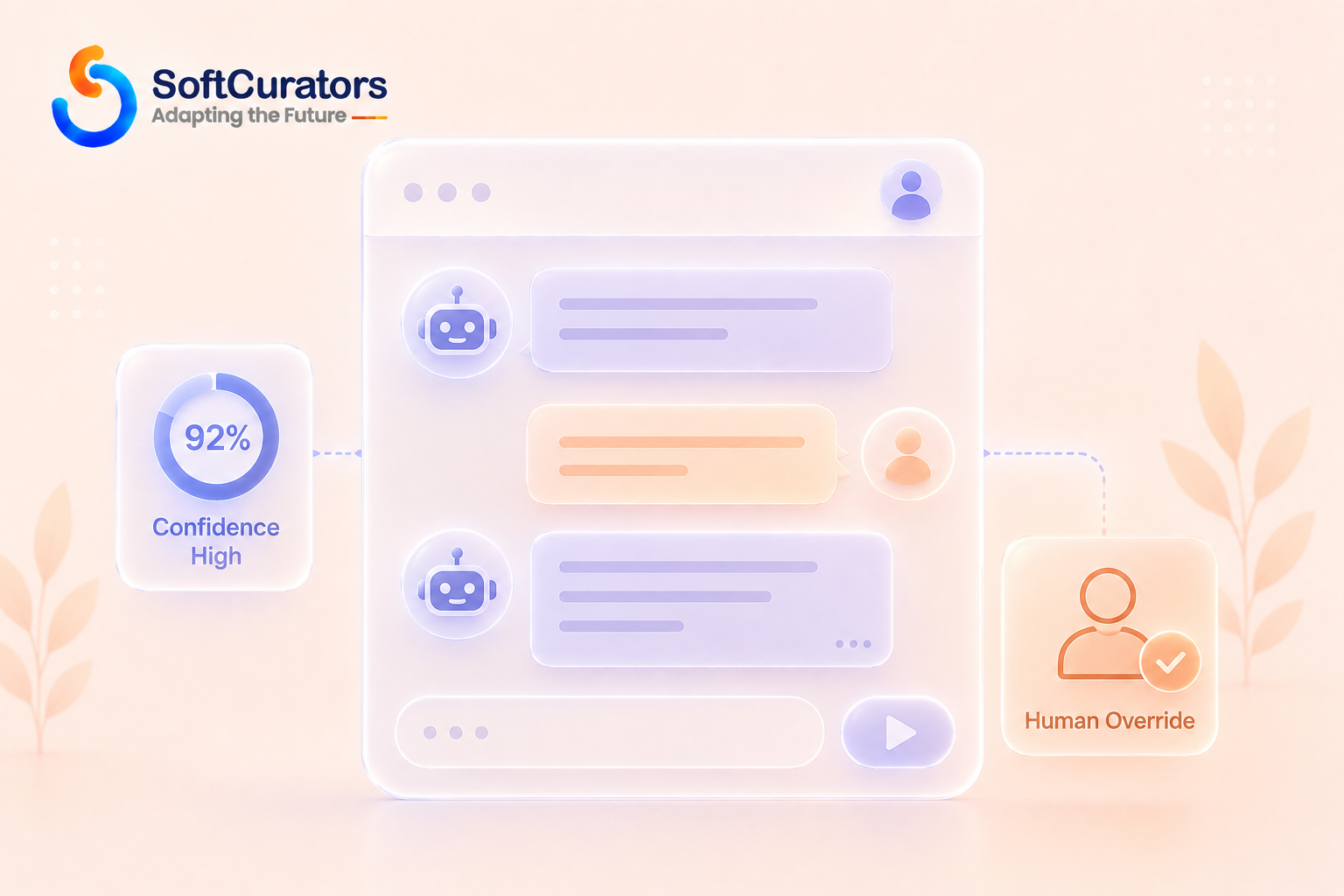
For any feature where a wrong answer has real cost, design the interface to show where an answer came from , a cited source, a confidence indicator, or a clear “AI-generated, verify before relying on this” signal , rather than presenting model output with the same unqualified certainty as a database lookup. This is a design decision, not a model decision, and it’s one of the more consistently under-built parts of AI products we review.
Build a Human Escape Hatch
Every AI feature that touches a real decision needs a clear path for a user to override, correct, or escalate past the model, and that path needs to be genuinely easy to find, not buried three menus deep. The products that lose user trust fastest are the ones where the model is confidently wrong and there’s no visible way to correct course.
Common Mistake: Testing an AI feature only on the inputs the team thinks users will send, then discovering in production that real users phrase things the team never anticipated. Model behavior on edge cases and adversarial or unusual phrasing needs dedicated testing time, not an assumption that it will “probably be fine.”
Why Does Your Data Foundation Matter More Than Your Model Choice?
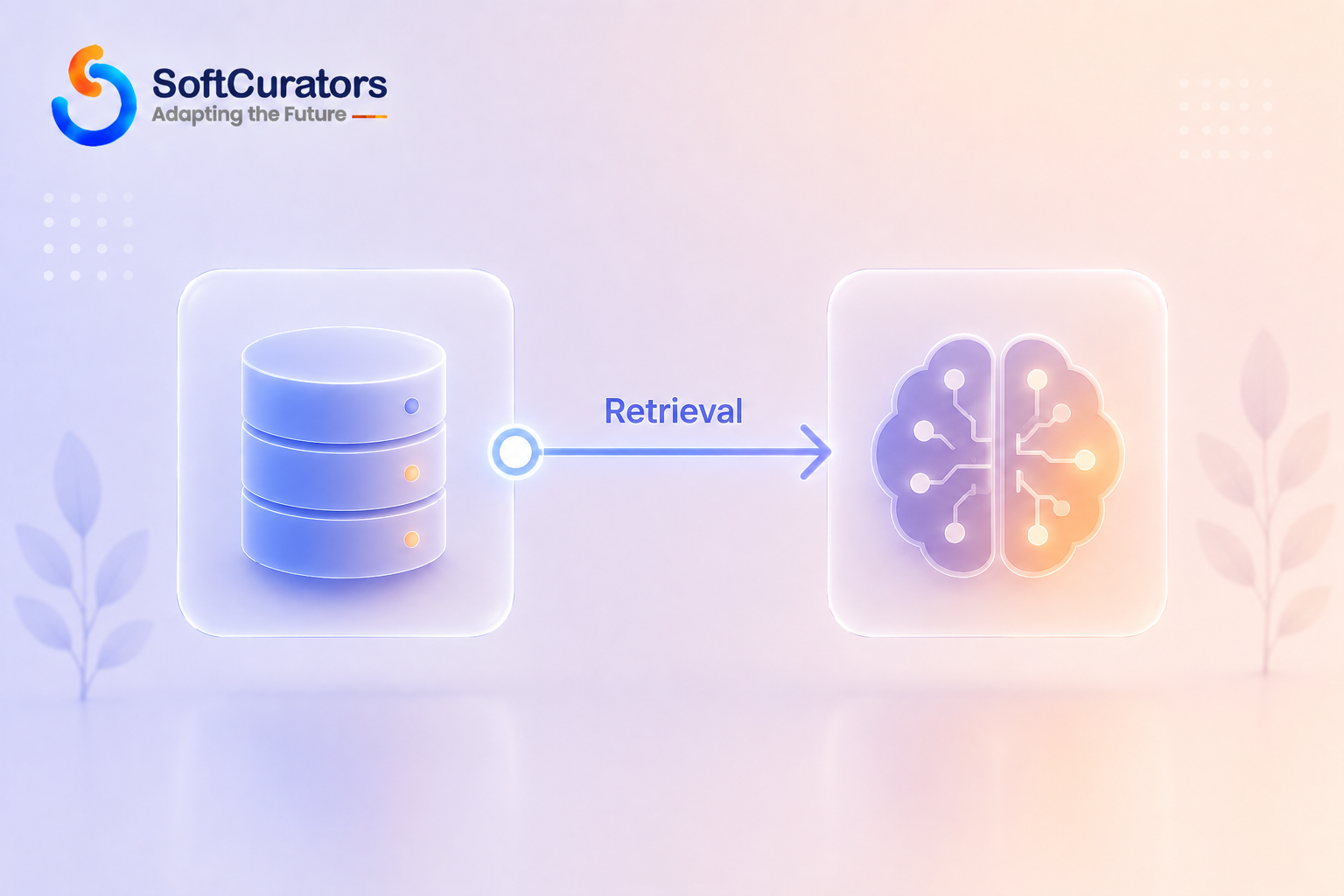
A foundation model already knows general language, general reasoning, and a broad slice of public knowledge. What it doesn’t know is your product’s specific data , your users, your catalog, your documents, your history. The technique for giving a model access to that specific information without retraining it is called retrieval-augmented generation, or RAG: at request time, you retrieve relevant information from your own data store and include it in what you send the model, rather than expecting the model to already know it.
Why RAG Beats Fine-Tuning for Most “Knows Our Data” Use Cases
RAG updates instantly when your underlying data changes , add a new document, and the next query can retrieve it immediately, with no retraining. Fine-tuning bakes information into the model’s weights at a specific point in time, which means new information requires retraining to become available. For most product use cases where the underlying data changes regularly , a catalog, a knowledge base, a set of listings , RAG is both cheaper and more current than fine-tuning would be for the same goal.
Our AI-powered DataOps guide covers the broader practice of building and maintaining the data pipelines this depends on , the RAG technique is only as good as the data store feeding it, in the same way any AI feature is only as good as its underlying data foundation.
Business Insight: A common but incorrect claim in AI product pitches is that proprietary data alone creates a defensible advantage. It’s true only if that data is genuinely hard for a competitor to replicate and genuinely improves the model’s output in a way users notice , a small, generic dataset wrapped in a RAG pipeline isn’t a moat, it’s a feature. Be honest with yourself about which one you actually have.
Prompting vs. Structured Outputs: Building AI Features That Don’t Break in Production
A prompt that works well in testing can produce inconsistent output formats once real, varied user input reaches it , which is fine for a demo and a real production reliability problem for a feature other parts of your app depend on parsing correctly.
Structured Output and Function Calling
Most major providers support requesting output in a defined structure , a specific JSON schema , or having the model call a defined function with structured arguments, rather than free-form text you then have to parse and hope is consistent. If your AI feature’s output feeds into other code (populating a database field, triggering an action, rendering a specific UI component), use structured output from the start rather than parsing free text and patching the parser every time a new format shows up.
Prompt Engineering Is a Real Skill, Not a One-Time Task
Technical Note: Treat your prompts as versioned code, not a one-time configuration you write and forget. A prompt that performs well on today’s model version can behave differently after a provider updates the underlying model, which is a real, recurring maintenance task, not a rare exception.
Do You Need an Agentic or Multi-Model Architecture?
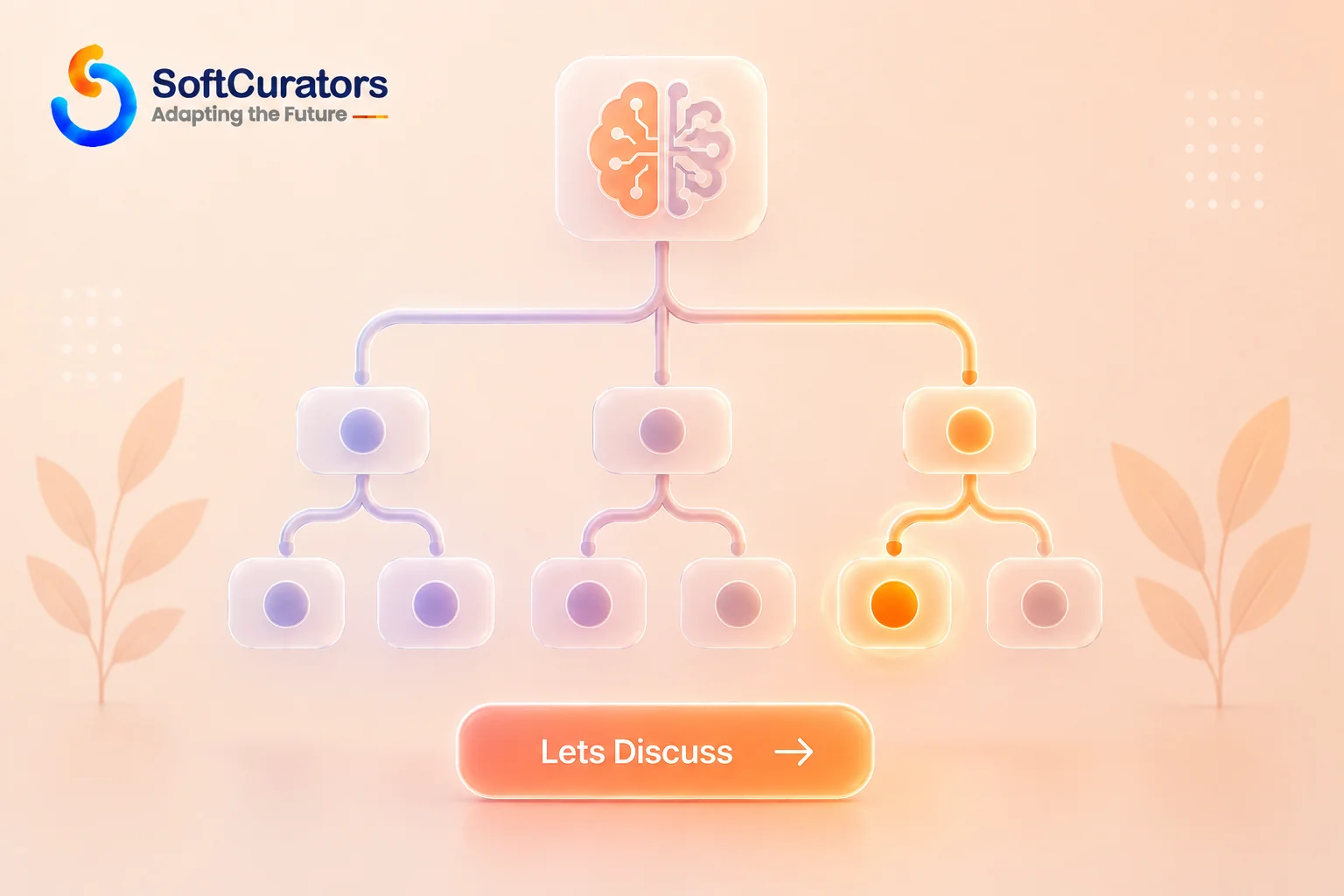
An AI agent, in the current use of the term, is a system where a model doesn’t just respond once , it decides which tool or function to call, evaluates the result, and decides what to do next, potentially across several steps, to complete a task rather than answer a single question. This is a genuinely different architecture pattern than a single request-response AI feature, and it’s worth being precise about whether you actually need it.
When a Single Call Is Enough
If your feature answers one question or performs one transformation per user action , summarize this, classify this, generate this , a single request to a model is the right architecture, and adding agentic complexity on top of it adds latency, cost, and failure surface for no real benefit.
When Multi-Step Reasoning Actually Earns Its Complexity
An agentic pattern earns its complexity when a task genuinely requires the model to gather information, take an action, check the result, and decide on a next step , booking a multi-part itinerary, researching across several data sources before answering, or executing a workflow with conditional branches a single prompt can’t reasonably encode.
Risk Alert: Multi-step agentic systems compound failure probability , if each step has a small chance of a wrong or unexpected outcome, a five-step task carries meaningfully more risk of ending up somewhere you didn’t intend than a single call does. Add explicit checkpoints where a human can review or halt the process for any agentic workflow with real-world consequences, rather than letting it run fully autonomously by default.
Using Different Models for Different Steps
A related pattern worth knowing: not every step in a workflow needs your most capable , and most expensive , model. A cheaper, faster model can often handle classification or routing steps, reserving a more capable model for the step that actually requires deeper reasoning. This is a genuine cost optimization once you have a multi-step feature in production, though it’s not worth the added complexity for a first version.
Expert Recommendation: Don’t reach for an agentic architecture because it’s the current default answer to “what’s next” in AI product discussions. Reach for it because your specific task genuinely requires multiple dependent steps a single call can’t handle , and even then, ship the single-call version first if any part of the task can be scoped that narrowly.
What Security and Compliance Risks Are Specific to AI Features?
AI features introduce risks that don’t exist in conventional software, and general mobile app security guidance doesn’t cover them.
Prompt Injection
A malicious or careless user can craft input designed to make a model ignore its original instructions , for example, embedding hidden instructions in a document your AI feature is asked to summarize. The OWASP Top 10 for Large Language Model Applications documents this and related risks in detail and is worth reviewing directly during design, not after an incident. This is the AI-specific equivalent of input validation, and it deserves the same seriousness.
Data Sent to Third-Party Model Providers
Every request to a foundation model API sends your data , potentially including user data , to a third-party processor, which has real implications under regulations such as the General Data Protection Regulation for EU/EEA users. Review your provider’s data processing terms specifically for your use case, and don’t send data to a model provider that your own privacy policy doesn’t disclose you’re sharing.

Governance: Treat This as a Managed Risk, Not a One-Time Checklist
The NIST AI Risk Management Framework offers a useful structure for thinking about AI-specific risk on an ongoing basis , mapping, measuring, and managing risk continuously , rather than a single pre-launch review that’s never revisited. Our overview of mobile app security and compliance covers the general mobile security foundation this sits on top of.
Risk Alert: If your AI feature touches regulated data , health, financial, or otherwise sensitive information , the compliance requirements of that domain apply on top of everything in this section, not instead of it. Our coverage of security and compliance for digital lending platforms is one example of what that looks like in a specific regulated vertical.
How Do You Turn This Into an MVP You Can Actually Ship?
Everything in this guide so far answers “what should we build,” not “what should we build first.” Those are different questions, and conflating them is how a two-week API integration turns into a three-month project.
Ship the Narrowest Version That Tests Your Actual Hypothesis
Your first version should test one specific claim , that AI-generated summaries save users time, that AI-matched recommendations convert better than manual filters , not attempt every feature the eventual product might have. Strip the interface, the edge-case handling, and the polish down to whatever’s needed to get a real answer to that one claim from real users, and build the rest only once that claim holds up.
Instrument Before You Launch, Not After
Decide what “the AI feature is working” actually means in measurable terms , time saved, conversion lift, reduced support tickets , before you ship, and put the tracking in place from day one. Teams that skip this end up with a feature everyone has an opinion about and no data to settle the argument.
Our MVP development approach and prototype development service both apply directly here , the same discipline that keeps a conventional MVP narrow applies to an AI feature, arguably more so, since AI features carry the added risk of looking impressive in a demo while failing to hold up against real, varied user input.
Common Mistake: Building the full evaluation framework, the fine-tuning pipeline, and the multi-provider fallback system before shipping anything to a real user. All of that infrastructure is worth building once you know the feature works. Building it first is optimizing a feature you haven’t validated yet.
Who Do You Actually Need on Your Team to Build This?
Our honest view: most founders building their first AI feature don’t need a dedicated ML team, and hiring one before validating the product with an API-based version is a common, expensive mistake.
For a Foundation Model API Build
Product engineers who already know how to call a REST API and handle asynchronous responses can build most API-based AI features without specialized ML background. The skill that matters more than ML theory here is careful product design around the failure modes covered earlier in this guide.
When You Actually Need ML-Specialized Talent
Fine-tuning benefits from someone who understands data quality and evaluation methodology, even if they’re not training models from scratch. Custom model training requires dedicated ML engineers who understand model architecture, training infrastructure, and ongoing performance monitoring , this is a distinct discipline from general software engineering, and treating it as something a strong generalist engineer can pick up on the side is how custom model projects quietly stall.
For teams building their first AI feature without existing in-house AI expertise, our AI consulting services and AI app development work covers exactly this gap , scoping and building the API-based version correctly the first time, which is both faster and cheaper than a well-intentioned custom build that turns out to underperform an API anyway.
In-House vs. a Development Partner for Your First AI Feature
Our view: for a first AI feature, working with a team that has already made and learned from the architecture mistakes covered in this guide is worth more than the time spent hiring and onboarding an in-house team before you know whether the feature earns its keep. Bring AI capability in-house once you have a validated feature and a clear, ongoing roadmap that justifies dedicated headcount , not as the default starting point.
How Do You Test an AI Feature Before Shipping It?
Standard software testing checks that a known input produces a known, exact output. AI features need a different discipline, generally called evaluation, because the same input can legitimately produce different valid outputs, and “correct” is often a matter of degree rather than a pass/fail check.
Build an Evaluation Set Before You Build the Feature
Assemble a representative set of real or realistic inputs, including deliberately difficult and edge-case examples, along with a clear definition of what a good response looks like for each. Run this set against every meaningful change , a new prompt, a new model version, a new provider , so you can measure whether a change actually improved things instead of guessing from a handful of manual spot checks.
Human Review Still Matters, Especially Early
Operational Perspective: Before you fully trust automated evaluation metrics, have a human review a meaningful sample of real production outputs on a regular cadence, not just during initial testing. Automated metrics can miss subtle quality problems , a technically correct but unhelpful answer, for instance , that a human reviewer catches immediately.
Our overview of mobile app testing, deployment, and maintenance covers the broader QA process this evaluation discipline sits alongside, for the parts of your app that aren’t AI-driven.
How Do You Budget and Plan Timeline for an AI Feature Realistically?
Two separate numbers need to go into your plan, and conflating them is a common source of budget surprises: the engineering cost to build the feature, and the ongoing inference cost to run it , these come from different places, scale differently, and need to be tracked separately.
Engineering Cost Follows Normal Software Estimation, With One Addition
Building an API-based AI feature is estimated like any other feature of comparable UI and integration complexity, plus dedicated time for the evaluation-set work covered earlier in this guide , teams that skip budgeting time for evaluation almost always end up doing it informally and late, under pressure, which produces a worse evaluation process than doing it deliberately from the start.
Inference Cost Needs a Usage Model, Not a Guess
Before launch, estimate your typical request’s input and output size, multiply by your expected request volume, and apply current provider pricing to get a real monthly figure , then stress-test that estimate against your worst-case input size, since a small number of unusually large requests can dominate your actual bill in ways an average-case estimate misses entirely.
Our mobile app development cost and pricing guide and mobile app cost calculator both cover the non-AI engineering cost baseline this sits on top of, for teams scoping a full app rather than a single feature added to an existing one.
Business Insight: Budget a specific, separate iteration phase after initial launch, not as a contingency you hope not to need. Your evaluation set will reveal gaps you didn’t anticipate, and prompt or model adjustments in response to real usage are a normal, expected part of getting an AI feature right, not a sign the first version was built poorly.
Common Mistakes Founders Make Building AI-Powered Apps
- Starting with a custom model or fine-tune before validating the idea with an API. This is the single most expensive sequencing mistake in this guide, and it’s avoidable.
- Shipping without a per-user or per-request cost ceiling. Token-based pricing scales with usage in ways that surprise teams who haven’t modeled their worst-case input size.
- Treating a prompt as a one-time configuration instead of versioned, monitored code. Model updates from your provider can silently change behavior your product depends on.
- Presenting model output with the same certainty as a database lookup. Users need to know when they’re looking at a generated answer that could be wrong, especially where being wrong has real cost.
- Skipping prompt injection review because it “sounds like a hypothetical.” It’s a documented, real risk category with an entire OWASP project dedicated to it.
- Assuming proprietary data automatically creates a competitive moat. It only does if that data is genuinely hard to replicate and measurably improves output quality.
- Hiring a dedicated ML team before shipping anything. Most first AI features don’t need one, and hiring early is a common way to burn runway on capability you don’t yet know you need.
- Reaching for an agentic, multi-step architecture by default. Most tasks are a single call. Multi-step complexity should be earned by the task’s actual requirements, not adopted because it’s the current trend.
- Estimating engineering cost but not ongoing inference cost. These come from different places and scale differently , budgeting only for the build, not the run, is a recurring and avoidable planning gap.
What Do Real AI-Powered App Implementations Actually Look Like?
The architecture and decisions in this guide play out differently depending on the specific product category. We’ve published detailed breakdowns across several verticals, each applying these principles to a real feature set.
- AI-powered property recommendation systems explained and our AI property valuation apps development guide, covering recommendation and valuation models in real estate specifically.
- AI in real estate mobile apps, covering the broader feature set , chatbots, computer vision, virtual tours , across a single vertical.
- AI in loan lending and AI in credit scoring, covering AI applied to regulated financial decisions, where the “cost of being wrong” framing from earlier in this guide matters most.
- AI in music streaming apps and the future of AI in music streaming platforms, covering recommendation and generative AI in a media context.
- How to develop an AI music generation app like Suno AI, a specific example of a generative AI product built primarily on foundation model APIs rather than custom training.
What’s Actually Changing in AI App Development Right Now?
The following are directional trends based on current momentum, not settled fact , verify against current provider documentation before treating any of these as a firm planning assumption.
- Structured output and function calling becoming the default, rather than an advanced technique, as more providers build native support and more teams learn to rely on it over free-text parsing.
- Narrower, cheaper specialized models increasingly handling specific tasks well enough to replace a general-purpose model for that one use case, shifting some cost-conscious teams toward a multi-model architecture rather than a single provider for everything.
- Evaluation tooling maturing as a distinct discipline, with more teams building the evaluation-set practice described earlier into standard release processes rather than treating it as optional.
- Growing regulatory attention on AI-driven decisions, particularly in regulated industries, likely increasing the documentation and review burden around any AI feature that materially affects a user outcome.
Final Summary and Next Steps
Building an AI-powered app well comes down to a small number of decisions made in the right order: confirm AI is actually solving a judgment-under-ambiguity problem, start with a foundation model API rather than committing to fine-tuning or custom training upfront, understand what actually drives your inference cost so it doesn’t surprise you, and design the product around how models actually fail rather than pretending they behave like deterministic software.
The founders who get this right treat their first AI feature as something to measure and iterate on, not something to over-engineer before they know whether it works. They start cheap and fast with an API, keep their model access swappable, and only move to a more expensive, more committed architecture once real usage data tells them the API version has hit a real ceiling , not before.
Consultant’s Tip: Before your next planning conversation, write down the specific judgment call your AI feature makes, what a wrong answer costs a user, and your rough monthly request volume estimate. Those three numbers determine almost every other decision in this guide, and most teams start building without having worked them out.
Risk Alert: None of the frameworks in this guide are a one-time decision. Model capability, pricing, and provider terms all continue to shift, sometimes significantly, and an architecture choice that was correct at launch can be worth revisiting a year later. Build a recurring review of your AI architecture into your regular product planning, rather than treating this guide as something you consult once and never again.
Next Step
If you’re deciding between a foundation model API, fine-tuning, or a custom build for your specific product, a Technical Audit with Softcurators is a direct way to work through your actual use case, cost model, and architecture options before committing engineering time to any one path. Softcurators works across AI development, AI app development, and AI automation. You can review our AI app development solutions page, browse our broader services overview, or get in touch directly to talk through your specific product.
Frequently Asked Questions
How much does it actually cost to build an AI feature?
For an API-based feature, initial build cost is comparable to any other product feature of similar complexity; the number that actually varies is ongoing inference cost, which is driven by how much text (or other input) you send the model per request and how many requests you make , not by an abstract complexity rating.
Should I fine-tune a model or just write a better prompt?
Try a better prompt first. Prompt changes are fast to test and cost nothing extra; fine-tuning requires data preparation and training time. Move to fine-tuning only once you've hit a consistent quality ceiling that better prompting genuinely can't fix.
What's the difference between RAG and fine-tuning?
RAG retrieves relevant information from your own data at request time and includes it in what you send the model, updating instantly as your data changes. Fine-tuning bakes information into the model's weights at training time, requiring retraining for new information to become available.
Is it risky to build my entire product around a single AI provider?
It creates vendor dependency risk around pricing and availability, which is manageable if you build your model access behind an internal interface that makes switching providers a configuration change rather than a rewrite.
How do I estimate what my AI feature will cost to run before launch?
Estimate the typical input and output size for a realistic user interaction, multiply by expected request volume, and apply the provider's current per-token pricing. Model your worst-case input size too, since a small number of unusually long requests can dominate your bill.
What's prompt injection, and should I actually worry about it?
Prompt injection is an attempt to make a model ignore its original instructions through crafted input, including input hidden inside documents or data the model processes. It's a documented, real risk category, not a hypothetical, and it deserves specific design attention for any feature that processes untrusted input.
Can I switch AI providers later without rebuilding my app?
Yes, if you build your model access behind an internal interface from the start rather than calling a specific provider's API directly throughout your codebase. This is worth the small amount of extra initial engineering effort.
How do I know if my AI feature is actually working well?
Build an evaluation set of representative and edge-case inputs with defined quality criteria, and run it against every meaningful change to your prompt, model, or provider. Supplement this with periodic human review of real production outputs, not automated metrics alone.
Does my proprietary data give me a real advantage over competitors using the same AI models?
Only if that data is genuinely difficult for a competitor to replicate and measurably improves your output quality. A small, generic dataset wrapped in a retrieval pipeline is a feature, not a durable competitive advantage.
What team do I need to build a fine-tuned model?
Someone who understands data quality and evaluation methodology is essential, even if they're not training models from scratch. You also need enough high-quality labeled examples of correct behavior , often hundreds to thousands , which is a higher bar than most teams expect going in.
Is a custom-trained model ever worth building for a startup?
Rarely, and usually only once you have a clear, measured reason a foundation model can't meet , genuinely unusual data, hard regulatory isolation requirements, or a proven usage volume where infrastructure cost beats ongoing API cost. Very few startups reach that point before an API-based version would have already told them what they need to know.
How do I keep AI features from breaking when a provider updates their model?
Maintain an evaluation set and run it against new model versions before adopting them in production, treat prompts as versioned code, and avoid hard-coding assumptions about exact output format , use structured output requests instead of parsing free text.
Do AI features need different security review than regular app features?
Yes. Prompt injection, data sent to third-party model providers, and output that could leak information the model was given elsewhere are all risks specific to AI features that standard mobile security review doesn't cover on its own.
What's the biggest hidden cost in AI-powered apps?
Ongoing inference cost that scales with usage and input size, which is easy to underestimate because it doesn't show up until real users start sending real (and sometimes unexpectedly long) requests at volume.
Should every AI feature show its sources or confidence level?
Not every feature needs this, but any feature where a wrong answer carries real cost to the user should. Low-stakes features (a casual recommendation) can present output more directly than high-stakes ones (a financial or medical-adjacent suggestion).
How long does it realistically take to build and ship a first AI feature?
An API-based feature can often reach a working, testable version in days to a few weeks, depending on the surrounding product work required, not the AI integration itself, which is usually the fastest part of the build.
Can AI features work well without an internet connection?
Foundation model APIs require connectivity, since the model runs on the provider's infrastructure, not the user's device. Fully offline AI requires an on-device model, which is a different and more constrained technical path with its own trade-offs.
What happens if the AI model gives a wrong or harmful answer to a user?
This is exactly why the "cost of being wrong" question belongs at the start of your planning, not after launch , it determines how much human oversight, confidence signaling, and fallback design the feature needs before it's safe to ship.
Is it better to build one AI feature well or several AI features at once?
One feature built well, measured, and iterated on teaches you more about whether AI is actually improving your product than several features shipped simultaneously without a clear success measure for any of them.
How do I compare different foundation model providers for my specific use case?
Weigh latency requirements and context window needs first, since they can eliminate options outright, then compare quality on your actual task using an evaluation set , not a general benchmark leaderboard , and review data handling terms for your specific plan tier.
Does adding AI features increase our data privacy obligations?
Often yes, since sending user data to a third-party model provider is a form of data processing that may bring additional obligations depending on your operating markets, including regulations like GDPR for EU/EEA users. This is jurisdiction-specific and worth reviewing with legal counsel.
What's the difference between AI evaluation and regular QA testing?
Regular QA checks that a known input produces a known, exact output. AI evaluation measures output quality against defined criteria across a representative set of inputs, accounting for the fact that the same input can produce different, still-valid outputs across separate model calls.
Should a non-technical founder be involved in the model selection decision?
Yes, specifically on the cost-of-being-wrong and latency-tolerance questions, since those are product and business decisions, not purely technical ones. The technical comparison of specific providers can happen after those parameters are set.
What's a realistic first step if I'm not sure AI is right for my product yet?
Run your idea through the filter covered earlier in this guide , state the specific judgment call in one sentence, and identify what a wrong answer costs. If you can't do both clearly, that's worth resolving before any technical work starts, through a structured product discovery conversation rather than jumping straight to a build.
What is an AI agent, and do I need one?
An AI agent decides which tool to call and what to do next across multiple steps to complete a task, rather than answering a single question in one call. Most first AI features don't need this , reach for it only when a task genuinely requires multiple dependent steps a single prompt can't encode.
Should I build my MVP with the full evaluation and fallback infrastructure from this guide, or skip it initially?
Skip the heavier infrastructure , evaluation pipelines, multi-provider fallback, fine-tuning setup , for a first version. Ship the narrowest version that tests your core hypothesis, and build the supporting infrastructure once you know the feature is worth investing in further.
Can a smaller or cheaper model work just as well as the most capable option?
Often yes, particularly for narrow tasks like classification or routing within a larger workflow. Reserving your most capable, most expensive model for the step that actually requires deeper reasoning is a real cost optimization once a feature is proven, though not worth the added complexity for a first version.
How do I decide whether to hire an in-house AI team or work with a partner for my first feature?
For a first AI feature, working with a team that has already made and learned from common architecture mistakes is generally worth more than the time spent hiring in-house before you know the feature works. Bring capability in-house once you have a validated feature and an ongoing roadmap that justifies it.
Should I budget engineering cost and inference cost together or separately?
Separately. Engineering cost is a one-time or per-iteration expense estimated like any other feature; inference cost is an ongoing, usage-based expense that scales with adoption. Treating them as one number makes it harder to catch a cost problem before it grows with your user base.
What's the most common reason an AI feature's actual cost exceeds the estimate?
Underestimating worst-case input size. An average-case cost estimate misses the small number of unusually long requests , a long document, an extended conversation , that can dominate the actual bill in a way a typical-usage estimate doesn't account for.
Is it normal for an AI feature to need adjustment after launch?
Yes, and it should be planned for, not treated as a sign of a poorly built first version. Real usage reveals input patterns and edge cases an evaluation set built before launch couldn't fully anticipate, and iterating in response is a normal part of the process.
How do I know when it's finally time to move from an API to fine-tuning or a custom model?
When you've shipped and measured the API version, identified a specific, repeated failure pattern it can't fix through better prompting, and confirmed you have the data volume and quality to meaningfully improve on it , not before, and not based on a general sense that a custom approach would be better.
