

Fintech
Loan Lending App Development Company
Most lending platforms don’t fail because the mobile app looks dated. They fail because the underwriting model was never validated against real repayment data, the licensing map had gaps nobody caught until a state regulator did, or collections was an afterthought bolted onto a support ticket system. A loan management system has to get the credit-risk logic, the compliance architecture, and the servicing infrastructure right before the borrower-facing screens matter at all this is fintech app development at its most unforgiving, since lending sits at the sharper end of what falls under what is fintech broadly. SoftCurators builds all three in parallel as a loan lending app development company not underwriting first and compliance later, which is the sequencing mistake that causes most rebuilds.






Fintech
Why Loan Lending App Development Looks Different Years Ahead
Credit scoring has genuinely moved past bureau-only decisioning. Cash flow underwriting assessing a borrower’s actual bank transaction data rather than relying solely on a FICO score has gone from a niche technique to mainstream practice, with recent industry survey data showing a strong majority of U.S. consumer lenders now report increased confidence in using alternative credit data alongside traditional scores.The CFPB’s Section 1033 rule, finalized in October 2024, was meant to mandate exactly this kind of standardized API access — though the rule is currently enjoined by a federal court and under CFPB reconsideration, so the specific compliance timeline remains unsettled even as the underlying shift toward API-based, consumer-permissioned data access continues across the industry.State-by-state licensing has also gotten more complicated, not less. Non-bank lenders generally need a license in every state where they originate or arrange credit, and regulators are paying closer attention to bank-partnership lending arrangements through “true lender” analysis evaluating whether the fintech or the partner bank is really the party bearing credit risk and setting loan terms, regardless of how the paperwork is structured. A handful of states have also moved to extend licensing obligations to third-party marketers and servicers operating on behalf of a bank partner, which matters directly for any lending platform built on a bank-partnership model rather than direct balance-sheet lending. Algorithmic underwriting is under real scrutiny too. Fair-lending law already applies to automated credit decisions, and states are starting to legislate around it directly California, for instance, now requires risk assessments, consumer notices, and opt-out rights when automated decision-making is used in financial services decisions. For a lending platform using machine-learning-based scoring, this means model documentation and explainability aren’t optional extras; they’re part of the underwriting build itself. Embedded lending credit offered by a non-lender at the point of need, inside an e-commerce platform, accounting software, or vertical SaaS tool is also pulling meaningful loan volume away from standalone lending apps. Platforms like Shopify Capital and similar merchant-financing programs show how contextual, first-party transaction data can underwrite a loan faster than a borrower filling out a traditional application. For NBFCs and regulated lenders specifically, India’s RBI Digital Lending Directions, 2025, consolidated the rules governing how digital lenders onboard borrowers, structure fund flows, and supervise lending service providers a good preview of how regulators globally are moving from guidance toward binding, audited frameworks for digital lending operations.
Types of Loan Lending App Solutions We Offer
Choose based on where your capital actually comes from and who your borrower is. A platform with investor capital lined up but no borrower acquisition channel should look hard at the P2P model’s dual compliance burden before committing; a platform sitting on rich transaction data from an existing non-lending product is usually better suited to embedded lending than to building a standalone consumer-lending brand from zero. Direct, balance-sheet lending shares the most in common architecturally with traditional banking app development, since the lender is carrying full credit and capital risk itself.









Key Features of Loan Lending Apps
- Seamless Registration & Login.
- Loan Application Form
- Credit Score Dashboard
- Loan Tracker
- Payment Integration
- Notifications & Alerts
- Customer Support
- Registrations and Approvals
- Investment Dashboard
- Loan Allocation
- Repayment Alerts
- Analytics & Forecasting
- Dashboard & Analytics
- User Management
- Lenders Management
- Loan Management System
- Risk Assessment Tools
- Document Verification
- Payment & Revenue Management
- Compliance & Reporting
Advanced Features That Set Our Loan Apps Apart
Real-Time Loan Status Tracking
Multi-Language Support
AI-Powered Credit Assessment
Secure Cloud Storage & Encryption
Fraud Detection & Prevention
Custom EMI Calculators
Multi-Payment Gateway Integration
Push Notifications & Reminders
Analytics Dashboard for Admin & Lenders
Regulatory Compliance and Security
Compliance and Security is very critical in fintech apps and Softcurators keeps it on priority. Apps we create fulfil the financial regulations making sure about the data integrity, privacy and fraud protection.
Budget and Planning Considerations Beyond Engineering
Founders scoping a loan lending app development budget typically account for design and engineering, then get caught off guard by four recurring cost centers: state-by-state lending license fees and legal costs, which scale with how many states the platform intends to operate in and rarely stay fixed; credit bureau and alternative-data integration fees, usually priced per pull or per API call and easy to underestimate at volume; ongoing underwriting model tuning as default data accumulates, since a model calibrated on thin pre-launch data needs real recalibration within the first few repayment cycles; and collections and servicing operational costs that scale with loan volume, not just headcount for a fixed support team. This overlaps with the broader line items we flag when clients ask about the cost to build a fintech app treat all four as recurring operating costs tied to loan volume, not one-time development line items, because none of them stop once the platform is live.
Our Build Process for Loan Lending Platforms
Before any screens are designed, we document who this lender wants to serve, what default rate is tolerable, and what data sources will actually inform that decision a lending platform without a defined credit box ends up either too restrictive to grow or too loose to survive its first default cycle.
We identify which states require a lending license, a servicer license, or both, and whether a bank-partnership model changes the answer this decides the platform’s legal entity structure, not just its go-to-market plan.
The decisioning engine, KYC/AML checks, and disclosure logic are built in the same development cycle as the application and origination screens, not scheduled for a compliance phase that arrives after the UI is already finished.
Staged collections logic, hardship-program handling, and regulatory-compliant contact rules are built before the first loan book exists, since retrofitting collections onto a live portfolio is where most operational fires start.
Payment rails, amortization logic, and the borrower dashboard get built and load-tested against realistic repayment volume, including edge cases like partial payments and early payoff.
Rather than opening origination broadly, we launch with a capped loan volume in one or two licensed states, validate default rates and collections throughput against the underwriting model’s assumptions, then scale origination.
Post-pilot, the underwriting model gets recalibrated against actual outcomes a model built on synthetic or bureau-only data before launch will drift once real repayment behavior starts coming in, which is exactly the stage where teams without in-house data science bandwidth often bring in AI consulting services rather than guessing at the recalibration.
Monetization Strategies for Your Loan Lending App
Interest and processing fees

Late payment or penalty charges

Subscription models

Advertising & promotions
Cashback partnerships

Commissions on transactions
Core Capabilities Every Loan Lending Platform Needs |
Loan origination workflow
application intake, document collection, and conditional approval logic that can branch by loan type without a separate codebase per product.
Underwriting and credit-decisioning engine
combining bureau data, alternative data, and business rules into a single, auditable decision, built with the same AI development discipline we apply across other lending-adjacent products, with a documented rationale for every approval, decline, or manual-review referral.
KYC/AML and identity verification
borrower identity confirmation and sanctions/watchlist screening built into onboarding, not a manual compliance step run after the loan is already active.
Alternative credit scoring
bank transaction data and cash flow analysis layered on top of bureau scores, which matters most for thin-file or credit-invisible borrowers who’d otherwise be auto-declined.
Loan servicing and repayment scheduling
amortization logic, payment processing, and automated adjustments for early payoffs, partial payments, or restructuring requests.
Collections and delinquency management
a structured, staged workflow (reminder, negotiation, escalation) rather than a single generic “past due” notification that treats every delinquent borrower the same way.
Regulatory reporting and audit trails
every underwriting decision, disclosure sent, and collections action logged in a form that can be reproduced for an examiner without a manual reconstruction project.
E-signature and document management
loan agreements, disclosures, and amendments signed and stored in a compliant, retrievable format tied to the specific loan record.
Borrower-facing dashboard
real-time loan status, repayment schedule, and payment history, designed through a UI/UX design process focused on reducing inbound servicing calls simply by making the information visible.
AI & ML Modules for Loan Lending Apps
Integrating AI and ML can upgreade your lending app by refining credit decisioning, fraud detection and predictive analytics
Contact Us
Ready to Build a Lending Platform That Holds Up Under Its First Audit?
Talk to SoftCurators about mapping your licensing footprint, designing your credit box, and building underwriting and collections tooling that scales with your loan book — see our work or get in touch to start scoping your platform.
Tech Stack for Loan Lending Platforms
SoftCurators uses modern, scalable and future ready technologies for Loan Lending App development.
- Flutter
- React Native
- Swift
- Kotlin
- Node
- Laravel (PHP)
- Python / Django
- Java / Spring
- MongoDB
- PostgreSQL
- Firebase
- Stripe, PayPal, Razorpay, Braintree
- Bank APIs
- OAuth 2.0
- SSL/TLS Encryption
- AES-256 Encryption
- Biometric Authentication
- Tokenization
- AWS / Google Cloud / Azure
- Cloud-based backups
- Onfido / Jumio / IDology
- AML Screening
Feel the difference
Industries and Use Cases Where Loan Lending App Development Drives Results
SME/business lending
working-capital and term loans underwritten against business cash flow and revenue patterns rather than personal credit history alone.
P2P/marketplace lending
platforms connecting individual or institutional capital directly to borrowers, requiring both lending compliance and investor-facing disclosure.
Embedded lending for retail or vertical-specific platforms
credit offered inside an existing non-lending product, such as a retail platform, agricultural input supplier, or logistics marketplace, using first-party transaction data already available on that platform.
Risk Mitigation, QA, and Launch Strategy
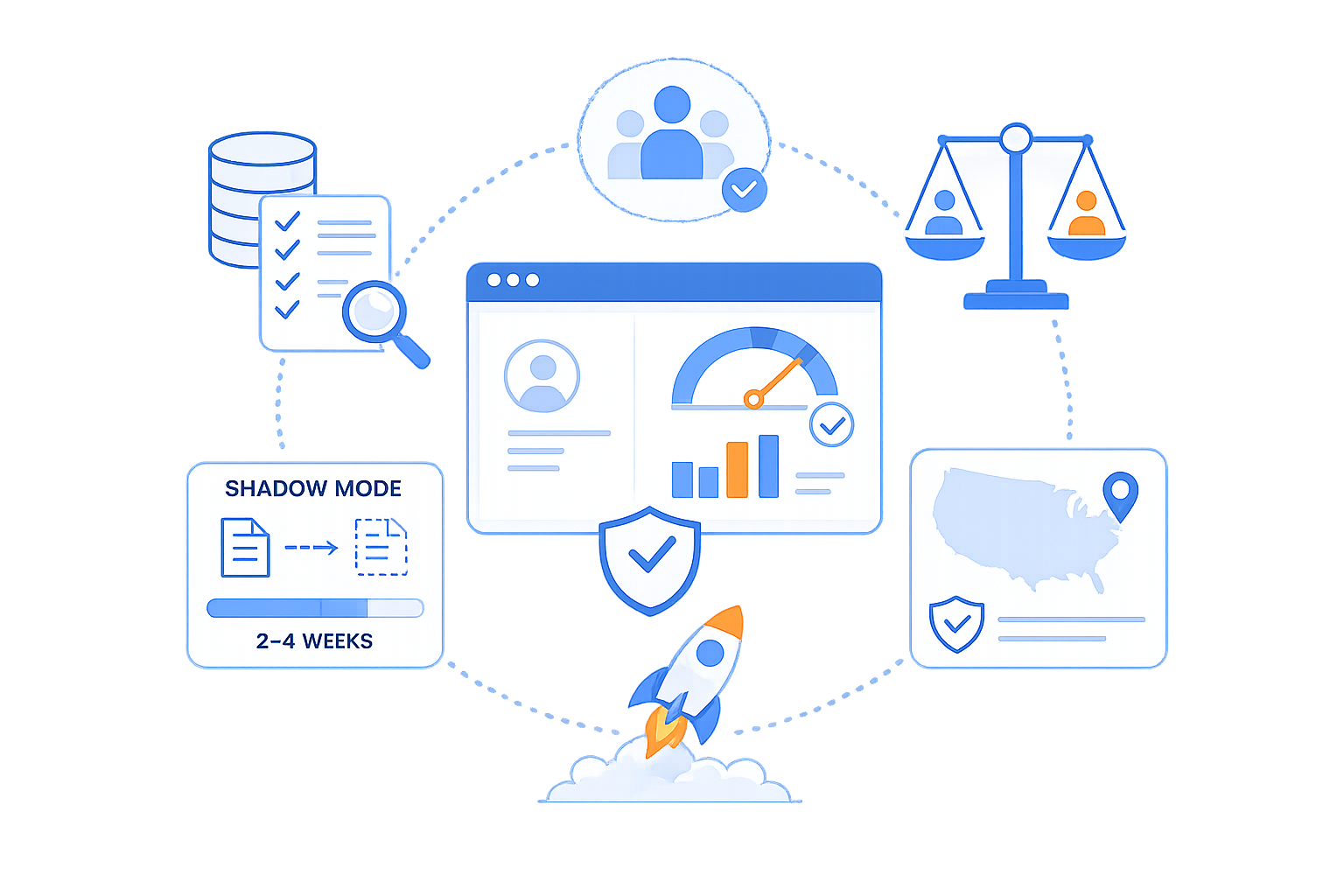
Three failure patterns show up consistently once a lending platform moves past its pilot phase. Underwriting model drift happens as the loan book grows past the size the original model was calibrated on a scoring model tuned on a few hundred pilot loans behaves differently at ten thousand, and it needs scheduled recalibration against real outcomes, not a one-time validation at launch. Licensing gaps discovered after expansion are a recurring and expensive failure mode a platform that mapped licensing correctly for its pilot states can still find a gap when it expands into a new state with different servicer-licensing rules, which is why licensing mapping needs to be revisited at every expansion, not just once at launch. And collections processes that don’t scale with delinquency volume turn a manageable problem into a portfolio-wide one test collections throughput against a realistic delinquency-rate projection, not the low delinquency rate typical of an early, small, highly-vetted pilot cohort.
Deployment, Maintenance, and Performance
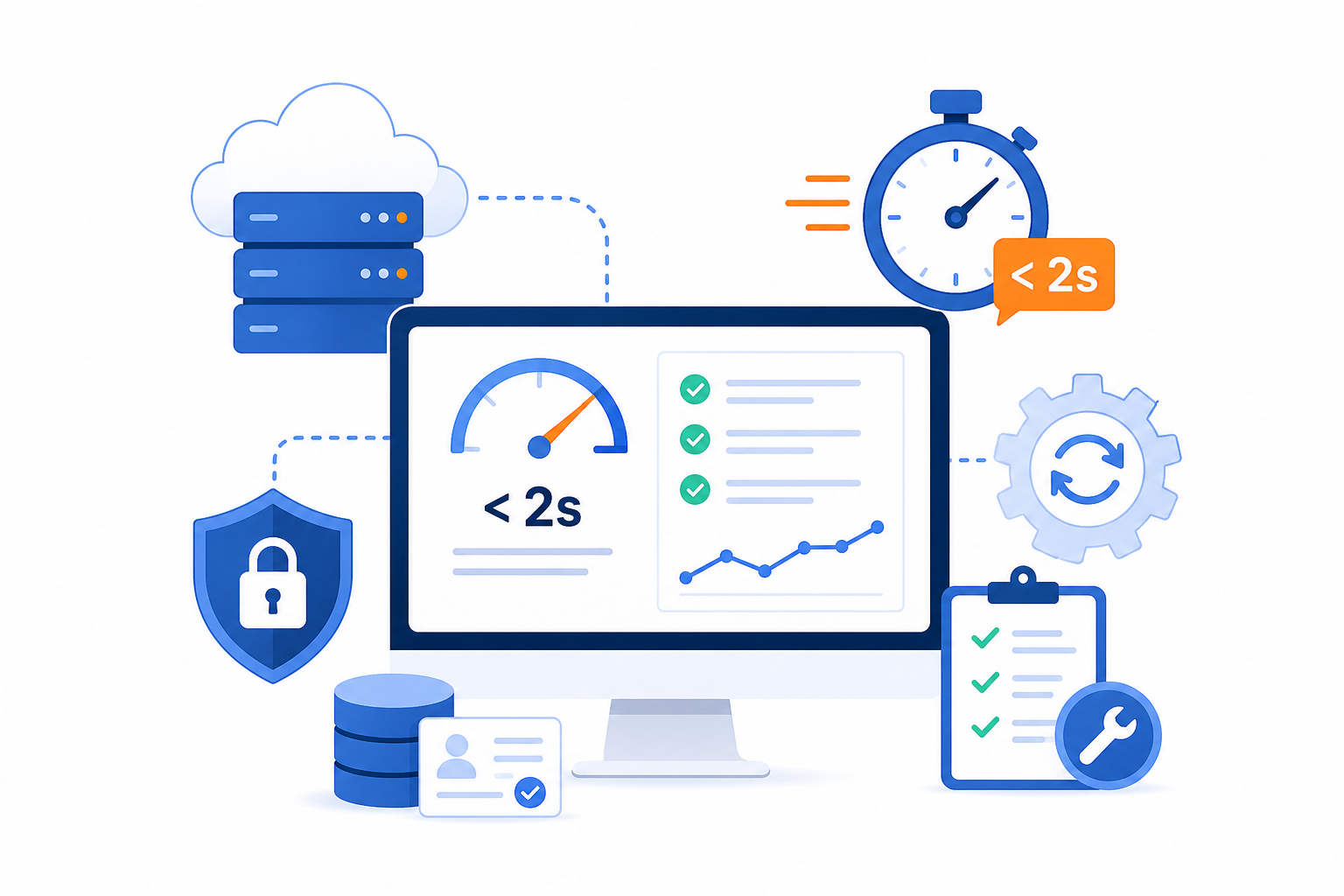
Underwriting model retraining has to happen on a schedule, not reactively — as repayment data accumulates, the model’s original assumptions about which signals predict default need to be re-validated, typically within the first several repayment cycles after launch. Regulatory reporting requirements change over time, and a platform’s audit-logging and reporting infrastructure needs to be flexible enough to accommodate new state requirements or federal rule changes without a full data-model migration each time — this is the kind of ongoing work best handled through ongoing maintenance and support services rather than a one-time handoff. And because disbursement and repayment processing are the two functions borrowers and lenders both depend on most, system reliability for these specific flows deserves dedicated monitoring and failover planning distinct from the general application uptime target — a delayed disbursement or a failed repayment charge has direct financial consequences in a way a slow-loading dashboard screen doesn’t.
Why Choose SoftCurators as your App Development Partner ?
Common Mistakes We See in Loan Lending Builds
|
Mistake
|
Why It Hurts
|
What To Do Instead
|
|---|---|---|
|
Launching origination before licensing is confirmed in target states
|
Loans originated without a required license can be unenforceable or void, exposing the lender to regulatory action
|
|
|
Underestimating collections infrastructure needs
|
Delinquency volume grows faster than a manual, ad hoc collections process can absorb
|
|
|
Relying solely on bureau data for underwriting
|
Thin-file and credit-invisible borrowers get auto-declined even when repayment capacity is genuinely there
|
Layer bank transaction and cash flow data on top of bureau scores from the initial underwriting design
|
|
Treating compliance as a legal-team afterthought
|
Disclosure and audit-trail requirements end up bolted onto a data model that wasn’t built to support them
|
Build compliance requirements into the schema and workflow from the first development sprint
|
|
Scaling origination volume before validating the underwriting model
|
Default rates surface at scale that a small pilot loan book never revealed
|
Run a capped pilot in one or two states and validate default rates before expanding origination
|
Lets Connect
Launch Your Loan Lending App with Confidence
Frequently Asked Questions
It depends on your state footprint and lending model. Most non-bank lenders need a lending license in every state where they originate or arrange credit, and some states additionally require a separate servicer or debt-collection license depending on who is actually collecting payments from borrowers.
It layers bank transaction data income consistency, spending patterns, account stability on top of or instead of a traditional bureau score, giving lenders a repayment-capacity signal for borrowers who are thin-file or credit-invisible under conventional scoring.
A pilot-ready platform origination, core underwriting logic, KYC/AML, and basic servicing for a capped loan book in one or two states takes meaningfully less time than a full multi-state platform, since MVP development intentionally defers features like advanced collections automation or multi-model scoring until pilot data justifies the investment.
Yes, if interest caps, disclosure language, and licensing rules are built as configurable data tied to each state rather than hardcoded into the application logic. this is the architectural decision that determines whether expanding to a new state takes weeks or a rebuild.
By documenting which factors the model weighs, testing for disparate outcomes across protected characteristics, and keeping a human-review path for borderline decisions, regulators and, increasingly, state law expect this kind of explainability for any automated credit decision, not just a defense prepared after the fact.
In direct lending, the platform’s own entity originates and holds the loan and carries the full licensing burden itself. In a bank-partnership model, a chartered bank originates the loan and the platform markets, underwrites, or services it — which reduces some licensing burden but introduces “true lender” scrutiny over which party actually controls the loan.
Almost always, yes bureau data remains useful for long-term repayment-behavior patterns, while alternative data adds real-time liquidity and income-stability context; combined, they produce a more complete risk picture than either alone.
Common approaches include origination fees charged at disbursement, servicing fees built into the repayment schedule, and — for marketplace models — a spread or platform fee charged to investors funding the loans, and we cover the mechanics of each model in more depth in how money lending apps make money.
Underestimating the ledger and audit-trail complexity. A lending platform needs an auditable record of every underwriting decision, disbursement, and repayment event, and retrofitting that level of audit logging onto a live loan book is far more expensive than building it in from the first schema migration.
Only if there’s a real investor-acquisition strategy behind it — marketplace lending adds securities-law and investor-disclosure obligations on top of standard lending compliance, and our guides on how to build a P2P lending app and how to create a P2P lending app walk through what that dual compliance burden actually involves.
Beyond credit decisioning, AI is increasingly used for document processing, collections prioritization, and early-warning signals that flag rising default risk before it shows up in a payment miss — we go deeper on this in AI in loan lending and AI in credit scoring.
Two things dominate: retraining the underwriting model as real repayment data accumulates, and keeping disclosure and reporting logic current as state and federal requirements change — both are best handled through the kind of security and compliance for digital lending platforms discipline we build in from the start, rather than a reactive fix each time a rule shifts.
It depends on how differentiated your underwriting model and target borrower are. A generic loan management system works for standard consumer lending; a custom build makes more sense once your credit box, data sources, or borrower niche genuinely differ from what off-the-shelf platforms are built to support — which is also the point where founders considering how to start a money lending business usually need to make this call.
Our Latest Blogs

Somewhere along the way, adding a chatbot got treated like adding a newsletter signup form , a small checkbox item...

If you use Salesforce, or you’re evaluating whether to, you’ve probably noticed the product names keep changing. Sales Cloud is...
“Why ‘How Much Does AI Cost’ Is the Wrong First Question ?” Founders ask this question expecting a single number,...

Ask ten AI vendors which tool your business needs and you’ll get ten different answers, each conveniently pointing at their...