iOS App Development Company

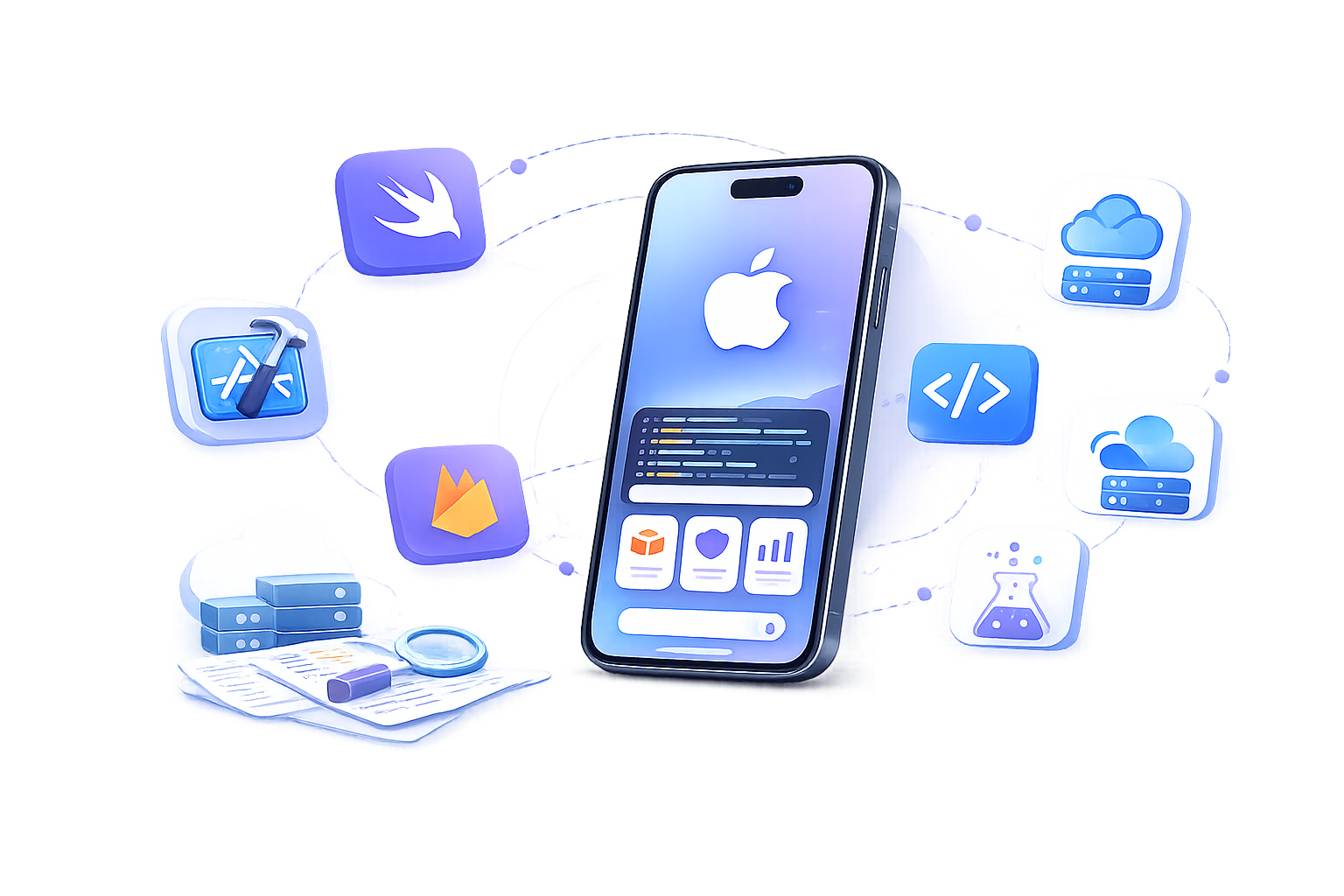
Native iOS app development is the practice of building apps in Swift using Apple’s own frameworks UIKit or SwiftUI, Core Data, HealthKit, and the rest of the platform SDK so the app runs directly on Apple’s operating system rather than through a cross-platform abstraction layer. What that actually buys you: day-one access to new Apple APIs the moment they ship at WWDC, deep integration with hardware and ecosystem features like Face ID, Apple Pay, and Apple Watch, and performance that doesn’t depend on a bridge layer translating your code into native calls. It’s not the right call for every project a small team needing both iOS and Android fast usually looks at our mobile app development overview first. SoftCurators builds iOS apps as a dedicated Swift practice, not a generalist team applying the same cross-platform patterns to a native codebase.

Request a Free Quote

    Satisfaction
    70 %
    Happy Clients
    50 +
    Years Experienced Team
    5 +
    Team Members
    40 +

    What We Build for iOS |

    image

    Custom iOS App Development

    Utilize the full power of the iOS platform with fast, secure, and feature rich native apps built using Native Swift & Objective-C . We develop scalable and intuitive mobile applications created to your business goals.
    image

    iPhone & iPad App Development

    Optimized applications for every Apple device. Universal iOS solutions which are adaptive layouts for all screen sizes and multitasking modes, not a phone layout stretched onto a tablet. Compatible with iOS 14+ & features. Also, accessibility and dark mode ready.

    image

    App Modernization & Migration

    Upgrade your iOS applications to the latest technologies, ensuring better performance, UX and security. From concept to launch, we create dynamic iOS applications that offer smooth performance and an engaging user interface. Moving a legacy codebase from Objective-C to Swift, or from UIKit to SwiftUI, done incrementally against a defined feature-parity checklist rather than a single risky rewrite.
    image

    iOS App Strategy & Consulting

    Not sure where to start? We help enhance your idea into a scalable mobile product. To start with product discovery workshops, Market & competitor analysis, MVP planning & Roadmap development. scoping architecture, framework choices (SwiftUI vs. UIKit vs. a hybrid of both), and iOS version support strategy before development starts, not after a costly mid-project pivot.
    image

    UX/UI Design for iOS

    Following Apple’s Human Interface Guidelines, interface design built around HIG conventions from the first wireframe, since retrofitting HIG compliance after App Store rejection costs real calendar time.
    image

    Third-Party API and SDK integration

    We seamlessly integrate your app with payment gateways, CRMs, analytics tools, maps, and more to expand functionality. Enhance user experience with fast-loading, offline capable applications. Connecting payment processors, analytics, and backend services into a native iOS codebase without compromising the app’s performance or App Store review standing
    image

    Apple Watch App Development

    Our team excels in iWatch app development, delivering innovative applications for smartwatches and wearable devices. We focus on creating apps that provide valuable functionalities and enhance the user’s lifestyle. Companion or standalone watchOS apps for health, fitness, and quick-glance use cases where a phone pickup is the wrong interaction model
    image

    Mobile App Maintenance & Support

    Ensure your app runs smoothly with our maintenance and support services, including bug fixes, performance optimization, and security updates.

    image

    App Clips

    Lightweight, instant-launch experiences for specific tasks (a parking payment, a quick order) that don’t require a full app install.

    image

    HealthKit and fitness data integration

    Apps reading or writing health and activity data through Apple’s HealthKit framework, built with the privacy and permission handling Apple requires for medical-adjacent data.

    image

    Widgets and Live Activities

    Home Screen and Lock Screen surfaces that extend an app’s core value beyond the main interface, built to Apple’s current widget and Live Activity frameworks.

    image

    Apple Pay and Secure Enclave integration

    Payment flows that use Apple’s hardware-backed security rather than a generic third-party payment SDK, relevant for fintech and commerce apps specifically.

    image

    On-device AI feature scoping

    Evaluating where Apple Intelligence and Foundation Models genuinely fit an iOS app’s roadmap, done alongside our AI consulting practice rather than bolted on as a marketing feature.


    Our Clients

    Do You Need Native iOS or Is Cross-Platform Enough?

    Native iOS is the right call when your app needs day-one access to new Apple frameworks, deep hardware integration, or Apple-ecosystem features that a cross-platform layer can’t reach as cleanly think HealthKit for medical data, Secure Enclave-backed Apple Pay for financial transactions, ARKit for spatial features, or Apple Intelligence and Foundation Models for on-device AI. Apple typically ships major platform capabilities as native SDK features first, and a cross-platform app either waits for community plugin support to catch up or ships without that capability at all. Native iOS becomes the wrong tool when your actual constraint is reaching both iOS and Android with one team and one budget, and the app doesn’t lean heavily on iOS-specific hardware or ecosystem features that’s precisely the situation cross-platform development with Flutter or React Native is built to solve more efficiently, and it’s a different starting point again from native Android development if Android is actually your primary platform. Our breakdown of native apps vs. hybrid apps covers that trade-off in more general terms; rather than re-litigating it here, this page assumes you already know (or suspect) you need iOS specifically and want to know what that actually involves.

    One more scenario worth naming directly: apps built primarily around Apple ecosystem touchpoints Widgets on the Home Screen, Live Activities on the Lock Screen, App Clips for frictionless first-run experiences are native-first by definition, since these are iOS platform features with no meaningful cross-platform equivalent.

    Our iOS Development Process

    1. Architecture and state-management decisions up front.

    We decide SwiftUI, UIKit, or a hybrid approach based on the app’s actual UI complexity and target iOS version range, since switching frameworks mid-project is expensive and rarely necessary if this decision is made correctly the first time.

    2. HIG-aligned design.

    Interface design follows Apple’s Human Interface Guidelines from the first wireframe — navigation patterns, gesture conventions, typography — because HIG compliance affects both user experience and App Store review outcomes.

    3. Development against Xcode and TestFlight.

    Code is built and internally tested through Apple’s own toolchain, with TestFlight builds distributed to internal and beta testers before a public submission.

    4. Device and iOS-version testing across supported hardware.

    We test against the actual range of iPhone and iPad models and iOS versions the app claims to support, not just the newest device with the newest OS the same discipline covered in our broader notes on mobile app testing, deployment, and maintenance.

    5. Performance profiling with Instruments.

    Memory usage, battery impact, and rendering performance get profiled with Apple’s own Instruments tooling before submission, catching issues that only show up under real usage patterns.

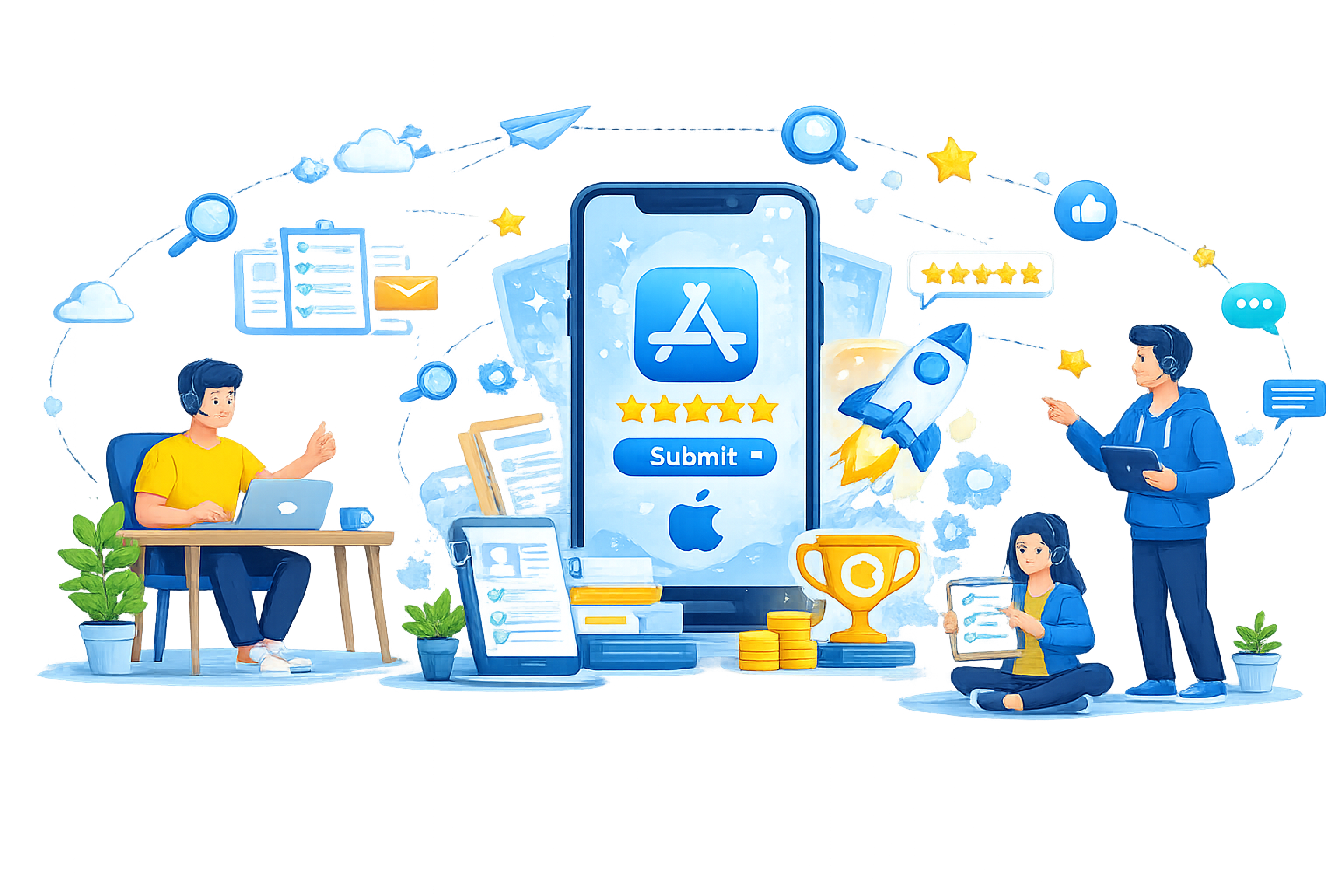
    6. App store submission, Post-launch performance monitoring and iOS version upgrade planning

    We prepare metadata, screenshots, and privacy disclosures aligned to current App Store Review Guidelines, and manage the review process directly, including responding to reviewer questions or rejections without losing submission momentum.. Once live, we track crash reports and performance data, and plan ahead for Apple’s annual iOS release cycle so deprecated APIs get addressed before they become a forced, urgent fix.

    Tech Stack for iOS Projects

    SwiftUI, UIKit, or a hybrid of both

    Swift, with Combine for reactive data flow

    Core Data, SQLite, or Realm

    CloudKit

     HealthKit, Core Location, AVFoundation, ARKit (as relevant to the project)

    REST, GraphQL, or Firebase

    Xcode, Instruments, TestFlight

    Navigating Apple’s App Store and Platform Requirements

    App Store review is Apple’s mandatory process for approving every new app and every app update before it goes live, and it checks against five guideline categories: safety, performance, business, design, and legal compliance. As of April 2026, Apple requires new submissions and updates to be built with Xcode 26 against the iOS 26 SDK, and Apple updated its App Review Guidelines again in June 2026 with new language covering AI-generated content, app quality standards, Live Activities, and developer identity verification which means a submission strategy that worked two years ago may not hold up unchanged today.

    The most common rejection reasons we see aren’t exotic: hidden or unclear subscription pricing, permissions requested without a clear in-app justification, and apps that don’t demonstrate genuine native value (a bare web-view wrapper around a website, for instance, is a well-documented rejection pattern). Any app selling digital content, features, or subscriptions generally needs to use Apple’s StoreKit in-app purchase system, with full pricing, currency, and renewal terms visible before a user confirms payment though following a US court ruling in the Epic Games case, Apple now permits apps in the US storefront to include buttons and links directing users to external payment options, a meaningful change from the platform’s earlier, stricter stance.

    Your minimum supported iOS version is a real cost and reach decision, not a technicality to leave until submission week. Supporting several old iOS versions back means avoiding newer APIs, more testing surface, and slower development, while supporting only the newest one or two versions cuts out users on older hardware the right line depends on your actual user base, not a default setting.

    Privacy compliance has also become a bigger part of iOS app development than a one-time checkbox. Apps must accurately complete their App Store privacy labels describing what data they collect and how it’s used, and App Tracking Transparency enforcement means any app wanting to track users across other apps or websites needs explicit, clearly-worded permission first. On top of that, several US states have introduced app-store-level age-verification requirements, and Apple has responded with tools like a Declared Age Range API that let developers request an age signal without collecting a user’s exact birthdate worth planning for early if your app’s category involves age-sensitive content or is likely to attract a younger audience.

    Cost and Timeline Planning

    Native iOS app cost and timeline scale primarily with feature complexity, device/OS version coverage, and how much custom, HIG-compliant design a project needs not with a flat per-screen rate. An MVP-scope iOS app  core flows, standard UI patterns, a lightweight backend  takes meaningfully less time than a medium-complexity app with custom animations and several third-party integrations, which in turn takes less time than a complex app requiring deep Apple framework integration (HealthKit, ARKit, Secure Enclave-backed payments) and enterprise-grade backend work; our mobile app development cost and pricing guide breaks down the general cost tiers in more depth. The iOS-specific factors that move cost and timeline the most:

    Contact Us

    Ready to Build Your iOS App?

    Talk to SoftCurators about your Apple framework needs and App Store submission plan before development starts see examples of our work or get in touch to start scoping your iOS project.

    Industries and Use Cases Where Native iOS Fits Best

    image

    Apps reading or writing data through HealthKit need native iOS specifically, since HealthKit’s permission model and data types are an iOS platform feature without a direct cross-platform equivalent.

    image

    Apps using Apple Pay or Secure Enclave-backed authentication for fintech and banking transactions get hardware-level security guarantees that are meaningfully harder to replicate through a cross-platform bridge.

    image

    Fitness and wellness with Apple Watch integration

    Apps built around real-time watchOS companions for workout tracking need native development, since Apple Watch app development is inherently a native iOS-ecosystem capability.

    image

    AR-driven retail and real estate apps

    Apps using ARKit for room measurement, virtual try-on, or spatial visualization need native iOS to access ARKit’s full capability set at release, rather than waiting for cross-platform plugin support to catch up.
    Why Choose SoftCurators for iOS Development

    Dedicated Swift and SwiftUI specialization

    Our iOS engineers work in Swift and Apple’s frameworks as their primary discipline, not as an occasional assignment between cross-platform projects.

    Real experience with Apple framework integration

    HealthKit, Apple Pay, ARKit, and Secure Enclave integrations are things we’ve built directly, not capabilities we’d be learning on your project.

    App Store submission handled as a managed process, not a final step

    Metadata, privacy disclosures, and review responses are planned for from early in the project, reducing the chance of a late-stage rejection surprise.

    iOS version support strategy scoped deliberately

    We help clients choose a minimum supported iOS version based on their real user base and cost constraints, not a default setting nobody revisited.

    HIG compliance built into design, not checked afterward

    Our UI/UX design process for iOS follows Apple’s Human Interface Guidelines from the first wireframe, which is where most avoidable App Store rejections actually get prevented.

    Ongoing iOS version and API deprecation monitoring

    Through our maintenance and support engagements, we track Apple’s annual iOS release cycle so deprecated APIs get addressed on a planned schedule rather than as an emergency.

    Common Mistakes We See in iOS Projects

    Mistake
    Why It Hurts
    What To Do Instead
    Ignoring HIG conventions
    Interfaces that deviate from Apple’s Human Interface Guidelines risk App Store rejection and feel subtly wrong to iOS users who expect standard navigation and gesture patterns
    Design against HIG conventions from the first wireframe, not as a pre-submission checklist
    Supporting too many old iOS versions
    Every additional supported version back adds testing surface and blocks use of newer APIs, inflating both cost and timeline
    Choose a minimum supported iOS version based on actual user base data, not a default “support everything” instinct
    Treating App Store review as an afterthought
    Metadata, privacy disclosures, and StoreKit compliance issues discovered at submission time cause avoidable delays right before launch
    Plan App Store submission requirements from early in the project, not the week before the intended launch date
    Under-using Apple’s own frameworks
    Building custom solutions for capabilities HealthKit, CloudKit, or ARKit already provide natively adds development time and often produces a worse result
    Default to Apple’s native frameworks first, and only build custom when a real gap exists
    Delaying iOS SDK and Xcode upgrades
    Apple’s annual OS releases and periodic Xcode/SDK requirement changes (like the April 2026 Xcode 26 mandate) can block new submissions if a project falls too far behind
    Plan incremental Xcode and SDK upgrades as part of regular maintenance, not a scramble triggered by a submission failure

    Deployment, Maintenance and Performance

    Every iOS app update goes through Apple’s App Store re-review process, not just the initial submission, which means a maintenance plan needs to account for review turnaround time on every release, not just the first one. Apple’s annual iOS version upgrades (a new major release each fall, with point releases throughout the year) regularly deprecate older APIs, and a project that doesn’t track this on a planned schedule ends up doing forced, urgent fixes instead of incremental updates the kind of ongoing risk we cover under mobile app security and compliance generally. Performance profiling with Instruments should continue post-launch, not just pre-submission, since real-world usage patterns, background app refresh behavior, memory pressure on older devices often surface issues a controlled pre-launch test environment doesn’t. Device-fragmentation testing matters less for iOS than Android given Apple’s narrower hardware lineup, but it’s not zero: an app supporting iPhone and iPad, or several iOS versions back, still needs real testing across that declared range, following the same mobile app UI/UX design best practices we apply across every platform, rather than assuming forward compatibility.

    Lets Connect

    Launch Your iOS App with Confidence

      Frequently Asked Questions

      It depends on whether your app leans on iOS-specific hardware or ecosystem features HealthKit, Apple Pay, ARKit, Apple Watch integration or needs day-one access to new Apple APIs. If none of those apply and reaching both iOS and Android quickly with one team matters more, cross-platform development is usually the more efficient path.

      Cost scales with feature complexity, device/OS version coverage, and how much custom HIG-compliant design the app needs, rather than a flat per-screen rate. An MVP with standard UI patterns costs meaningfully less than a medium-complexity app with custom design and integrations, which costs less again than a complex app requiring deep Apple framework work.

       Timeline follows the same complexity drivers as cost an MVP with core flows and standard components moves fastest, while apps needing deep Apple framework integration or support across many iOS versions take meaningfully longer, partly due to added testing time and App Store review cycles.

      SwiftUI generally suits new projects wanting faster iteration and Apple’s current recommended approach, while UIKit remains relevant for complex legacy codebases or specific fine-grained control SwiftUI doesn’t yet fully expose. Many production apps use a hybrid of both rather than treating it as an exclusive choice.

      Every new app and every update goes through Apple’s review process, which checks against safety, performance, business, design, and legal-compliance guidelines before approval. Review timelines vary, and submitting a build with unclear pricing, unjustified permissions, or incomplete privacy disclosures is the most common cause of an avoidable rejection and delay.

      Hidden or unclear subscription and pricing terms, permissions requested without a clear in-app justification, and apps that don’t demonstrate genuine native value (like a bare web-view wrapper) are the most frequent, well-documented rejection patterns. Most of these are avoidable with review-aware planning before submission, not fixes made after a rejection.

      Yes, migrating from Objective-C to Swift, or from UIKit to SwiftUI, is typically done incrementally against a defined feature-parity checklist rather than as a single risky rewrite. The right approach depends on how much of the existing codebase is worth preserving versus how much has accumulated technical debt that makes a phased rebuild faster.

      Two things dominate: handling Apple’s annual iOS version upgrades and the API deprecations that come with them, and managing App Store re-review on every update rather than treating it as a one-time launch event. Falling behind on either creates a compounding problem — an app left too many iOS or Xcode versions behind can eventually be blocked from submitting updates at all.

       Yes, watchOS app development — whether a companion app to an iPhone app or a standalone Apple Watch experience — is part of our native iOS work, particularly relevant for fitness, health, and quick-glance use cases where a phone pickup is the wrong interaction model.

      Yes, Apple has been expanding on-device AI capabilities available to developers, including Apple Intelligence integration and Foundation Models access for building AI-driven features without sending data to external servers. Specific capabilities available to your app depend on current Apple platform APIs and the iOS versions your app supports, which is worth scoping early with our AI development team if on-device AI is a core feature.

      Following a US court decision in the Epic Games dispute, Apple updated its guidelines to allow apps in the US storefront to include buttons and external links directing users to payment options outside Apple’s in-app purchase system. This is a meaningful, relatively recent shift from Apple’s earlier, stricter requirement that all digital purchases go through StoreKit, and it’s worth factoring into monetization planning if your app serves US users primarily.

      Our Latest Blogs