

If you use Salesforce, or you’re evaluating whether to, you’ve probably noticed the product names keep changing. Sales Cloud is now Agentforce Sales. Data Cloud is now Data 360. Einstein and AI Cloud were folded into something called Agentforce AI. This isn’t cosmetic – Salesforce restructured a meaningful share of its product line around Agentforce starting in 2025, and the rebrand makes it genuinely harder to answer a simple question: what does this thing actually do, and does my business need it?
This confusion is compounded by how much of the available content on Agentforce is written either by Salesforce itself, understandably positioning the product in the best possible light, or by implementation partners with a direct commercial interest in you concluding you need help deploying it. Neither is a criticism – both are simply incentive structures worth being aware of as you read anything about this product, including this guide. Our aim here is to explain the mechanics plainly enough that you can form your own judgment, not to talk you into or out of a specific decision.
Salesforce Agentforce:
Is Salesforce’s AI agent platform, and the distinction that matters most is the one between an agent and a chatbot. A chatbot answers a question and stops. An Agentforce agent reads the situation against your real Salesforce data, decides what to do, takes the action, and either confirms it worked or hands the case to a person with a summary of what it already tried. That difference – taking action versus just responding – is the entire premise of the product, and it’s also where most of the real evaluation questions live.
This guide explains how Agentforce actually works underneath the marketing language, what it costs based on Salesforce’s currently published pricing, who genuinely benefits from it, and where we think it falls short of what the positioning implies. If you’re weighing this against building a custom AI agent instead, our guide on how to build an AI-powered app is a useful companion for that comparison, which we cover directly later in this guide.
One framing point before we get into the mechanics: Salesforce didn’t just add an AI feature to its existing products. Starting with the Spring ’26 release, Sales Cloud was renamed Agentforce Sales, signaling that agentic AI is now treated as central to how the product works, not an add-on module sitting beside it. Understanding that shift matters, because it means evaluating Agentforce isn’t really a separate decision from evaluating how you use Salesforce going forward – the two are increasingly the same conversation.
What Agentforce Actually Is (And What It Isn’t)
Agentforce is an AI agent-building platform embedded directly inside Salesforce, not a standalone product you can adopt independently of the Salesforce ecosystem. This single fact shapes almost every other decision in this guide, so it’s worth stating plainly before anything else: if you don’t already run on Salesforce, or you’re not planning to, Agentforce isn’t something you can bolt onto a different CRM. It’s built to read and act on Salesforce records specifically.
This is a genuinely different starting point than most AI agent platforms on the market, which are typically built to be data-source-agnostic and connect to whatever CRM, database, or tool a business already uses. Agentforce takes the opposite approach deliberately – depth of integration with one specific platform’s data model, in exchange for not needing to solve the harder, more general problem of grounding an agent in data that could live anywhere. Whether that trade-off works in your favor depends almost entirely on whether Salesforce is already where your business data actually lives.
Who Agentforce Is Actually For
Existing Salesforce customers with real transaction volume – enough support cases, sales opportunities, or marketing interactions that automating a meaningful share of them changes headcount math – are the clearest fit. Salesforce reported that Agentforce had closed roughly 29,000 deals and reached around $800 million in annual recurring revenue by early 2026, according to its own Q4 FY2026 earnings disclosure, which tells you adoption is real at scale, even if it doesn’t tell you whether it’s the right fit for a specific business.
Who Should Be More Cautious
Smaller Salesforce orgs with sparse or messy data, businesses on Salesforce editions below Enterprise, and companies evaluating Agentforce as a first AI initiative without any internal experience validating AI output all have a harder path. The technology isn’t the limiting factor for most of these teams – the data foundation and organizational readiness are, and we’ll cover exactly why in the next section.
It’s worth being specific about what “a harder path” means in practice, rather than leaving it as a vague caution. For these organizations, the honest sequencing is usually: first, get comfortable with a smaller, lower-stakes AI initiative that builds internal muscle for evaluating AI output quality; second, invest in data cleanup as a standalone project with value independent of Agentforce; and only then revisit an Agentforce pilot with both organizational readiness and technical readiness actually in place, rather than treating Agentforce itself as the vehicle for building that readiness.
Consultant’s Tip
Before evaluating any Agentforce feature, answer one question honestly: how clean and complete is your Salesforce data today? Duplicate records, missing fields, and inconsistent case categorization don’t just make reporting annoying – they directly degrade what an Agentforce agent can reliably do, since the agent reasons over exactly the data you already have. A capability demo always looks better than your actual data will perform.
How Agentforce Got Here: From Feature to Company-Wide Rebrand
Understanding the timeline matters for evaluation purposes, not just as background – it tells you which parts of the platform are mature and which are recent enough that you should verify current behavior directly rather than trusting a description that might already be dated.
2024: The Original Launch
Salesforce introduced Agentforce in 2024 as an AI agent capability layered onto its existing Sales, Service, and Marketing clouds. At this stage, it was positioned as a powerful new feature within the existing Salesforce product structure – meaningful, but still clearly an addition to a familiar product line rather than a replacement for it.
2025: The Rebrand That Changed the Product Line
Salesforce underwent what it describes internally as its most significant rebranding in company history, moving away from the familiar “Cloud” naming convention entirely. Sales Cloud, Service Cloud, and Marketing Cloud were rebuilt around Agentforce as the organizing concept rather than a bolt-on feature. Data Cloud became Data 360. Einstein and AI Cloud were folded into a unified Agentforce AI. By Dreamforce 2025, Salesforce began branding the full ecosystem as Agentforce 360.
2026: Consolidation and New Capabilities
Through the Winter, Spring, and Summer 2026 releases, Salesforce has continued building out the ecosystem rather than settling into a stable, unchanging product. Agentforce Voice reached general availability, meaning real-time voice agents are now genuinely production-ready rather than an early access feature. Multi-agent orchestration, letting several specialized agents work together on a single customer interaction, arrived in the Summer 2026 release. Gartner named Salesforce a Leader in its 2026 Magic Quadrant for Conversational AI Platforms, a data point worth knowing even though a single analyst ranking shouldn’t be the deciding factor in your own evaluation.
What this timeline tells you practically: the core Service and Sales agent capabilities are the most mature and battle-tested, having existed since the original 2024 launch. Voice, multi-agent orchestration, and MCP-based external interoperability are considerably newer, and we’d treat vendor claims about these specific capabilities with more caution and more direct verification than the longer-established features.
How Agentforce Actually Works: The Atlas Reasoning Engine
This is the part most business-focused coverage skips entirely, and it’s worth understanding at least at a conceptual level, because it explains both what Agentforce is good at and where it reliably breaks.
System 2 Reasoning, Not a Single Model Call
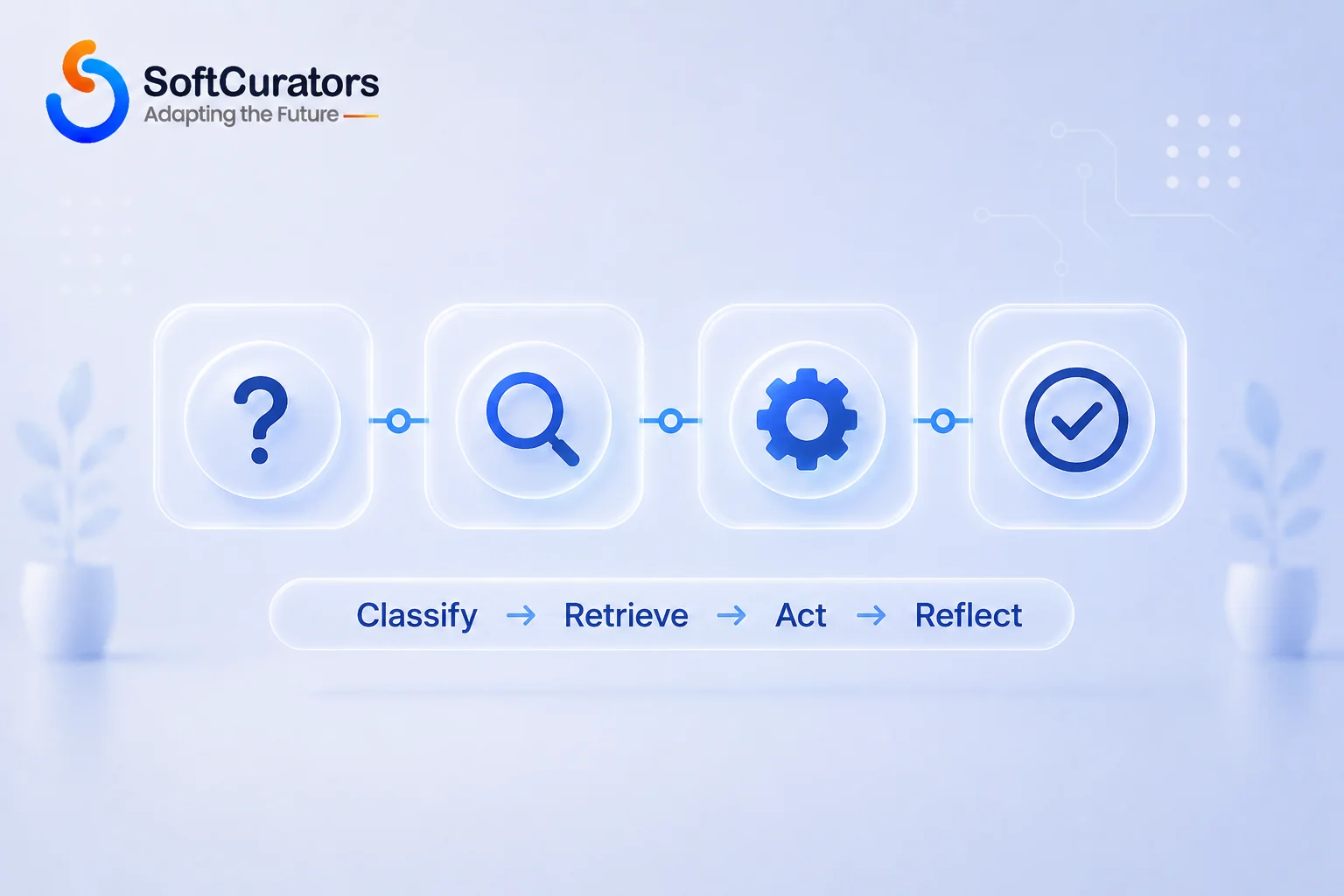
The Atlas Reasoning Engine is the orchestration layer that sits between a user’s request and the underlying language model, and Salesforce describes its approach as “System 2” reasoning – slower, multi-step, deliberate reasoning rather than a single fast response. In practice, this means an agent doesn’t just answer a question directly. It classifies the request into a topic, retrieves relevant knowledge from your Salesforce data, decides on an action, and reflects on whether that action actually addressed the request before responding.
The Five Attributes That Define an Agent
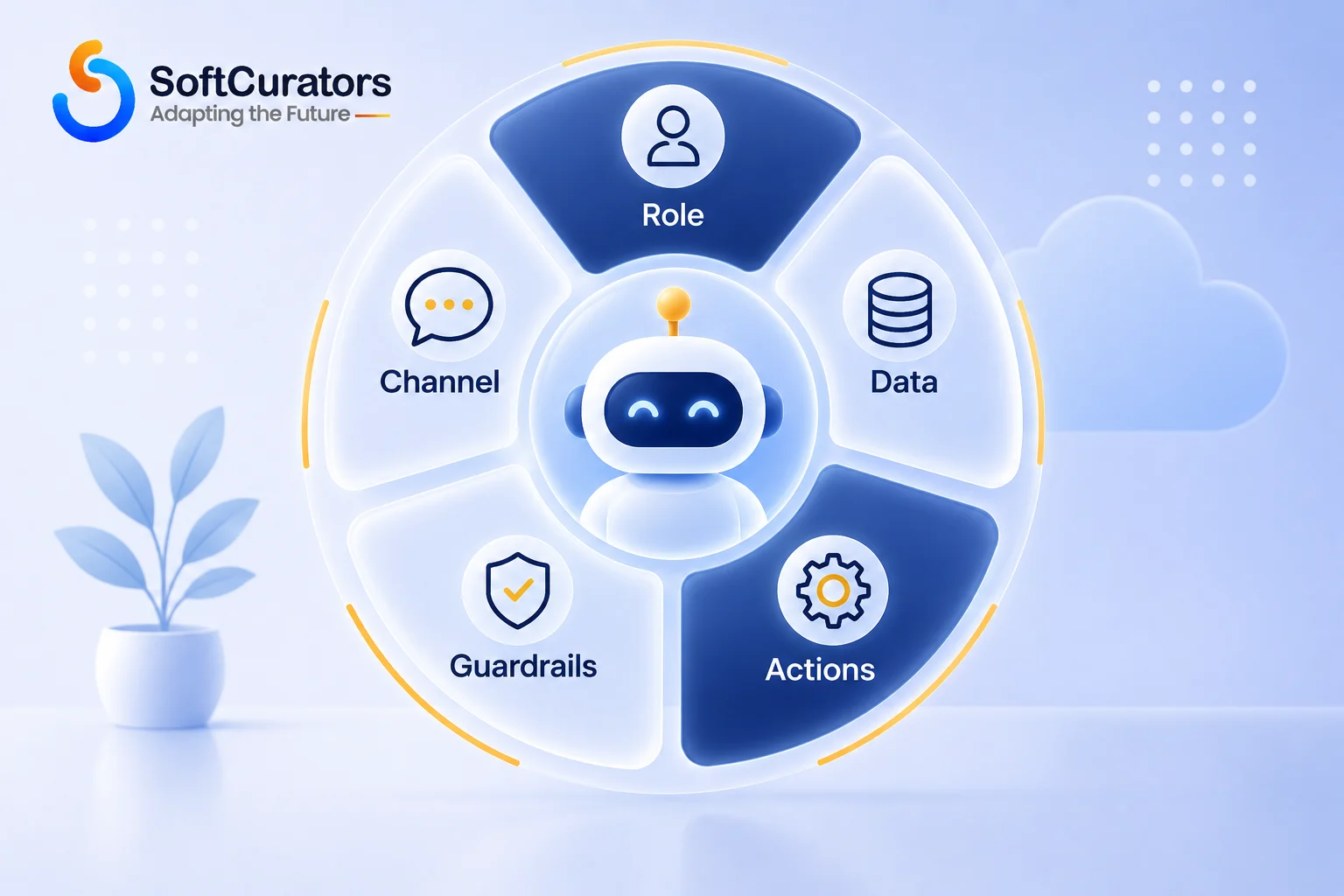
Every Agentforce agent is configured around five elements: Role (what the agent’s job is), Data (what information it can access), Actions (what it’s actually allowed to do), Guardrails (the boundaries on its behavior), and Channel (where it operates – chat, voice, email, or a workflow trigger). This structure matters because it’s also where the real configuration work happens – an agent isn’t useful until someone has deliberately scoped all five of these, and that scoping work is a project, not a toggle.
Agents Can Be Triggered Without a Human Asking Anything
Unlike a chatbot, an Agentforce agent can be triggered by a data event – a case status changing, an email arriving, a meeting starting in five minutes – not just by a person typing a message. This proactive triggering is genuinely different from most conversational AI products and is a large part of why Salesforce positions Agentforce as “digital labor” rather than a support tool.
Where This Breaks in Practice
Reasoning engines built this way don’t fail loudly. An agent asked to find at-risk accounts and draft renewal emails can call the wrong action, ignore a returned result, and still produce a confident, well-formatted, entirely wrong response – with no error thrown. This is a genuine operational risk worth planning for explicitly, not a hypothetical edge case, and it’s the reason observability and human review checkpoints matter more here than in traditional CRM automation, where a broken workflow at least tends to fail visibly.
Consider a concrete version of this failure: an agent tasked with identifying the ten highest-risk renewal accounts and drafting outreach calls its account-scoring action once, then – for reasons that aren’t always visible even in the debug logs – proceeds to draft three emails addressed to the same account, none of which actually mention the renewal it was asked to address. Nothing crashes. No exception fires. A person skimming the output could easily approve it, since the emails are grammatically fine and professionally formatted; only checking the actual account targeting and renewal-specific content reveals the failure. This is exactly the kind of error a demo environment, built on curated sample data, is unlikely to surface – and exactly the kind your production monitoring needs to be built to catch.
Data 360: The Prerequisite Nobody Frames as a Prerequisite
This is the section we think gets the least honest treatment in most Agentforce coverage, and it’s a genuinely important one.
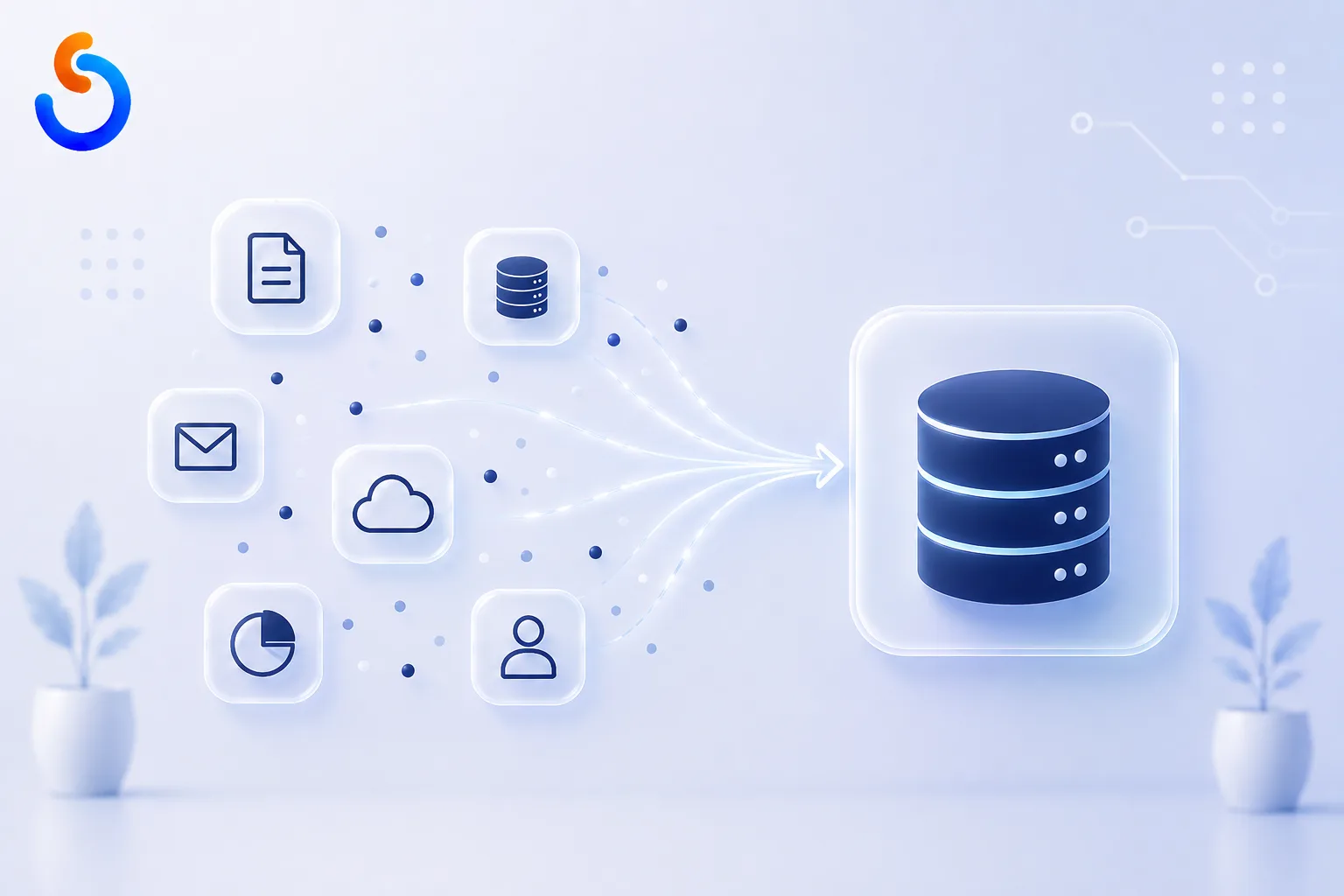
Data 360 (formerly Data Cloud) is Salesforce’s unified data platform, and it’s what Agentforce agents actually query when they retrieve knowledge to ground a response. The quality of an Agentforce agent is a direct function of the quality of your Data 360 setup, not primarily a function of which model or agent configuration you choose. An agent grounded in fragmented, duplicated, or stale customer data will reason confidently over bad information, which is arguably worse than an agent that simply doesn’t know something.
Operational perspective: for many organizations evaluating Agentforce, the actual first project isn’t agent configuration at all – it’s a Data 360 implementation to unify records that have been living in disconnected systems, inconsistent field structures, or duplicate accounts for years. This is real, substantial work, and it’s the piece of the project most likely to be underscoped in an initial evaluation, since demos are run against clean sample data that doesn’t reflect the reality of most production Salesforce orgs.
If your data infrastructure is genuinely fragmented across legacy systems, our guide on why enterprises need to modernize legacy applications and our overview of AI-powered business intelligence are worth reading before an Agentforce evaluation, since the data foundation work described here overlaps heavily with both.
Future perspective: it’s worth framing Data 360 investment as durable infrastructure rather than an Agentforce-specific cost, since unified customer data pays off in reporting, business intelligence, and any future AI initiative, not just the specific agents you deploy today. Organizations that approach this as “the cost of running Agentforce” tend to under-invest in it relative to organizations that treat it as a broader data foundation project that happens to also unlock Agentforce.
What Agentforce Can Actually Do, By Function
Agentforce ships pre-built agent templates across Salesforce’s major clouds, and understanding what each one actually automates helps separate the genuinely useful capabilities from the ones that sound impressive in a keynote. Each of these templates is a starting configuration, not a finished product – every one still needs the topic scoping, action definition, and guardrail work described later in this guide before it’s ready for real customer or employee interaction.
| Function | What the Agent Does | Where It Fits |
| Service Agent | Handles service cases without pre-scripted decision trees, resolving issues or escalating with full context | Replaces or supplements first-line support for well-documented issue types |
| Sales Development (SDR) Agent | Engages prospects, answers questions, handles objections, and books meetings based on CRM and external data | Early-funnel qualification, particularly for inbound leads that currently go cold before a rep follows up |
| Customer Engagement Agent | Independently follows up with and qualifies buyers around the clock, aimed at leads reps don’t reach fast enough | High-volume inbound lead flow where response speed is the bottleneck |
| Commerce / Intent-Aware Search Agent | Understands shopper intent through natural conversation rather than static keyword search | Retail and commerce catalogs where product discovery is a real conversion driver |
| IT Service Agent | Multiple specialized agents supporting IT teams, with a configuration management database view of infrastructure | Internal IT support functions, particularly ticket triage and known-issue resolution |
| Momentum | Captures calls, emails, and meetings and writes structured data back into Salesforce automatically | Sales teams where conversation data currently never makes it into the CRM at all |
Agentforce Voice: Real-Time Voice Agents
Agentforce Voice extends the same reasoning and action-taking capability to phone-based interactions, reaching general availability during the 2026 release cycle after an earlier period as a more limited access feature. This is a meaningfully harder engineering problem than text-based chat – real-time voice requires low-latency reasoning, natural interruption handling, and integration with telephony infrastructure, none of which are trivial additions on top of a text-based agent framework.
Technical note: voice actions consume a higher Flex Credit rate than standard actions (30 credits versus 20, working out to $0.15 versus $0.10 per action), which reflects the additional infrastructure – speech-to-text, text-to-speech, and telephony platform integration – layered on top of the same Atlas reasoning core used elsewhere in Agentforce. Operational perspective: voice deployments also introduce a testing burden text-based agents don’t have – accents, background noise, and interruption patterns all need real-world validation beyond the scripted test calls a demo environment typically uses.
Agent Builder and Prompt Builder: How You Actually Configure This
Agentforce agents are configured through Agent Builder, a low-code interface for defining the five attributes described earlier, paired with Prompt Builder for crafting the underlying instructions and grounding data an agent uses. Understanding this configuration layer matters even for a purely business-focused evaluation, since it’s where the real project timeline and skill requirements actually come from – not from the underlying model or reasoning engine, which Salesforce has already built and tuned.
Technical note: “low-code” here means you’re not writing Apex or a custom integration to get an agent running – it doesn’t mean the configuration work is trivial. Defining accurate topics, scoping actions narrowly enough to prevent an agent from doing something it shouldn’t, and writing guardrails that actually hold up against real user input is a genuine skill, closer to prompt engineering and business process design than to traditional Salesforce administration. Teams that treat this as a quick admin task consistently under-scope the project.
Salesforce also offers a certification specifically validating skills in building and configuring Agentforce agents, aimed at admins and developers rather than business buyers – useful context if you’re planning to build this capability in-house rather than relying entirely on an implementation partner.
Multi-Agent Orchestration and Interoperability
As of the Summer 2026 release, Agentforce supports multi-agent orchestration – multiple specialized agents working together as a coordinated team on a single customer interaction, sharing context so a customer doesn’t have to repeat themselves across different agent handoffs.
Why this matters practically: a single, generalist agent trying to handle every possible request tends to accumulate an unwieldy set of topics, actions, and guardrails, which makes it harder to test and more prone to the silent-failure pattern described earlier. Multiple narrower, specialized agents – one handling billing questions, another handling technical troubleshooting, coordinated through orchestration – are generally easier to scope, test, and maintain individually, even though the orchestration layer itself adds its own coordination complexity.
Future perspective: Agentforce also supports Model Context Protocol (MCP) server connections through verified AgentExchange partners, which matters beyond Salesforce specifically – MCP is an emerging open standard for connecting AI agents to external tools and data sources, and Agentforce’s support for it signals Salesforce is positioning agents to interoperate with tools outside its own ecosystem, not just within it. This is a genuinely developing area of the platform, worth watching rather than treating as a fully mature capability yet.
Agentforce Pricing: Flex Credits vs. Conversations
This is where most Agentforce coverage gets vague or outdated fast, so we’re working from Salesforce’s currently published pricing structure directly rather than a stale number. Salesforce has changed this pricing structure meaningfully since Agentforce’s 2024 launch – the flat $2-per-conversation model was, for a period, the only option, and Flex Credits arrived as a deliberate response to customer demand for pricing that scales more precisely with actual usage across varied use cases.
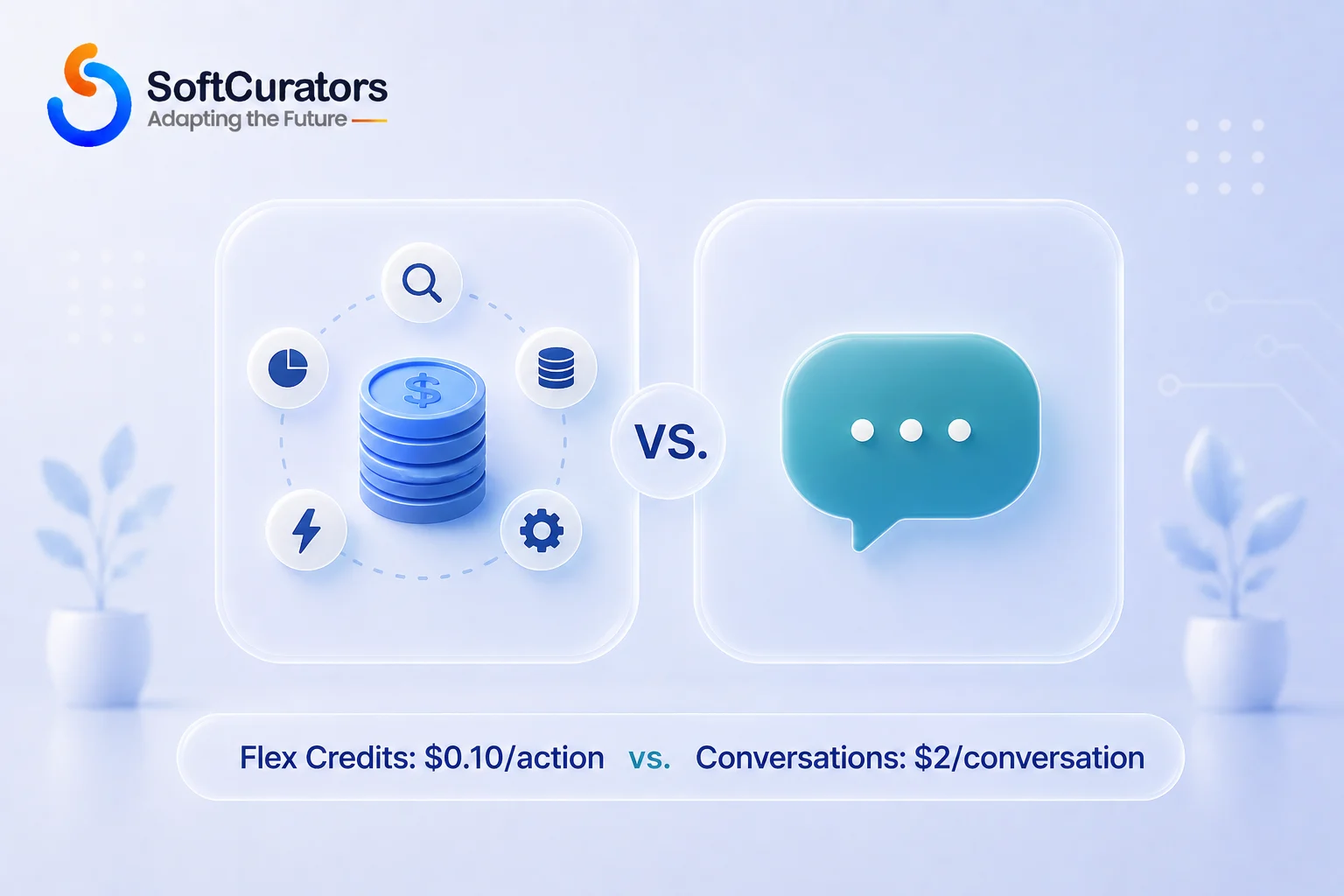
Agentforce runs on consumption-based pricing, not a traditional per-seat subscription, and Salesforce offers two mutually exclusive pricing models per org – you choose one, and an org can’t run both simultaneously.
Flex Credits
Flex Credits are Salesforce’s universal consumption currency across Agentforce actions, Data 360 operations, and related AI functionality. A standard action – updating a record, summarizing a case, answering a knowledge-base question – consumes 20 Flex Credits, working out to $0.10 per action at list pricing. Voice actions consume 30 credits, or $0.15 per action. Credits are purchased in blocks of 100,000 for $500. Usage is tracked in real time through a tool Salesforce calls Digital Wallet.
Conversations
The original Agentforce pricing model – a flat $2 per conversation – is still available, and Salesforce positions it specifically for external customer-facing agents where flat, predictable per-interaction pricing is easier to forecast than granular per-action billing. Conversation pricing is pre-purchase only; it doesn’t support the pay-as-you-go or committed-spend structures available under Flex Credits.
| Model | Best Fit When | Weaker Fit When | Buying Structures Available |
| Flex Credits | Agents span multiple departments or use cases with varying consumption patterns | You need the simplest possible forecasting for a single, narrow customer-facing use case | Pre-purchase, Pay-as-you-go, PreCommit |
| Conversations | External customer-facing agents where flat, predictable per-interaction cost matters most | You’re deploying agents across internal, employee-facing, or multi-department workflows | Pre-purchase only |
Three Ways to Buy Flex Credits
Beyond choosing between Flex Credits and Conversations, Flex Credit customers also choose among three buying structures. Pre-purchase means buying credits upfront at the contracted rate and drawing them down as they’re consumed – the most predictable option for budgeting. Pay-as-you-go bills monthly in arrears based on actual usage with no upfront commitment, which is the lowest-risk option for a pilot or an initial evaluation. PreCommit involves committing to a minimum spend level in exchange for better per-credit pricing, with a true-up charge if actual usage falls short of the committed amount at the end of the term.
Our recommendation: start any Agentforce evaluation on pay-as-you-go, even if a PreCommit structure would eventually offer better unit economics. The point of a pilot is to learn your actual consumption pattern before locking in a spend commitment, and PreCommit’s better rate isn’t worth the risk of over- or under-committing based on assumptions rather than real usage data.
Risk alert specific to buying structure: unused Flex Credits do not roll over into subsequent subscription terms, which matters directly for how aggressively you should pre-purchase. Buying a large credit block based on optimistic usage projections, only to have a meaningful share expire unused, is a straightforward and avoidable way to overpay relative to a more conservative purchasing approach.
Salesforce Foundations: The Free Starting Point
Enterprise Edition customers and above can access Salesforce Foundations, which includes Agent Builder, Prompt Builder, 200,000 Flex Credits, and 250,000 Data 360 credits at no cost – this is a permanent tier, not a time-limited trial, and it’s a genuinely reasonable place to start validating whether Agentforce fits your use case before any commercial conversation with Salesforce.
Risk Alert
Agentforce pricing has changed meaningfully since the product’s 2024 launch, and Salesforce’s own rate cards get updated periodically. Verify current per-credit and per-conversation rates directly against Salesforce’s official Agentforce pricing page before budgeting, since consumption-based enterprise software pricing in this category has shown real movement within a single year.
What Agentforce Actually Costs Beyond the Credits
The per-action price is the easiest number to find and, in our view, the least useful one for a real budgeting conversation, because it isn’t where most of an Agentforce project’s cost lives. This mirrors a pattern we see across AI feature adoption generally – the metered usage cost is visible and easy to quote, while the surrounding implementation and operational cost is where the real budget actually goes, and it’s genuinely underestimated far more often than the usage pricing is.
Implementation Timeline
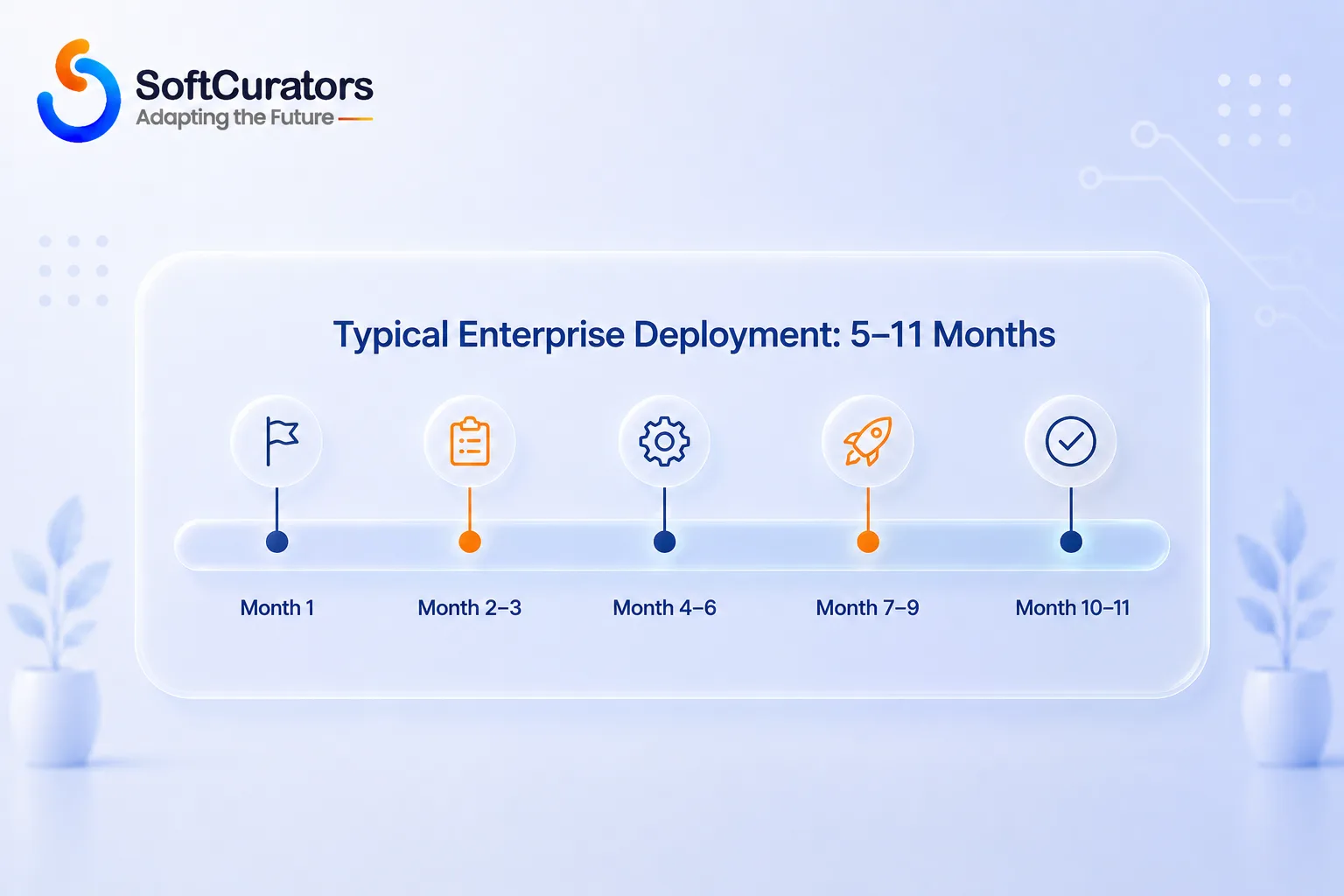
Multiple independent implementation sources describe typical enterprise Agentforce deployments taking somewhere in the range of five to eleven months from kickoff to production, driven primarily by the Data 360 foundation work covered earlier, not by Agent Builder configuration itself. This is the number that should anchor your planning, not the per-credit rate.
Data 360 and Underlying Salesforce Edition Requirements
Several Agentforce capabilities require Enterprise Edition or above, and meaningful use of Data 360 for grounding agents in unified customer data is itself a separate cost and implementation project, priced and scoped independently of Agentforce action credits. Treating these as one line item in a budget is a common and consequential underestimate.
Ongoing Tuning and Governance
Given the Atlas Reasoning Engine’s failure mode described earlier – confidently wrong output with no thrown error – a production Agentforce deployment needs ongoing monitoring, guardrail refinement, and a real owner watching for silent quality drift, not a one-time configuration that runs unattended indefinitely. Budget this as a recurring operational cost from the start.
For a broader framework on how AI feature costs break down generally, our guide on AI integration costs covers this same pattern – engineering and operational cost consistently outweighing raw usage pricing – across AI projects outside the Salesforce ecosystem specifically.
Decision Framework: Should Your Business Adopt Agentforce?
This decision hinges on three factors more than any feature comparison: your existing Salesforce investment, your data quality, and how well-defined the task you want automated actually is. It’s worth resisting the temptation to treat this as primarily a technology evaluation, since the technology itself is the least variable part of the equation across most businesses considering it – your data and organizational readiness vary far more.
When Agentforce is the right fit: you’re already running Salesforce as your core CRM, you have real transaction volume in the function you want to automate, and your Salesforce data – while probably imperfect – is unified enough that a Data 360 foundation project is realistic rather than a multi-year undertaking. When it’s a weaker fit: you’re not on Salesforce and adopting it purely to access Agentforce, your data is fragmented across systems that would need substantial work before any agent could reason over it reliably, or the task you want automated is genuinely novel and unstructured rather than a well-defined, previously scripted process.
Cost implications:
the credit pricing is genuinely competitive for well-defined, high-volume tasks, but the implementation cost (Data 360 foundation, configuration, ongoing governance) typically exceeds the credit spend in year one for most organizations.
Maintenance implications: this is not a deploy-and-forget system – guardrail tuning and quality monitoring are ongoing operational commitments given how the Atlas Reasoning Engine’s failure modes present.
Scalability implications: the consumption pricing model scales predictably with usage once you understand your actual per-interaction credit consumption, which is a genuine advantage over guessing at seat counts for an AI feature.
Risk factors: vendor lock-in is real and worth naming directly – Agentforce agents are built specifically around Salesforce’s data model and can’t be ported to another platform, which matters if you’re not otherwise committed to Salesforce long-term.
Time-to-market impact: a narrow, well-scoped pilot (one agent, one function, clean data) can reach production faster than the multi-month enterprise timelines described above, and we’d recommend starting there rather than a broad, multi-department rollout.
Agentforce vs. Building a Custom AI Agent: Where We Land
This is a genuinely common question for Salesforce customers, and we’re not going to hedge on it: if you’re already on Salesforce and the task you want to automate is well-represented in your existing CRM data, Agentforce is very likely the faster and more defensible starting point over a custom build.
The reasoning is straightforward. A custom AI agent solving the same problem still needs to solve data grounding, action execution against your CRM, guardrails, and observability – all of which Agentforce provides natively, already integrated with the data you’re trying to act on. Building that integration layer yourself, on top of a general-purpose model, duplicates work Salesforce has already done specifically for its own data model.
Where custom development becomes the better answer instead: your use case spans systems well outside Salesforce and forcing it through Agentforce’s data model creates more friction than it solves, you need agent behavior or integration patterns Agentforce’s configuration options genuinely don’t support, or Salesforce isn’t your CRM system of record at all. Our overview of AI app development and AI automation services cover what a custom build actually involves once that’s the right call, and our AI development page covers the broader capability set beyond agent-specific work.
A pattern worth naming: some organizations use Agentforce for the well-defined, CRM-native use cases (service triage, lead qualification) while building custom AI capability for anything that spans systems Salesforce doesn’t touch. This isn’t an either-or decision at the company level – it’s a per-use-case decision, and treating it that way avoids both the mistake of forcing every AI initiative through Salesforce and the mistake of rebuilding CRM-native functionality Agentforce already provides.
Cost comparison worth making explicit:
Agentforce’s per-action pricing already has CRM integration, guardrail infrastructure, and data grounding built in – costs Salesforce absorbed once, at platform scale, and now sells access to. A custom build recreating equivalent CRM integration, guardrails, and grounding from scratch is unlikely to beat Agentforce’s unit economics for a Salesforce-native use case, even accounting for Agentforce’s own implementation costs described earlier. Where a custom build wins economically is specifically where that CRM-native infrastructure isn’t the value you’re trying to capture – a workflow spanning multiple systems where Salesforce integration is only a small piece of the total problem.
Security, Governance, and Compliance Considerations
Because Agentforce agents can take real actions on real customer data, the security posture deserves the same scrutiny you’d apply to any system with write access to production CRM records – arguably more, given that the agent is making its own decisions about when and how to act rather than following a fixed, auditable workflow path.
- Guardrails aren’t optional polish. The Role, Data, Actions, Guardrails, Channel framework exists specifically because an agent with unscoped action permissions is a genuine operational risk, not a theoretical one.
- Observability matters more here than in traditional automation. Given the silent-failure pattern described earlier, logging what data an agent retrieved and what action it took – not just whether the interaction completed – is essential for catching quality drift before a customer does.
- Data residency and access control follow your existing Salesforce configuration, but agents introduce a new layer worth auditing specifically: which agents can access which fields, and whether that access is scoped as narrowly as the use case actually requires.
- Human review checkpoints for consequential actions (anything affecting a real financial or contractual outcome) should be a deliberate design decision, not an assumption that the agent’s accuracy rate makes review unnecessary.
For a broader view of AI-specific security considerations beyond the Salesforce ecosystem, our guide on mobile app security and compliance covers the baseline principles this builds on.
Industry-specific note:
Businesses in regulated industries – financial services, healthcare, insurance – face additional scrutiny on any system that can autonomously take action affecting a customer’s account or record, and that scrutiny applies to Agentforce agents the same way it applies to any other automated decision system. If your business already deals with these requirements in adjacent contexts, our guides on AI in credit scoring and AI in loan lending cover how this kind of automated-decision scrutiny plays out in financial services specifically, and the same underlying principles – explainability, audit trails, human override – apply directly to a regulated business’s Agentforce deployment.
How to Measure Whether an Agentforce Deployment Is Actually Working
Given the consumption-based pricing and the silent-failure risk described earlier, measuring actual impact matters more here than for a typical software rollout, where usage alone is a reasonable proxy for value.
Track Resolution Accuracy, Not Just Resolution Rate
A high case-resolution rate looks good on a dashboard but doesn’t tell you whether resolutions were actually correct. Sample a meaningful share of agent-resolved cases for human review on a regular cadence, specifically checking for the confident-but-wrong pattern described earlier, rather than trusting the agent’s own confirmation that it resolved something.
Measure Escalation Quality, Not Just Escalation Rate
When an agent hands off to a human, the quality of that handoff – does the human get full, accurate context, or do they have to start over – matters as much as how often escalation happens. A low escalation rate paired with poor handoff quality is a worse outcome than a higher escalation rate with genuinely useful context attached.
Compare Against a Real Baseline
Measure your pre-Agentforce baseline (average resolution time, lead response speed, cases per rep) before rollout, not after, so you have an honest before-and-after comparison rather than an anecdotal sense that things improved. This is a basic discipline that’s easy to skip under launch-timeline pressure and expensive to reconstruct later.
Revisit Credit Consumption Patterns Regularly
Your actual per-interaction credit consumption will likely differ from initial estimates once agents are handling real, messier production cases rather than test scenarios. Reviewing consumption patterns against your buying structure – particularly if you’re on a PreCommit arrangement – on a recurring basis avoids both under- and over-committing relative to real usage.
Team and Skill Requirements for an Agentforce Implementation
Scoping the right team early avoids a common failure pattern: assuming existing Salesforce admin capacity can absorb this work alongside everything else they already own.
Data Architecture Ownership
Someone needs to own the Data 360 foundation work specifically – understanding what’s fragmented across your current Salesforce org, what needs deduplication, and what unified customer profile structure agents will actually query. This is closer to a data architect role than a traditional Salesforce administrator’s day-to-day responsibilities, and treating it as a side task for an already-stretched admin is a common source of delayed timelines.
Agent Configuration and Prompt Design
Building effective agents in Agent Builder and Prompt Builder requires someone comfortable thinking through edge cases, testing against adversarial input, and iterating on guardrails – skills that overlap more with prompt engineering and QA discipline than with declarative Salesforce configuration work most admins are trained in.
Ongoing Governance and Monitoring
Post-launch, someone needs real, ongoing ownership of reviewing agent output quality, tuning guardrails as new edge cases surface, and tracking credit consumption against your buying structure. This isn’t a project that concludes at go-live – treating it as though it does is one of the more consistent gaps between how Agentforce projects get scoped and how they actually need to run.
Operational perspective: for teams without in-house capacity across all three of these areas, this is a reasonable argument for bringing in an implementation partner for the initial Data 360 foundation and agent configuration work, while building internal ownership specifically for the ongoing monitoring role – since that role benefits from deep, continuous familiarity with your specific business context in a way that’s harder to hand off externally on an ongoing basis.
Common Mistakes When Adopting Agentforce
Most of these trace back to the same root cause covered throughout this guide: evaluating Agentforce as a feature decision rather than a data and organizational readiness decision.
- Evaluating Agentforce against a clean demo instead of your actual production data. The gap between demo performance and real-world performance is almost entirely a function of data quality, not agent configuration.
- Treating the per-action credit price as the total cost of the project. For most organizations, Data 360 foundation work and implementation time dominate year-one cost, not credit consumption.
- Starting with a broad, multi-department rollout instead of one narrow, well-defined pilot. A single agent automating one clearly-scoped task is a far better first project than an ambitious cross-functional deployment.
- Under-scoping guardrail and topic configuration as a quick admin task. This work is closer to prompt engineering and business process design, and treating it casually produces agents that fail in exactly the silent, confident-but-wrong way described earlier in this guide.
- Assuming Agentforce fits a use case just because it’s AI-shaped. The clearest ROI cases are well-defined, previously repetitive tasks – forcing a genuinely novel, unstructured problem through Agentforce because it’s already licensed rarely produces a good result.
- Skipping ongoing monitoring after launch. Given how this reasoning engine fails, a deploy-and-walk-away posture is a materially higher risk here than with traditional CRM automation.
How Agentforce Fits Across Different Industries
The core platform is the same everywhere, but the practical fit and the specific risks worth watching differ meaningfully by industry, and it’s worth thinking through your own vertical specifically rather than evaluating Agentforce in the abstract. A capability that’s low-risk in retail can carry real regulatory weight in financial services or healthcare, even though the underlying Agent Builder configuration looks identical on screen.
Financial Services and Fintech
Agentforce agents handling account questions, transaction disputes, or lending-adjacent inquiries operate in a space with real regulatory scrutiny around automated decision-making and disparate impact, similar in principle to the concerns covered in our guides on AI in credit scoring and cost to build a fintech app. Guardrails and human review checkpoints need to be scoped with legal input from the start, not added after a pilot surfaces a problem.
Healthcare
Any agent touching patient data or scheduling introduces HIPAA-adjacent considerations that need explicit review – this is a case where the general Agentforce security guardrails aren’t automatically sufficient, and a healthcare-specific compliance review of the actual data an agent can access is a separate, necessary step beyond standard configuration.
Retail and Commerce
This is arguably the vertical with the clearest, most mature Agentforce fit currently, given the Commerce and Intent-Aware Search agent capabilities described earlier. Product catalog data tends to be more structured and less personally sensitive than service or financial data, which lowers both the data-quality barrier and the compliance stakes relative to other verticals.
B2B and Enterprise Software
SDR and lead qualification agents tend to have a clear, measurable ROI case here, since response speed to inbound interest has a direct, quantifiable relationship to pipeline conversion – this is one of the easier business cases to build internally, since the before-and-after comparison (response time, meetings booked) is straightforward to measure against the baseline-tracking approach described earlier in this guide.
Does Agentforce work the same way across Sales, Service, and Marketing?
The underlying Atlas Reasoning Engine and Agent Builder configuration approach are shared across the platform, but the pre-built agent templates and available actions differ by function – a Service Agent’s action set (case resolution, knowledge lookup) is meaningfully different from an SDR Agent’s (prospect engagement, meeting scheduling), so evaluate each function’s specific capabilities rather than assuming uniform maturity across the whole platform.
How do I compare Agentforce pricing against what a custom AI agent would cost?
Model your expected action volume against Agentforce’s Flex Credit rate, then compare that to the fully loaded cost of a custom build – including the CRM integration, guardrail engineering, and grounding infrastructure Agentforce already provides natively – rather than comparing Agentforce’s per-action price against a custom model API’s raw per-token cost alone, which understates what a comparable custom system actually requires.
Final Summary: What We’d Actually Recommend
If you’re already running Salesforce with real transaction volume, Agentforce is worth a genuine evaluation – but we’d start with Salesforce Foundations and one narrow, well-scoped pilot before any broader commitment, rather than a company-wide rollout planned around a keynote demo. Audit your Data 360 readiness honestly before assuming the agent technology itself is the limiting factor, since in our experience it rarely is.
Budget for the implementation timeline realistically – five to eleven months for a full enterprise deployment isn’t unusual – and treat ongoing guardrail tuning and monitoring as a permanent operational line item, not a one-time setup cost. The credit pricing is genuinely reasonable for well-defined, high-volume tasks; it’s the surrounding data and governance work that determines whether a specific Agentforce project succeeds.
The broader pattern worth carrying forward, whether or not Agentforce ends up being the right choice: agentic AI systems fail differently than traditional software, confidently and often silently rather than with a visible error, and that changes what good implementation discipline looks like. Whatever platform you build on, the businesses getting real value from this category of technology are the ones treating monitoring and human oversight as core infrastructure, not an afterthought bolted on once something has already gone wrong in front of a customer.
Decision Checklist
Before committing to an Agentforce rollout, confirm: your Salesforce data is unified enough for a realistic Data 360 foundation project, not a multi-year undertaking; you’ve identified one well-defined, high-volume task for an initial pilot rather than a broad rollout; you’ve budgeted implementation timeline and ongoing governance separately from credit consumption; and someone specific owns guardrail tuning and quality monitoring after launch, not just initial configuration.
Next Step: Get an Honest Read on Whether Agentforce Fits Your Setup
Whether Agentforce is the right next step, or whether a custom AI integration serves your specific data and workflow better, depends on details a generic guide can’t answer for you. Softcurators offers an Architecture Review for teams evaluating Agentforce or a custom AI agent build, working through your current Salesforce data readiness, integration requirements, and realistic cost before any commitment is made. Learn more about our approach on our why choose Softcurators page, or reach out directly to schedule a session.
Frequently Asked Questions
Do I need Salesforce to use Agentforce?
Yes - Agentforce is built specifically to work with Salesforce data and isn't available as a standalone product independent of the Salesforce platform, which is the single most important qualifying fact for any business evaluating it.
How much does Salesforce Agentforce actually cost?
Agentforce runs on consumption pricing: Flex Credits cost $500 per 100,000 credits, with a standard action consuming 20 credits ($0.10) and a voice action consuming 30 credits ($0.15), or alternatively a flat $2 per conversation model for customer-facing agents - verify current rates directly against Salesforce's official pricing page, since consumption pricing in this category has changed more than once since 2024.
What is the Atlas Reasoning Engine?
It's the orchestration layer that powers Agentforce's decision-making, implementing what Salesforce calls "System 2" reasoning - classifying a request, retrieving relevant knowledge from your Salesforce data, deciding on an action, and reflecting on the outcome, rather than generating a single fast response the way a typical chatbot does.
What is Data 360, and why does it matter for Agentforce?
Data 360 (formerly Data Cloud) is Salesforce's unified data platform, and it's what Agentforce agents actually query to ground their responses - an agent's real-world reliability depends more on the quality and completeness of your Data 360 setup than on any agent configuration choice.
How long does it take to implement Agentforce?
Enterprise deployments commonly take five to eleven months from kickoff to production according to multiple independent implementation sources, driven mainly by data foundation work rather than agent configuration itself - a narrow, well-scoped pilot can move considerably faster than a broad rollout.
Can Agentforce work with data outside Salesforce?
Agentforce increasingly supports connections to external tools and data sources through Model Context Protocol (MCP) server integrations via verified AgentExchange partners, though its core reasoning is built around Salesforce's own data model, and this external interoperability is a newer, still-developing part of the platform.
What's the difference between Flex Credits and the Conversations pricing model?
Flex Credits is a granular, per-action consumption model suited to agents spanning multiple departments or use cases with varying consumption patterns, while Conversations is a flat $2-per-interaction model best suited to a single, predictable external customer-facing use case - an org must choose one model, since the two aren't supported simultaneously.
Is there a free way to try Agentforce?
Yes - Salesforce Foundations, available to Enterprise Edition customers and above, includes Agent Builder, Prompt Builder, 200,000 Flex Credits, and 250,000 Data 360 credits at no cost, and it's a permanent tier rather than a time-limited trial.
What happens when an Agentforce agent can't complete a task?
It's designed to hand the case off to a human with a summary of what it already attempted, rather than failing silently or looping - though in practice, reasoning failures can still produce a confident, plausible-sounding wrong answer without triggering an obvious error, which is why ongoing monitoring matters.
Should a small business adopt Agentforce?
Only if you're already committed to Salesforce as your CRM and have real transaction volume in the function you'd automate - for a small business without an existing Salesforce investment or with genuinely low interaction volume, the implementation cost and data foundation work rarely justify the return.
How is Agentforce different from Microsoft Copilot Studio or other CRM-native AI agent platforms?
The core distinction across this category is which underlying data platform and CRM ecosystem the agent is built to reason over - Agentforce is purpose-built for Salesforce's data model specifically, so the comparison that actually matters is less about feature parity and more about which CRM platform already holds your business's data of record.
What Salesforce edition do I need for Agentforce?
Several core capabilities, including the free Salesforce Foundations tier, require Enterprise Edition or above - verify specific feature availability against your current edition directly with Salesforce or an implementation partner before planning a rollout.
Can Agentforce replace human customer service or sales reps entirely?
No - it's positioned and best used to automate well-defined, repetitive tasks and escalate genuinely complex or ambiguous cases to a human, and the clearest current ROI cases are augmentation and triage rather than full replacement of a support or sales function.
What is Momentum in the Agentforce ecosystem?
Momentum is a Salesforce capability that captures sales conversations - calls, emails, meetings - and writes structured data back into Salesforce automatically, addressing the common problem of conversation data never making it into the CRM at all.
Does Agentforce require a separate AI or machine learning team to maintain?
Not necessarily a dedicated ML team, but it does require someone with real ownership of agent configuration, guardrail tuning, and quality monitoring - typically an admin or architect who develops genuine familiarity with Agent Builder and Atlas's behavior patterns rather than treating it as a one-time setup task.
How does Agentforce pricing compare to building a custom AI feature?
This isn't a direct apples-to-apples comparison - Agentforce's per-action pricing already includes CRM data integration and guardrail infrastructure Salesforce built once for its own platform, while a custom build's cost depends on how much of that same integration and governance work your team has to build from scratch; our guide on AI integration costs breaks down that custom-build cost structure in detail.
How do I know if my Salesforce data is 'clean enough' for Agentforce?
Look at duplicate account and contact rates, how consistently cases and opportunities are categorized, and whether key fields agents would need to reason over are reliably populated rather than left blank - if your team already struggles to trust standard Salesforce reports built on this data, an agent reasoning over the same data will inherit those same gaps.
Can I run a pilot without committing to a full Agentforce implementation?
Yes - Salesforce Foundations' free tier (200,000 Flex Credits, Agent Builder, and Prompt Builder for Enterprise Edition customers) combined with a pay-as-you-go buying structure is specifically suited to validating one narrow use case before any larger commitment.
What's the risk of vendor lock-in with Agentforce?
It's real and worth planning around - agent configurations, guardrails, and integrations built in Agent Builder are specific to Salesforce's platform and data model, so migrating that logic to a different CRM or AI platform later would mean substantially rebuilding it rather than porting it directly.
