Maintenance and Support Services

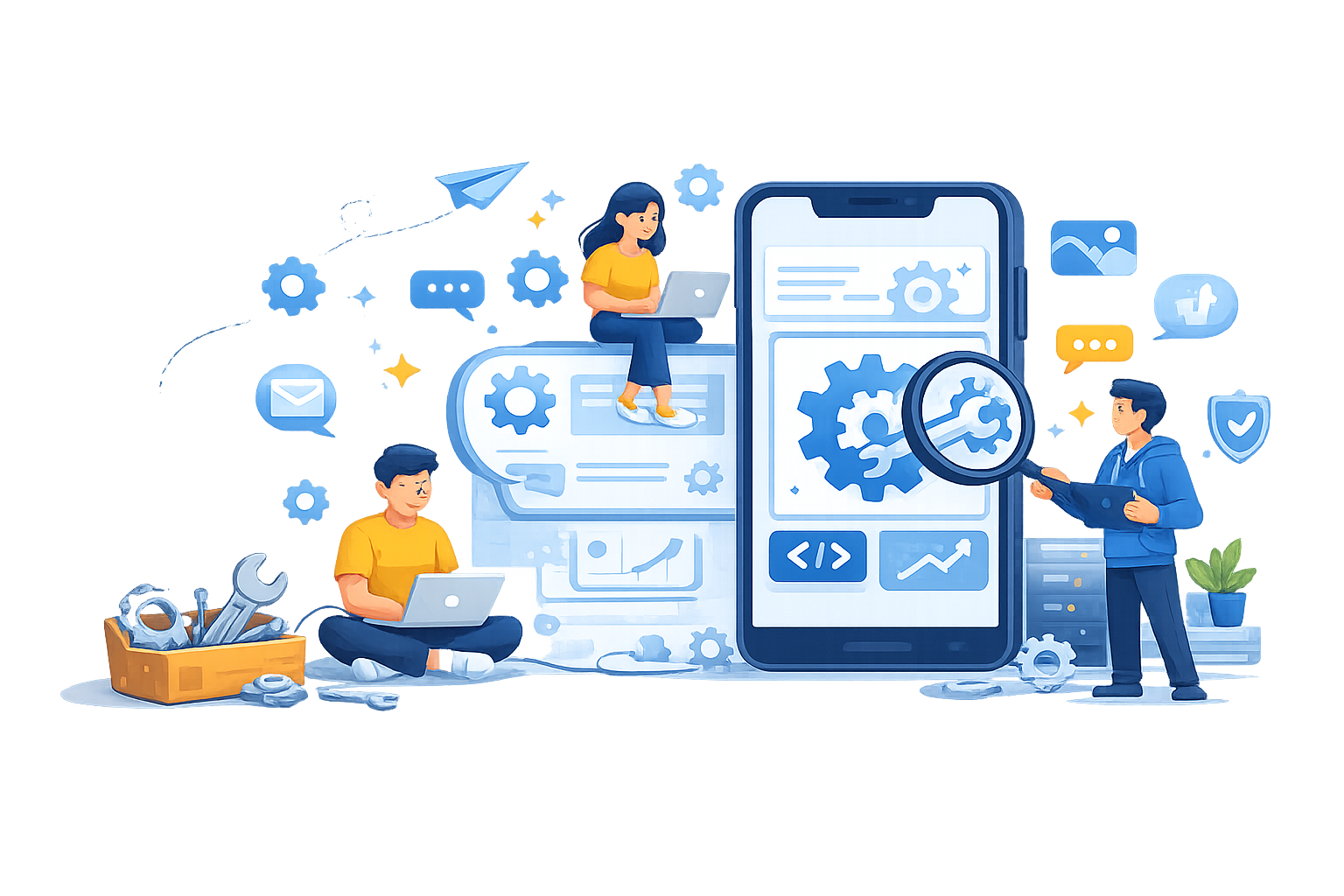
Software maintenance and support services are the ongoing work that keeps a live website, app, or platform secure, performant, and compatible with the operating systems, browsers, and third-party integrations it depends on work that continues well after a product first launches. Without it, a live product decays in predictable ways: performance degrades as content and dependencies accumulate, security exposure grows as unpatched vulnerabilities sit unaddressed, and compatibility quietly breaks as browsers, OS versions, and third-party APIs update out from under a codebase nobody’s maintaining. This applies whether we built your product or not our web development and mobile app development teams support new builds, but we also take over maintenance on existing products built by other teams. SoftCurators scopes a maintenance engagement against your product’s actual architecture and risk profile before proposing a plan, rather than selling the same fixed retainer to every client regardless of what they’re running.

Request a Free Quote

    Satisfaction
    70 %
    Happy Clients
    50 +
    Years Experienced Team
    5 +
    Team Members
    40 +

    Our Services Maintenance and Support |

    image

    Corrective Maintenance (Bug Fixing & Issue Resolution)

    Corrective maintenance fixes defects and bugs discovered after launch errors that were missed during pre-launch testing or that only surface under real usage conditions. Examples include: - Fixing a checkout process that fails under specific payment method combinations - Resolving a data-sync bug that only appears at higher user volumes than testing covered - Correcting a broken third-party integration after an API’s response format changed - Patching a crash that only occurs on specific device/OS combinations
    image

    Preventive Maintenance

    Preventive maintenance addresses risks before they cause a failure, rather than reacting to one that’s already happened. Examples include: - Refactoring code with known technical debt before it causes a production issue - Rotating credentials and access keys on a defined schedule rather than after a suspected compromise - Monitoring database query performance and optimizing before slow queries become a user-facing problem - Reviewing and updating dependency versions before end-of-life versions become a security gap
    image

    Adaptive Maintenance (Keeping You Future-Ready)

    Adaptive maintenance changes a product to keep working as its external environment changes new OS versions, browser updates, or third-party API changes that the product didn’t cause and can’t control. Examples include: - Updating an app for compatibility with a new major iOS or Android release - Adjusting code that depended on a third-party API’s old response structure after a breaking change - Updating a website’s code for compatibility with new browser rendering behavior - Migrating away from a deprecated SDK or library version before support ends

    image

    Performance Optimization Services

    Perfective maintenance improves a product that already works correctly feature enhancements and usability refinements based on real usage patterns, not defect fixes. Examples include: - Adding a frequently requested feature identified through user feedback or support tickets - Streamlining a multi-step flow that usage data shows causes unusually high drop-off - Improving load performance on a page that works correctly but loads slower than ideal - Refining an interface based on patterns observed in real usage rather than pre-launch assumptions
    image

    Security & Compliance Maintenance

    Security is non-negotiable. Our security-focused maintenance includes: Firewall monitoring , SSL updates, Data encryption audits,Compliance alignment with standards like General Data Protection Regulation & Role-based access control audits.We protect your application from vulnerabilities and cyber threats.
    image

    24/7 Monitoring & Incident Response

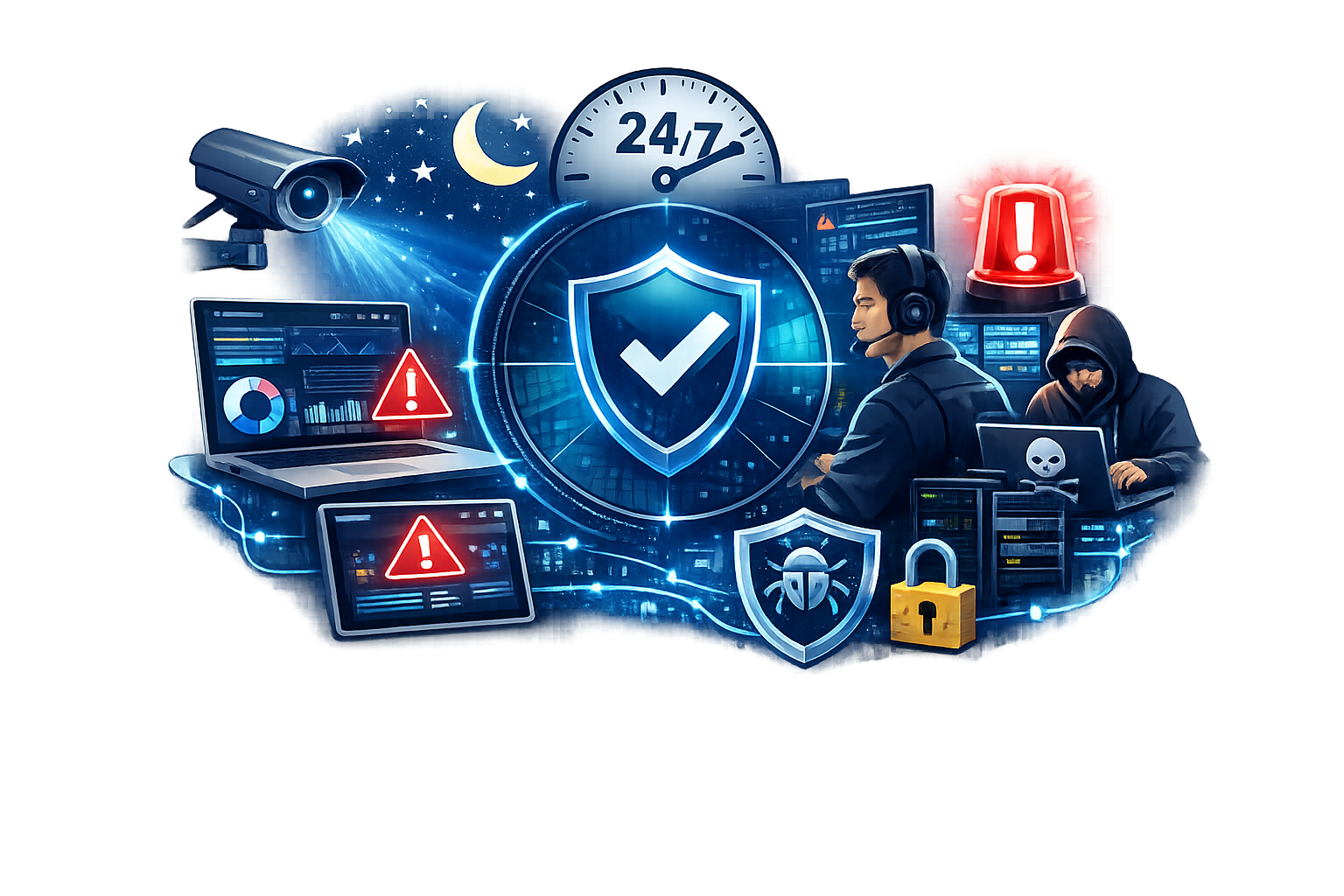
    We provide round-the-clock monitoring for: Server uptime , API failures, System overload, Database performance, Suspicious activity, Immediate alerts and rapid response minimize downtime.

    image

    Cloud Infrastructure Support

    We manage and optimize your cloud environment on: AWS, Microsoft Azure, Google Cloud.Including Resource scaling, Cost optimization,Backup management & Disaster recovery setup

    image

    Feature Enhancements & Continuous Improvements

    Maintenance doesn’t mean stagnation.We help you Add new features,Improve workflows,Upgrade UI,Integrate AI modules,Optimize user journeys. Your product evolves as your business grows.

    Software maintenance breaks down into four recognized categories : corrective, preventive, adaptive, and perfective and understanding which type a given piece of work falls under helps set realistic expectations for what a maintenance engagement actually covers. Most support conversations default to talking only about corrective maintenance “what happens when something breaks” because it’s the most visible and urgent category. But a maintenance engagement built entirely around reacting to defects misses most of the value ongoing support can actually provide: preventive work catches problems before they become incidents, adaptive work keeps a product from silently breaking as its environment changes around it, and perfective work is how a product actually improves over time instead of just staying static. A mature maintenance relationship allocates real attention across all four categories, not just the one that generates the most urgent-feeling tickets.

    Our Clients

    Choosing the Right Support Plan for Your Business

    The right support plan depends on how critical the application is to your business operations and revenue, not just its size or age. An internal tool that a delay of a few hours doesn’t meaningfully hurt needs a different plan than a customer-facing platform where an hour of downtime means lost revenue and damaged trust.

    Tier
    Response Time Expectation
    What’s Included
    Best Fit
    Basic Monitoring
    Best-effort response during business hours
    Uptime monitoring, periodic security patching, monthly health checks
    Internal tools or low-traffic sites where downtime has limited business impact
    Standard Maintenance
    Defined response window during business hours
    Uptime and performance monitoring, regular security and dependency updates, corrective and adaptive maintenance as needed
    Growing businesses with a customer-facing product where reliability matters but 24/7 coverage isn’t yet justified
    Enterprise / SLA-Backed Support
    Guaranteed response time under a signed SLA
    24/7 monitoring and incident response, priority corrective maintenance, proactive preventive maintenance, dedicated escalation path
    Revenue-critical platforms, high-traffic applications, or businesses with contractual uptime obligations to their own customers

    Choose Basic Monitoring only if downtime genuinely has limited business consequence for anything customer-facing or revenue-generating, Standard or Enterprise tiers reflect the real cost of an outage more accurately than a lighter plan does. The right tier for a given product also isn’t necessarily fixed forever. A product that launched on Basic Monitoring as a low-traffic internal tool may need to move to Standard or Enterprise coverage once it starts handling customer-facing traffic or processing payments the periodic review step in our maintenance process (below) exists specifically to catch this kind of shift before an incident forces the conversation.

    24/7 Monitoring and Incident Response

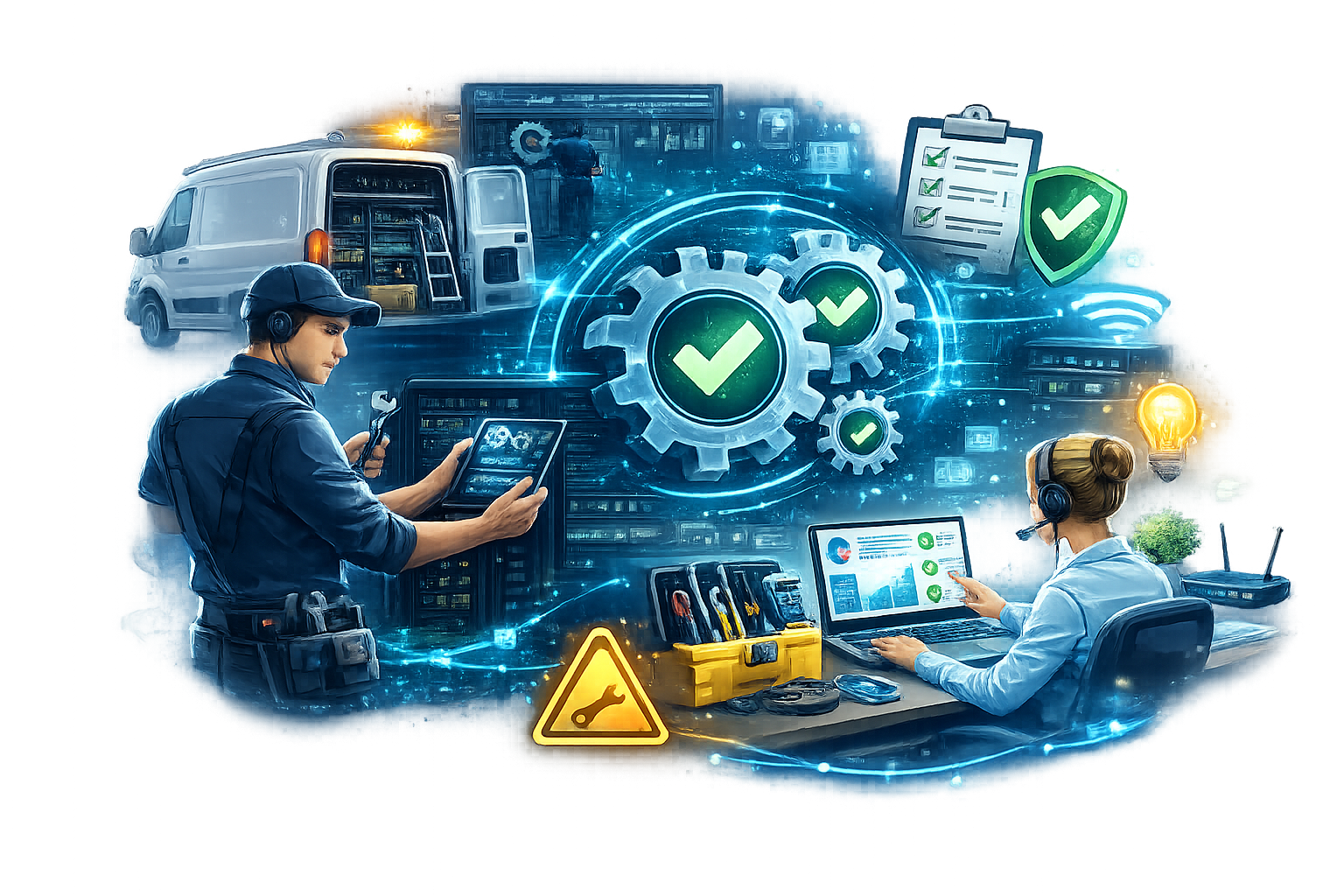
    24/7 monitoring means continuously tracking a defined set of health signals across your application and infrastructure, with an alert firing the moment something crosses a defined threshold rather than waiting for a user to report a problem. When an alert fires, the response follows a defined path: the issue gets triaged for severity, an engineer familiar with the system investigates the root cause, and a fix gets deployed following the response-time commitment tied to your support tier. Critical, customer-facing issues get prioritized ahead of lower-severity ones, and post-incident, a root-cause summary documents what happened and what preventive maintenance (see above) might reduce the chance of recurrence. Anomaly-detection approaches increasingly draw on AI-assisted pattern recognition to flag unusual behavior a traffic spike that doesn’t match normal patterns, or a gradual performance degradation too slow for a fixed threshold alert to catch supplementing, rather than replacing, threshold-based monitoring on the metrics listed above

    What actually gets monitored includes:

    • Uptime and availability – whether the application and its critical endpoints are reachable and responding correctly
    • API failures and error rates – spikes in failed requests or error responses that signal a breaking issue upstream or downstream
    • System load and resource usage – CPU, memory, and server load trending toward capacity limits before they cause a slowdown or outage
    • Database performance – query response times and connection pool health, since database slowdowns are a common root cause of broader application slowness
    • Suspicious activity – unusual traffic patterns, repeated failed login attempts, or other signals consistent with an attempted security breach

    Security and Compliance Maintenance

    Security maintenance means continuously reducing a live product’s attack surface, not a one-time hardening pass done at launch and never revisited. This includes firewall and access-control monitoring to catch unauthorized access attempts, SSL/TLS certificate renewal before expiration (an expired certificate immediately damages user trust and can break API integrations), and periodic encryption audits confirming sensitive data stays properly protected both at rest and in transit as the application evolves. Compliance maintenance depends heavily on what your product handles and where its users are. A product processing EU resident data needs ongoing GDPR alignment data handling practices, breach notification readiness, and user data rights need to stay current as the product’s data flows change, not just be correct at initial launch. Healthcare products handling protected health information carry HIPAA-related obligations that similarly require ongoing attention as the product evolves, not a single compliance review that’s assumed to remain valid indefinitely. Compliance maintenance is fundamentally different from feature maintenance: it’s driven by regulatory and legal requirements that can change independent of anything happening in your product itself, which is why it needs its own dedicated attention rather than being folded into general bug-fixing work. The cost of neglecting security maintenance specifically tends to be invisible right up until it isn’t. An expired SSL certificate or an unpatched dependency doesn’t announce itself the way a broken feature does it sits quietly until a browser warning drives users away or a known vulnerability gets exploited. This is precisely why security maintenance belongs on a defined, recurring schedule rather than a reactive “we’ll get to it” list, since the cost of catching a gap proactively is nearly always lower than the cost of responding to it after exploitation.

    Cloud Infrastructure Support

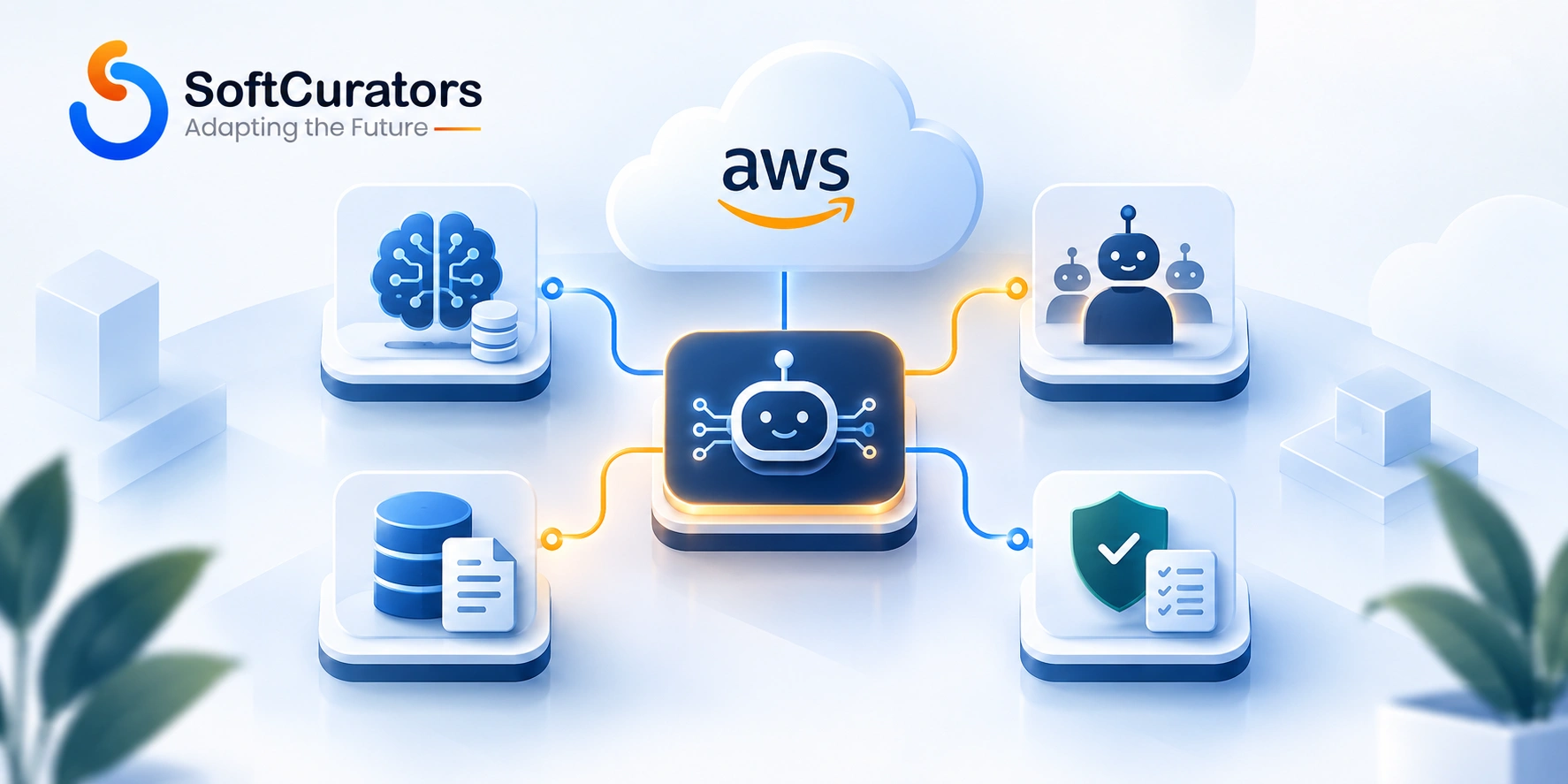
    Cloud infrastructure support means ongoing management of the AWS, Azure, or GCP resources a product runs on scaling, cost, backup, and disaster-recovery readiness separate from the application code itself. Infrastructure support and application-level maintenance are related but distinct disciplines, and treating them as the same thing is a common gap in lighter support arrangements. A product can have flawless application code and still go down because of an infrastructure issue a database running out of connection capacity, a misconfigured auto-scaling rule, a backup that was never actually tested for restore. Comprehensive maintenance covers both layers, not just the one that’s easier to see from the outside.

    • Scaling – adjusting compute and database resources to match real traffic patterns, so a product neither runs under-provisioned during peak load nor over-provisioned (and overpaying) during normal usage.
    • Cost optimization – reviewing cloud spend against actual usage, since infrastructure that was correctly sized at launch often drifts into paying for capacity or services no longer needed.
    • Backup management – automated, tested backups on a defined schedule, with periodic restore testing to confirm backups would actually work in a real recovery scenario, not just that a backup file exists.
    • Disaster recovery readiness – a documented plan for restoring service after a significant infrastructure failure, tested rather than assumed to work when actually needed.

    Our Structured Maintenance Process

    image

    System Audit & Assessment

    We review the application’s current architecture, dependency versions, security posture, and known technical debt, establishing an accurate baseline before proposing any maintenance plan rather than assuming a generic starting point.
    image

    Strategy and plan design

    Based on the audit, we scope which maintenance types (corrective, preventive, adaptive, perfective) need the most attention for this specific product, and match that to a support tier that reflects the application’s actual criticality.
    image

    Monitoring setup.

    Uptime, performance, error-rate, and security monitoring get configured against the specific systems and thresholds relevant to your application, not a generic monitoring template applied unchanged across every client.
    image

    Ongoing optimization and maintenance execution.

    Corrective fixes, preventive work, adaptive updates, and perfective improvements get executed on an ongoing cadence, with priority given based on business impact rather than a strict first-in-first-out queue

    Contact Us

    Ready for Maintenance That Doesn’t Wait for Something to Break?

    Talk to SoftCurators about auditing your current application and scoping a support plan that actually matches its real risk profile see examples of our work or get in touch to start the conversation.

    Technology Stack We Support

    React, Angular, Vue, and legacy jQuery-based frontends


    Node.js, PHP/Laravel, Python/Django, Java, and legacy monolithic backends

    Native iOS (Swift/Objective-C), native Android (Kotlin/Java), Flutter, React Native

    WordPress, Shopify, WooCommerce, Magento

    PostgreSQL, MySQL, MongoDB, and legacy database versions still in active use

    AWS, Azure, Google Cloud Platform

    Pricing and Contract Options

    Maintenance pricing typically follows one of three structures: a fixed monthly retainer covering a defined scope of work, hourly billing for ad hoc or unpredictable maintenance needs, or an SLA-tiered contract where pricing scales with guaranteed response times and coverage hours. A retainer suits products with fairly predictable, ongoing maintenance needs; hourly billing suits products needing infrequent, unpredictable support; and SLA-tiered contracts suit businesses where guaranteed response time is itself a requirement, not just a preference. The most useful way to approach a maintenance pricing conversation is to start from the system audit described in our process above, rather than requesting a quote before anyone has actually looked at what needs supporting. A quote produced without that audit is either padded to cover unknown risk or underscoped in ways that surface as change requests later neither serves the client well, which is why we treat the audit as a prerequisite to a real proposal rather than an optional add-on.

    Industries We Support

    Why Choose SoftCurators for Maintenance and Support

    Maintenance scoped against your product’s real architecture, not a fixed package

    The system audit at engagement start determines what your product actually needs, rather than fitting every client into the same predetermined plan.

    All four maintenance types actively planned for, not just reactive bug fixing

    Preventive and perfective maintenance get scheduled proactively alongside corrective fixes, rather than support consisting entirely of reacting to reported problems.

    Infrastructure cost optimization included, not just uptime

    We review cloud spend against actual usage patterns as part of ongoing support, catching infrastructure that’s drifted into being over-provisioned.

    Comfortable taking over codebases we didn’t build

    Inheriting an existing product from another development team is routine work for us, including ones built on legacy or uncommon technology combinations.

    Compliance maintenance treated as continuously active, not launch-and-forget

    GDPR, HIPAA, and similar obligations get revisited as your product’s data handling evolves, not assumed to remain correct indefinitely from a single initial review.

    Incident response with documented root-cause follow-up

    Every significant incident gets a post-incident summary connecting back to preventive maintenance recommendations, not just a fix with no record of why it happened.

    Lets Connect

    Schedule Your Free Maintenance Consultation

      Frequently Asked Questions

       Corrective maintenance fixes a defect after it’s already caused a problem a bug, a crash, a broken integration. Preventive maintenance addresses a risk before it causes a failure, like refactoring known technical debt or rotating credentials on a schedule, rather than waiting for an incident to force the work.

       Cost depends primarily on application complexity, infrastructure size, and how intensive the monitoring and response-time commitment needs to be, rather than a flat rate. A simple, low-traffic site on a best-effort support plan costs meaningfully less than a complex, high-traffic platform under a 24/7 SLA-backed contract.

       Yes, taking over an existing product’s maintenance from another team is a normal part of this work, starting with a system audit to establish an accurate baseline of the current codebase, infrastructure, and technical debt before proposing a plan.

       Both are available, structured around the support tiers above 24/7, SLA-backed monitoring and incident response for revenue-critical or high-traffic platforms, and business-hours coverage for products where that level of guaranteed responsiveness isn’t yet justified by the business impact of downtime.

      The issue gets triaged for severity and routed to an engineer familiar with the system, with resolution prioritized against the response-time commitment tied to your support tier critical, customer-facing issues take priority over lower-severity ones in the queue.

      Yes, this is routine we support current and legacy technology stacks specifically so an engagement isn’t blocked by an original development team’s technology choices, and a system audit at the start of the engagement establishes what we’re working with.

       Security maintenance includes firewall and access-control monitoring, SSL/TLS certificate renewal before expiration, and periodic encryption audits confirming sensitive data stays properly protected as the application evolves — an ongoing practice, not a one-time hardening pass done at launch.

       Ongoing maintenance covers CMS and plugin updates, SSL certificate renewal, uptime monitoring, Core Web Vitals tracking, and tested backup management — distinct, recurring tasks rather than a single generic support bucket. Falling behind on any one of these creates compounding risk, particularly security patching and SSL renewal.

      We track uptime, API error rates, system resource usage, and database performance continuously, with alerts firing the moment a defined threshold is crossed rather than waiting for a user-reported problem to surface an issue.

       Yes, infrastructure support covers scaling, cost optimization, backup management, and disaster recovery readiness across AWS, Azure, or GCP, managed as an ongoing responsibility separate from application-code maintenance itself.

      A retainer covers a defined, predictable scope of ongoing work for a fixed monthly cost, while hourly billing suits products with infrequent or unpredictable maintenance needs where a fixed retainer wouldn’t reflect actual usage. The right structure depends on how consistent your product’s maintenance needs actually are.

       Both, under different categories corrective maintenance fixes defects, while perfective maintenance covers feature enhancements and usability improvements based on real usage data, which is a standard, planned part of a maintenance engagement rather than a separate project.

      Compliance maintenance is treated as continuously active rather than a one-time launch checklist as a product’s data handling evolves, we revisit data practices, breach-readiness, and user data rights obligations to keep them current rather than assuming an initial compliance review stays valid indefinitely.

      Our Latest Blogs