
As you know that the music streaming apps have changed how we listen to music now.
Instead of downloading MP3 files or purchasing the albums physically, users now enjoy unlimited music access anytime and anywhere.
Popular platforms like Spotify, Apple Music, YouTube Music and Amazon Music have become essential parts of daily entertainment.
Unsurprisingly, startups, entrepreneurs and enterprises want to enter this flourishing market.
But obviously the question is, How much does it cost to develop a music streaming app?
The straightforward answer to this is that – it depends, because several factors affect the final investment, ranging from app complexity and features to third-party integrations and licensing requirements.
This detailed guide breaks down everything you need to know before building your own Spotify-like music platform, including:
- Updated 2025 market numbers
- Feature-by-feature cost implications
- Total development cost
- Hidden cost factors no one talks about
- Monetization strategies
- Step-by-step development roadmap
- How SoftCurators can build a world-class streaming app
If you’re planning to enter the music tech industry, consider this your complete blueprint.
Understanding the Music Streaming App Market
The music streaming industry exploded over the past decade and continues to grow exponentially.
The shift from physical music to digital music—and now to cloud-based streaming—changed the way people consume audio permanently.
Why Music Streaming Apps Are in High Demand
- Smartphones have become universal
- Internet costs are dropping globally
- On-demand content is now a standard expectation
- AI-driven recommendations to enhance user experience
- Freemium models make apps accessible to everyone
Music streaming apps offer
- Unlimited tracks
- Personalized playlists
- Offline listening
- Radio-like streaming
- AI-powered music suggestions
- Podcasts, live sessions & audio events
- Social sharing features
With millions of potential users, a music streaming platform can be extremely profitable—if built the right way.
Music Streaming App Market Statistics
Here are the latest stats that explain why this industry is flourishing:
Global Market Value
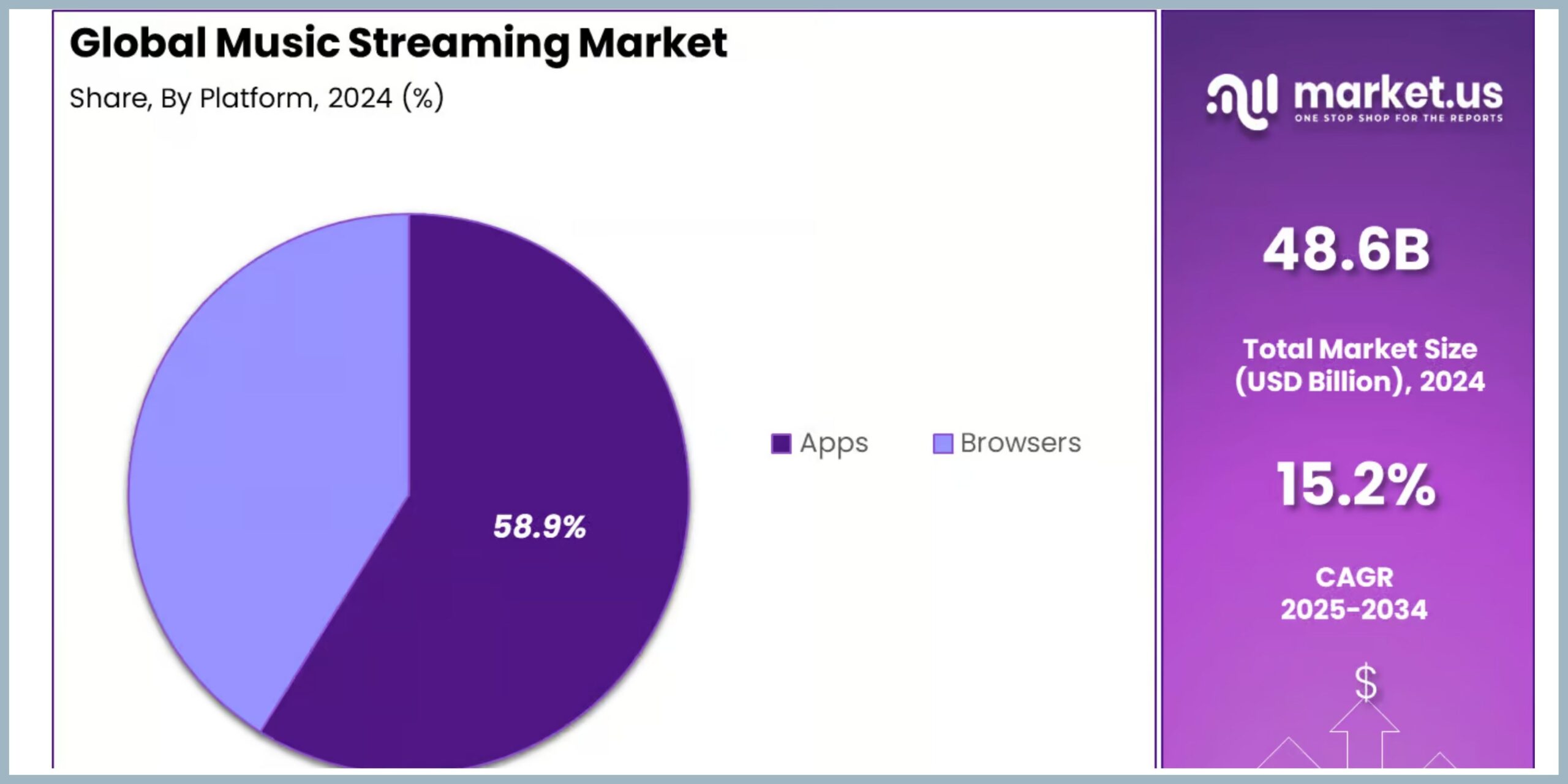
- The global music streaming market is projected to reach $121 billion by 2030, growing at a CAGR of 14.7%.
User Base Growth
- More than 650 million people globally use music streaming apps monthly.
- By 2030, the user count is expected to exceed 1 billion.
Revenue Breakdown
- Subscription revenue contributes 65% of total streaming revenue.
- Ad-supported free streaming contributes 35%.
Platform Dominance
- 78% of music streaming occurs on mobile devices.
- 22% happens on desktop and smart speakers combined.
AI Adoption
- 70%+ of users listen to algorithmically generated playlists.
- AI personalization improves user retention by 40%.
Genre Popularity
- Pop
- Hip-hop
- Electronic
- Indie
- Podcasts (fastest growing category)
These statistics confirm that music streaming will continue to evolve, making it an excellent investment opportunity.
Popular Music Streaming Apps Worldwide
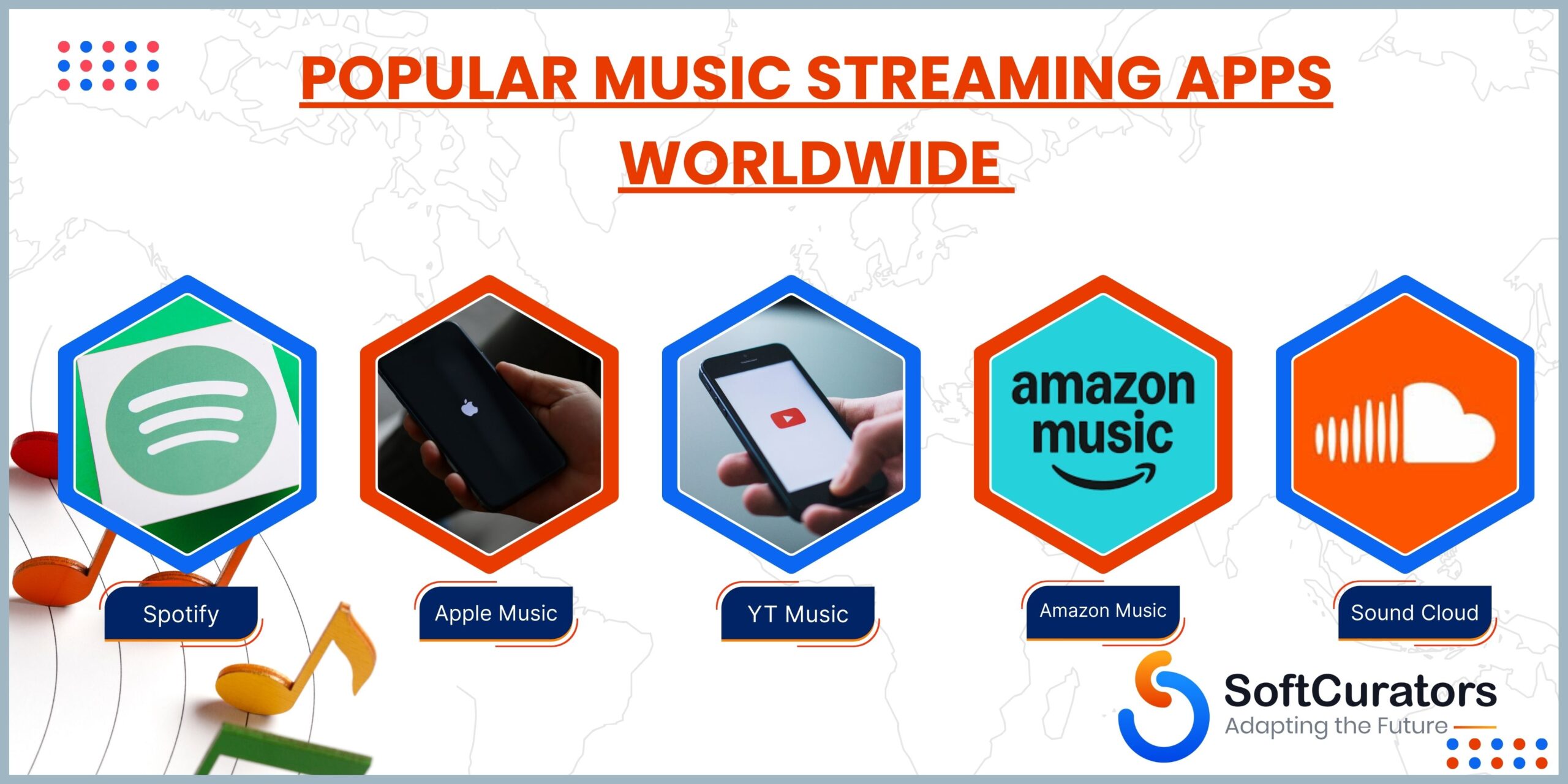
While Spotify leads the market, there are several apps that dominate different niches.
-
Spotify
The global leader known for its recommendation engine, podcasts and personalized playlists.
-
Apple Music
Strong ecosystem integration for Apple users and superior sound quality.
-
YouTube Music
Huge library, great for lyric videos and unofficial content.
-
Amazon Music
Bundled with Prime subscription; strong voice integration through Alexa.
-
Deezer
Focuses on high-fidelity audio and unique features like Flow.
-
Tidal
Known for HD audio, lossless formats & artist-first payout models.
-
Pandora
Popular in the US for its radio-style recommendation model.
-
SoundCloud
Largest independent artist platform with user-generated uploads.
-
Wynk Music / Gaana / JioSaavn (India)
Localized content libraries and regional music variety.
These platforms show that music streaming apps aren’t limited to just one type—there is room for innovation and niche-focused products.
What Determines the Cost of Developing a Music Streaming App?
The cost to develop an app like Spotify or Apple Music is decided by several things:
-
App Complexity
Is it a basic streaming player or a complete music ecosystem with podcasts, AI playlists & social features?
-
Licensing Requirements
You need licenses to legally stream copyrighted music.
-
Feature Set
- Basic features (search, play, playlists)
- Advanced features (offline mode, AI recommendations)
-
Platform Choice
- Android
- iOS
- Web
- Or all of them
-
Tech Stack
Cloud hosting and streaming infrastructure significantly affect cost.
-
UI/UX Complexity
Custom animations, transitions, visualizers add to the overall expense.
-
Region of Development
Development cost differs significantly by country.
All of these elements combine to form a final cost estimate.
Hidden Factors That Influence Cost
These are the often-overlooked areas that dramatically increase cost if not planned for:
-
Music Licensing Costs
You must license music legally through:
- ASCAP
- BMI
- SESAC
- Sound Exchange
- Local copyright bodies
Licensing is often more expensive than the development cost.
-
Cloud Hosting & Infrastructure
Streaming large audio files requires:
- AWS
- Google Cloud
- DigitalOcean
Costs increases as users base grow.
-
Content Delivery Network (CDN)
For global streaming without lag, CDN providers like Cloudflare or Akamai are needed.
-
Database Scaling
Millions of tracks + user playlists = huge storage needs.
-
Security & Compliance
You must secure:
- User data
- Payment information
- Usage analytics
This adds extra layers of development cost.
-
Ongoing Maintenance
Post-launch updates cost around 15–20% of development cost annually.
Hidden costs can determine whether your app becomes a premium platform or a budget-friendly MVP.
Features Required for a Music Streaming App
Basic Features :
These features form the foundation of every music app:
-
User Registration & Profiles
Simple sign-up with:
- Phone
- Social login
-
Music Library
Browse by:
- Genre
- Artist
- Album
- Mood
- Trending playlists
-
Playlists
Users can:
- Create
- Edit
- Save
- Share
-
Music Player
Should have:
- Play/pause
- Skip
- Shuffle
- Repeat
- Seek bar
-
Search Feature
Instant search across millions of tracks.
-
User Settings
Themes, playback settings, language etc.
Advanced Features
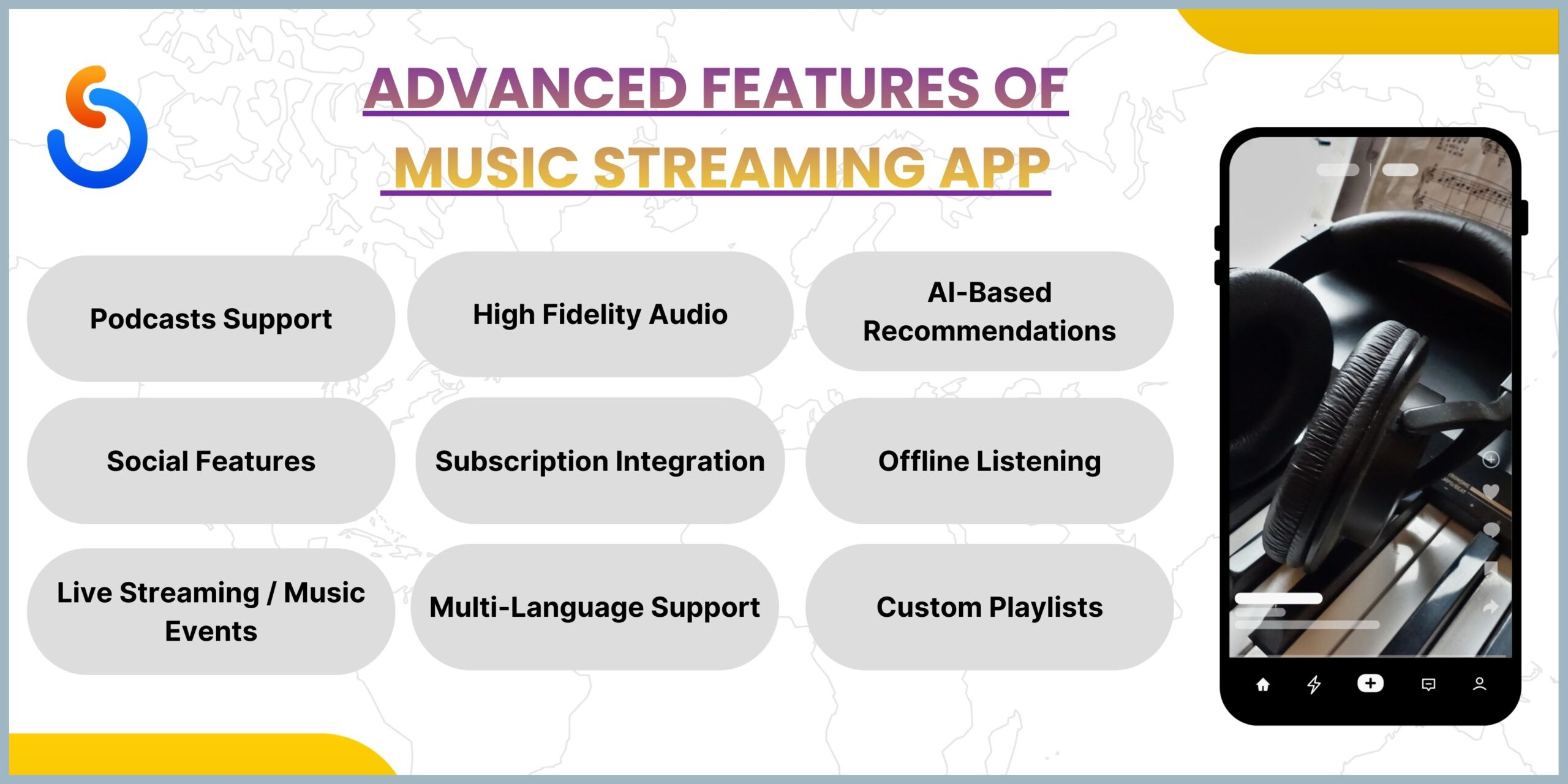
Advanced features enhances the premium experience
-
Offline Listening
Users download the songs to listen them without the internet.
-
AI-Based Recommendations
Algorithms suggest:
- Daily mixes
- Discover weekly playlists
- Suggested artists
-
Podcasts Support
Podcast streaming is rapidly growing.
-
Social Features
- Share playlists
- Follow friends
- Collaborative playlists
-
Live Streaming / Music Events
Artists can host:
- Live concerts
- Q&A sessions
-
High Fidelity Audio
Lossless or studio-quality audio for premium subscribers.
-
Subscription Integration
Handles:
- Monthly plans
- Family plans
- Regional pricing
-
Multi-Language Support
Essential for global music platforms.
Tech Stack for Music Streaming App Development ()
Frontend Technologies
- React Native (Cross-platform)
- Flutter (Cross-platform)
- Swift (iOS)
- Kotlin (Android)
Backend Technologies
- Node.js
- Python Django
- Ruby on Rails
- GoLang
Database
- MongoDB
- PostgreSQL
- Cassandra
- Redis (for speed)
Cloud Streaming Infrastructure
- AWS S3
- AWS MediaConvert
- Firebase Storage
APIs & Integrations
- Payment gateways (Stripe, Razorpay, PayPal)
- Recommendation engines
- Social APIs
- Analytics tools
CDN Providers
- Cloudflare
- Akamai
Your tech stack determines your scalability, performance, and long-term cost efficiency.
Step-by-Step Development Process
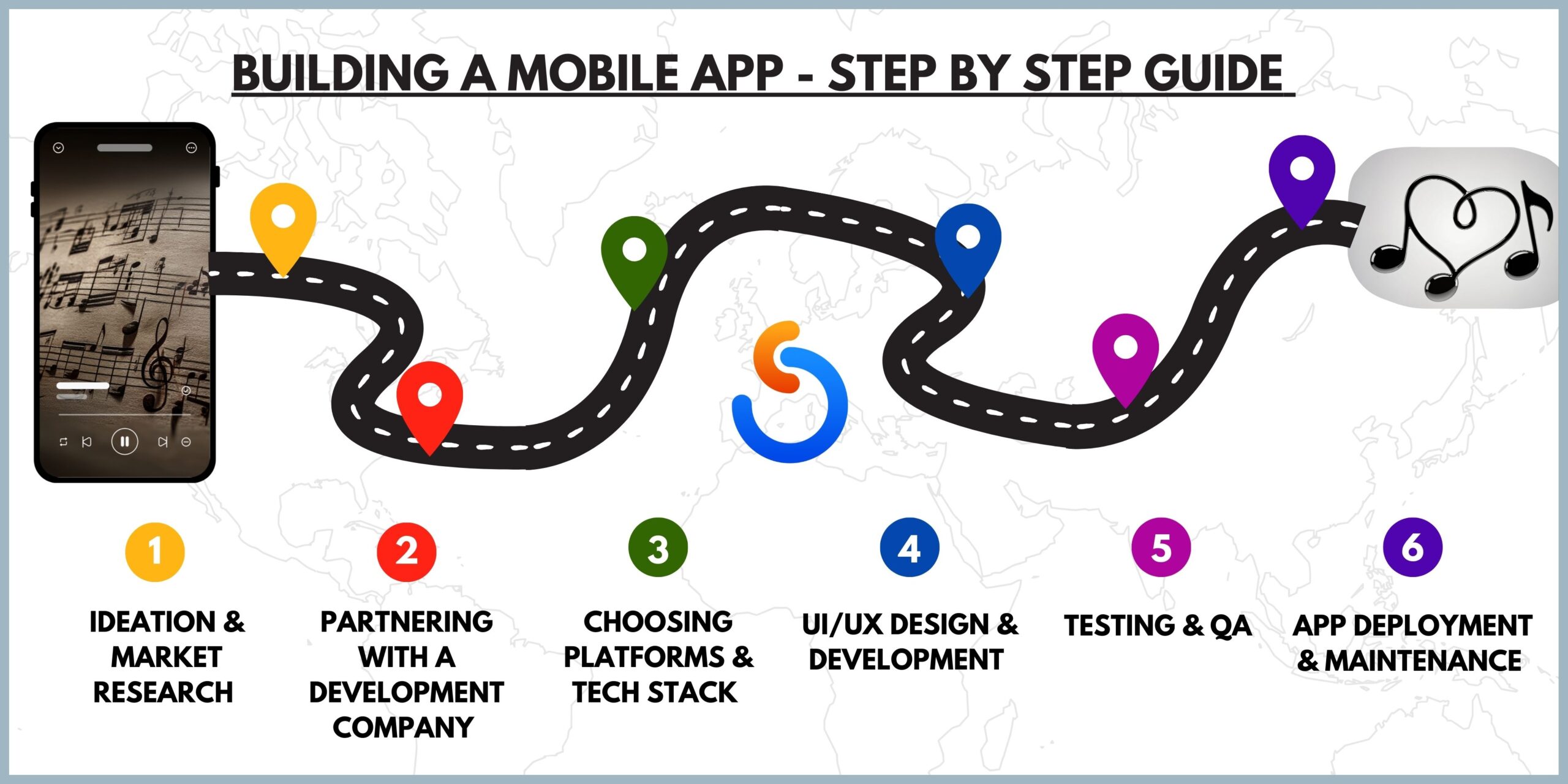
1. Market Research
Identify:
- Target audience
- Music niches
- Competitor gaps
- Licensing needs
2. Define App Features
List must-have + premium features.
3. Choose Tech Stack
Select technologies for frontend, backend, cloud & media streaming.
4. UI/UX Design
Music apps require:
- High aesthetics
- Smooth transitions
- Beautiful player interface
5. Development Phase
Includes frontend, backend, and API integrations.
6. Licensing Agreements
Secure music rights legally.
7. Testing
Test:
- Playback
- Downloads
- Login
- Payment
- Offline mode
8. Deployment
Launched on:
- App Store
- Google Play
- Web platforms
9. Maintenance
Essential to fix bugs and update features.
Factors That Affect the App Development Cost
Key cost influencers:
- App Complexity : Basic vs full-featured app.
- Number of Platforms : Android, iOS, or both.
- Features : Advanced features increase development time.
- UI/UX : Custom animation-heavy UI elevates cost.
- Developer Location : US developers cost more than Asian teams.
- Streaming Infrastructure : Cloud servers are expensive at scale.
- Licensing : Large content libraries increase costs.
Cost Breakdown: How Much Does a Music Streaming App Really Cost?
- Basic Music Streaming App : $15,000 – $25,000
- Mid-Level App : $25,000 – $35,000
- Advanced Spotify-Like App : $35,000 – $50,000+
- Ongoing Monthly Costs : $1,000 – $2,000 (cloud servers, maintenance, licensing)
Timeline: How Long Does It Take to Build a Music Streaming App?
| Phase | Duration |
| Market Research | 1–2 weeks |
| UI/UX | 2–4 weeks |
| Development | 6–8 weeks |
| Testing | 2 weeks |
| Deployment | 1 week |
⏳ Total: 3–5 months
Why Choose SoftCurators for Music Streaming App Development?
SoftCurators specializes in high-quality, scalable, and feature-rich music streaming app development.
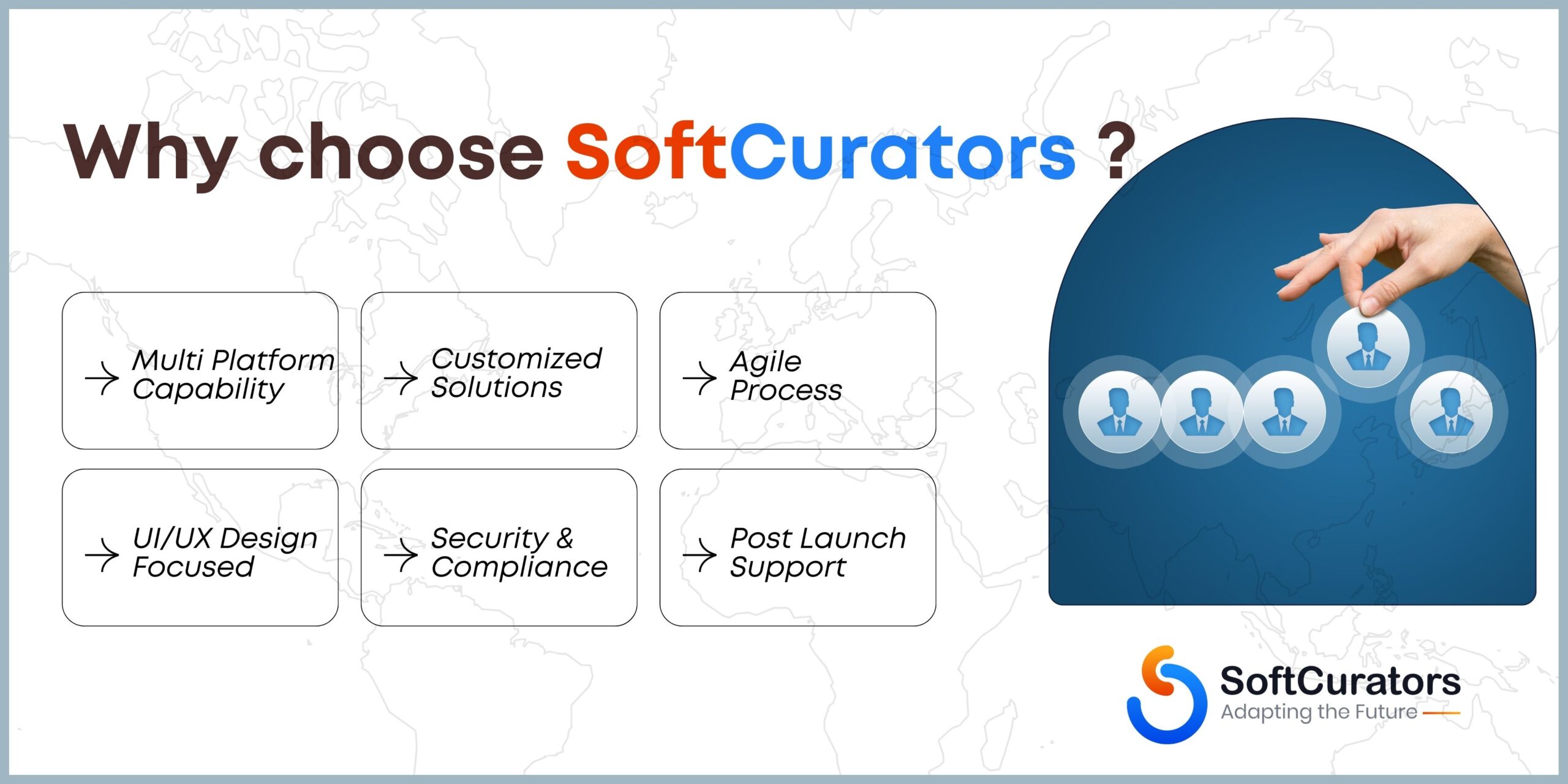
Why SoftCurators?
- Experienced audio streaming engineers
- Expertise in music licensing integrations
- Custom UI/UX tailored for music lovers
- Scalable cloud-based architecture
- Advanced AI recommendation integration
- Dedicated project managers
- Transparent pricing
- Long-term maintenance & support
SoftCurators has helped multiple startups build:
- Spotify-like apps
- Social music sharing platforms
- Podcast streaming apps
- Artist monetization apps
- Music event live-streaming apps
If you’re planning to launch a world-class music streaming platform, SoftCurators is your perfect development partner.
Conclusion
Music streaming apps are one of the fastest-growing digital industries, with huge revenue potential.
Whether you want a music streaming app development company, Apple Music, or your own unique niche streaming app, the opportunity has never been bigger.
This guide gives you a detailed understanding of:
- Market Insights
- Development cost
- Hidden expenses
- Monetization strategies
- Technical requirements
- Timeline
- Feature-wise cost breakdown
If you’re serious about building a competitive music platform, SoftCurators can bring your vision to life with precision and high performance.
FAQs
How long does development take?
Typically 3–5 months.
Do I need music licenses?
Yes, licensing is legally required and can be costly.
Can I build a music streaming MVP first?
Absolutely—this reduces risks and cost.
What makes a music app successful?
A massive library, smooth streaming, strong recommendations, and great UI.
What tech stack is best?
Node.js + React Native + AWS + MongoDB is a strong modern stack.
Does SoftCurators offer end-to-end development?
Yes, including design, development, cloud setup, licensing support & maintenance.
