
Mobile app development in 2026 isn’t just evolving it’s accelerating.
Artificial intelligence is becoming more practical. Connectivity is faster. Users expect more and they expect it instantly.
Today, businesses are no longer competing on features alone. They’re competing on experience, performance, personalization, and security. And the latest mobile app development trends in 2026 reflect exactly that shift.
The apps winning in 2026 are smarter. Faster. More adaptive. Built to scale.
In this guide, we’ll break down the most important and top mobile app development trends, why they matter for long-term business growth, and how startups and enterprises can adopt them strategically not blindly.
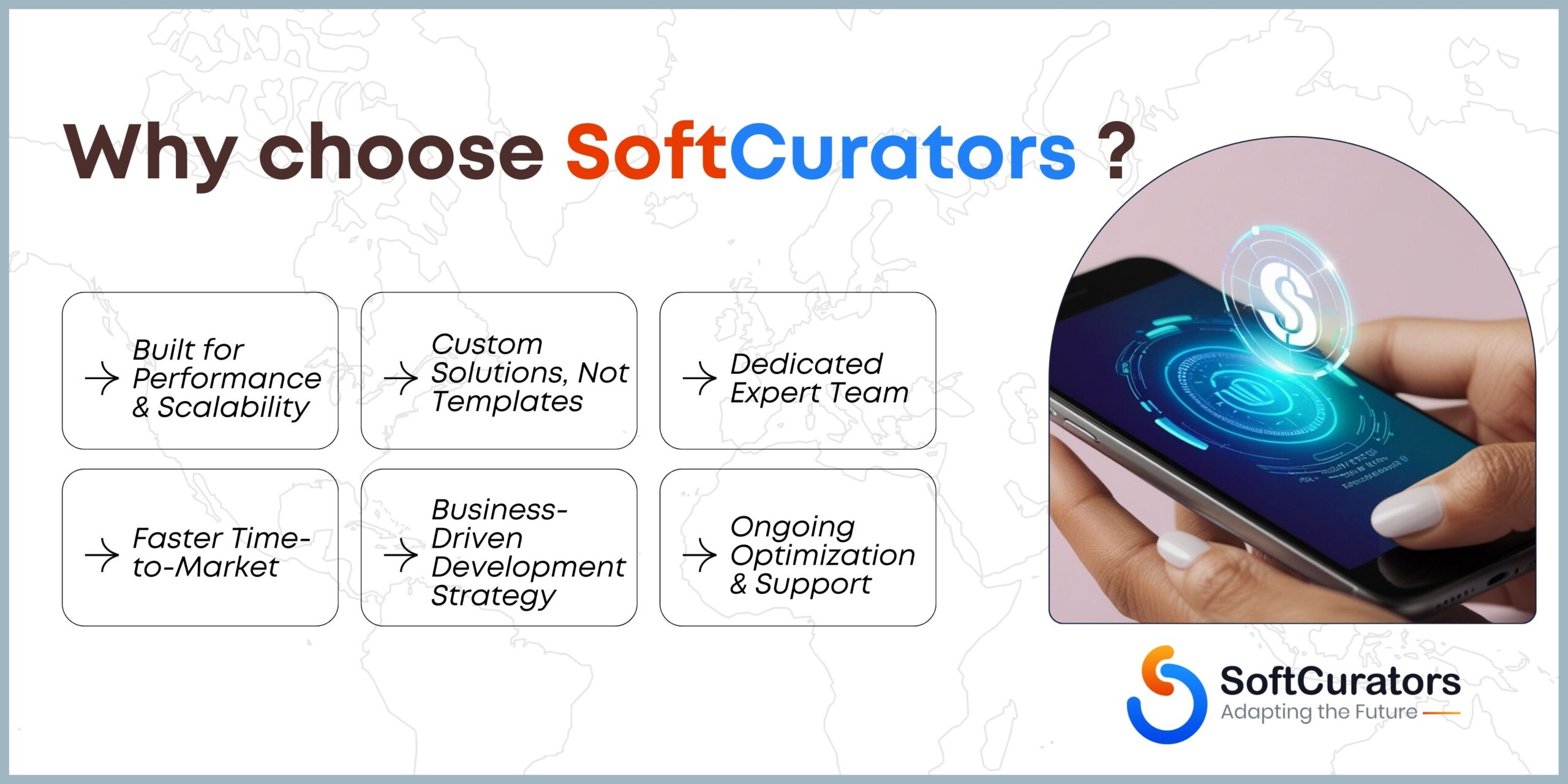
At SoftCurators, we help companies turn these trends into scalable, secure, growth-driven digital products. Because trends only matter when they translate into results.
What Are Mobile App Development Trends ?
Mobile app development trends are emerging technologies, frameworks, methodologies, and design approaches that shape how modern mobile applications are built, optimized, and scaled.
These trends evolve rapidly because of:
- Continuous advancements in AI and cloud computing
- Increasing mobile user expectations
- Platform updates from Android and iOS
- Growing demand for speed, security, and scalability
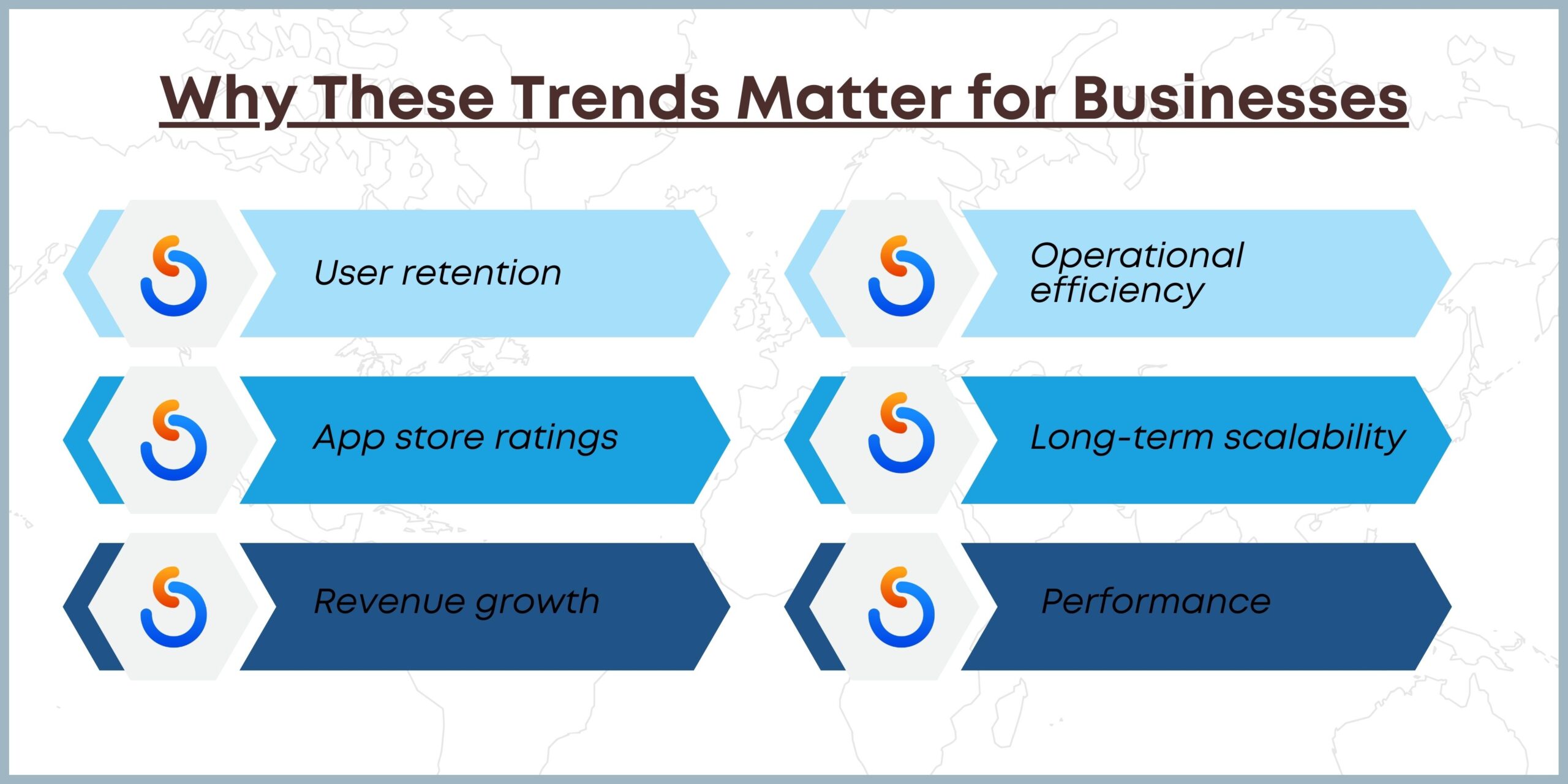
For businesses, adopting the right mobile app development trends directly impacts:
- User engagement and retention
- App performance and scalability
- Development cost and time-to-market
- Overall digital competitiveness
Ignoring these trends doesn’t just slow innovation. It risks building apps that feel outdated within months of launch.
Latest Mobile App Development Trends in 2026
Trend #1: AI & Generative AI Integration in Mobile Apps
AI is no longer experimental. It’s foundational.
Artificial Intelligence has become the backbone of next-generation mobile app development in 2026.
Key AI-powered features include:
- AI chatbots for instant customer support
- Virtual assistants and in-app co-pilots
- Personalized content, feeds, and recommendations
- Predictive analytics for user behavior
- Generative AI for text, images, and voice output
On-Device AI vs Cloud AI
- On-device AI improves speed, offline functionality, and data privacy
- Cloud-based AI enables complex processing, scalability, and continuous learning
Real-world use cases:
- Fintech apps with smart financial insights
- Healthcare apps with symptom analysis
- eCommerce apps with personalized shopping experiences
Trend #2: Cross-Platform App Development Frameworks
Cross-platform mobile app development continues to dominate in 2026 and for good reason.
Why businesses prefer cross-platform development:
- Single codebase for Android and iOS
- Faster development and deployment
- Reduced development and maintenance costs
- Consistent UI and UX across devices
This approach is particularly beneficial for:
- Startups launching MVPs
- Businesses targeting faster market entry
- Companies aiming for scalable app solutions
Cross-platform frameworks balance cost, speed, and performance which is exactly what modern businesses need.
SoftCurators specializes in cross-platform mobile app development to deliver quality without unnecessary complexity.
Trend #3: 5G-Powered Mobile Applications
The expansion of 5G networks is quietly reshaping what mobile apps can actually do.
5G enables:
- Ultra-low latency interactions
- High-definition video streaming
- Real-time multiplayer gaming
- Cloud-powered mobile applications
- Enhanced AR and VR experiences
Apps optimized for 5G load faster and perform smoother. The difference isn’t subtle — users notice.
Businesses that leverage 5G capabilities gain a measurable competitive advantage in user experience.
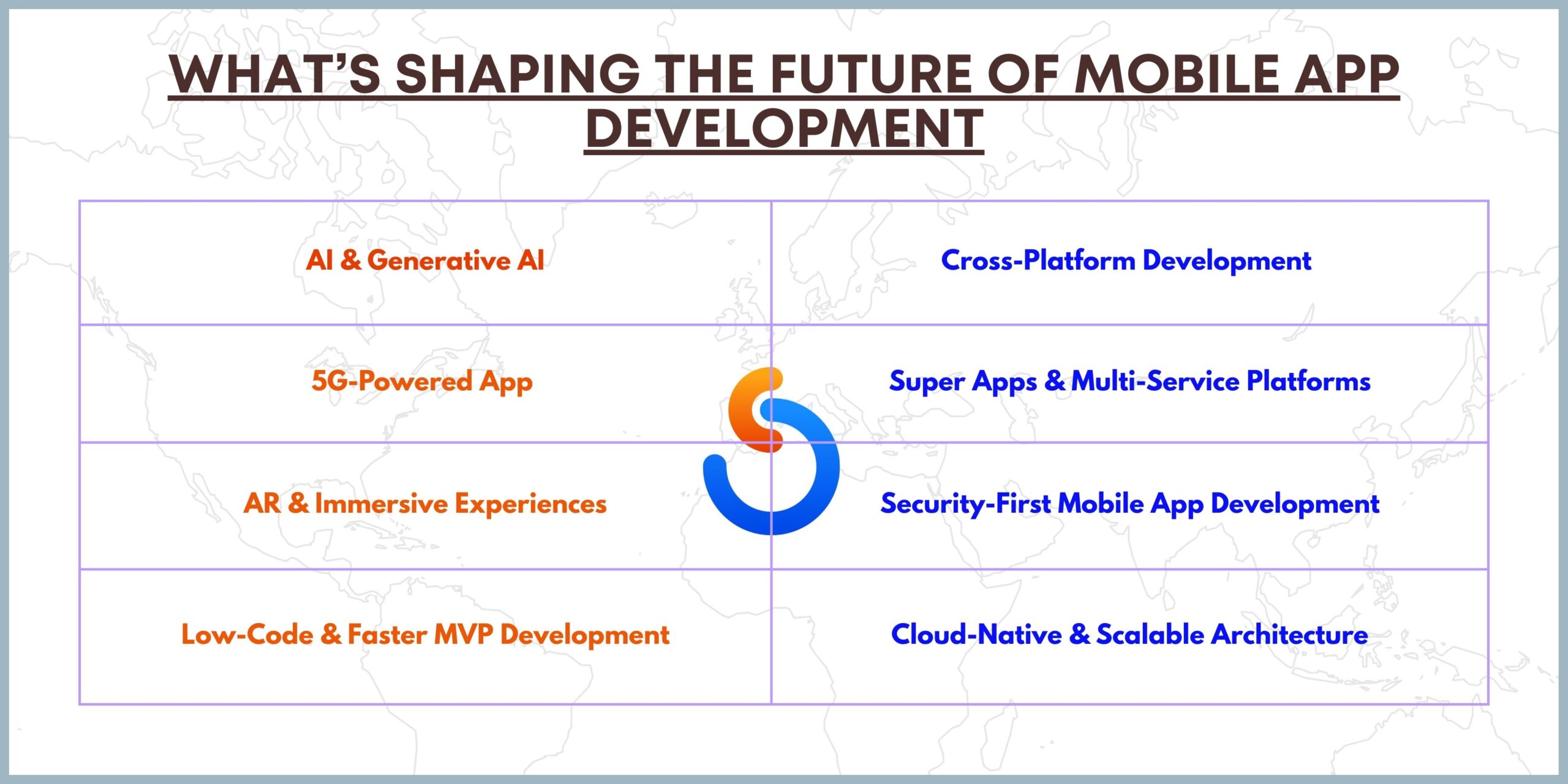
Trend #4: Super Apps & Mini Apps
Users prefer convenience. Less switching. More integration.
Super apps combine multiple services into one ecosystem, while mini apps offer lightweight functionality inside larger platforms.
Business benefits include:
- Increased user engagement and retention
- Reduced app uninstall rates
- Multiple monetization channels
- Centralized user data and insights
Super apps are especially popular in:
- Fintech and digital wallets
- On-demand services
- Logistics and travel platforms
The strategy here is simple become the platform users rely on daily.
Trend #5: AR & VR in Mobile App Development
AR and VR are no longer niche technologies.
In 2026, they’re practical tools for enhancing mobile app experiences.
Key applications include:
- Virtual product try-ons in retail
- Interactive real estate tours
- Medical training and simulations
- Educational and skill-based learning apps
AR and VR significantly increase user engagement and trust particularly for experience-driven businesses.
And trust converts.
Trend #6: Mobile App Security & Privacy-First Development
As mobile apps handle more sensitive data, security has become non-negotiable.
Modern mobile app development trends emphasize:
- Biometric authentication (fingerprint, face recognition)
- End-to-end data encryption
- Secure API integrations
- Compliance with global data protection regulations
Security-first mobile app development protects both user trust and brand reputation.
At SoftCurators, security is built into the development lifecycle from day one not added after launch.
Trend #7: Low-Code / No-Code Mobile App Development
Low-code and no-code platforms are accelerating innovation.
Advantages include:
- Faster app prototyping
- Lower development costs
- Easy customization and updates
- Faster idea validation
This trend is ideal for:
- MVP development
- Internal business applications
- Startups testing new concepts
How These Trends Impact Businesses & Startups
The latest mobile app development trends influence growth in very practical ways:
- Improving customer experience and satisfaction
- Reducing operational and development costs
- Enabling faster product launches
- Enhancing scalability and flexibility
- Supporting long-term digital transformation
Startups gain speed. Enterprises gain stability and scale.
Adopting the right mobile app development strategy often determines whether a product grows or stalls.

How to Choose the Right Mobile App Development Trend for Your Project
Not every trend fits every business.
Choosing the right mobile app development trend depends on:
- Business goals and target audience
- Budget and timeline
- App complexity and scalability needs
- Security and compliance requirements
Instead of chasing every new technology, SoftCurators helps businesses adopt trends strategically — aligning technology decisions with measurable outcomes.
Future of Mobile App Development Beyond 2026
Beyond 2026, mobile app development is expected to move toward:
- AI-native and autonomous applications
- Voice-first and multimodal interfaces
- Deeper IoT and wearable integration
- Fully cloud-managed mobile ecosystems
- Predictive and context-aware experiences
The businesses that invest in innovation early often lead the next digital wave.
Conclusion
Mobile app development trends in 2026 revolve around intelligence, speed, scalability, and security.
AI, 5G, cross-platform development, AR/VR, and privacy-first architectures are shaping the future of mobile applications.
But trends alone don’t create success.
Execution does.
By partnering with SoftCurators, businesses can transform emerging mobile app development trends into scalable, secure, and growth-ready applications built for long-term impact.
FAQs
Is AI necessary for modern mobile apps?
Not mandatory — but highly recommended for businesses aiming for long-term engagement and scalability.
Which mobile app framework is best in 2026?
Cross-platform frameworks are ideal for cost-efficiency and speed, while native development is better for performance-intensive apps.
Are cross-platform apps better than native apps?
Cross-platform apps offer faster development and lower costs. Native apps deliver maximum performance in complex use cases.
How secure are modern mobile applications?
When built with encryption, biometrics, and compliance-first practices, modern apps are highly secure and enterprise-ready.
